Faux wood blinds offer a durable, low-maintenance window treatment option for many American homes. Regular cleaning helps maintain their appearance and prolong their life. This guide provides a practical, step-by-step approach to removing dust, dirt, and cooking smoke residues from faux wood blinds without damaging the finish.
Quick Answer
Quick method: Use an extendable blind duster or slat cleaning brush to remove dust, then wipe with a microfiber cloth. For built-up grime, spray a small amount of faux wood blind cleaning spray solution on a cloth and gently wipe each slat, rotating as needed.
What You’ll Need
- faux wood blind cleaning spray solution
- microfiber cloth set for cleaning faux wood blinds
- slat cleaning brush for faux wood blinds
- extendable blind duster for faux wood blinds
- faux wood blind dusting wand with microfiber


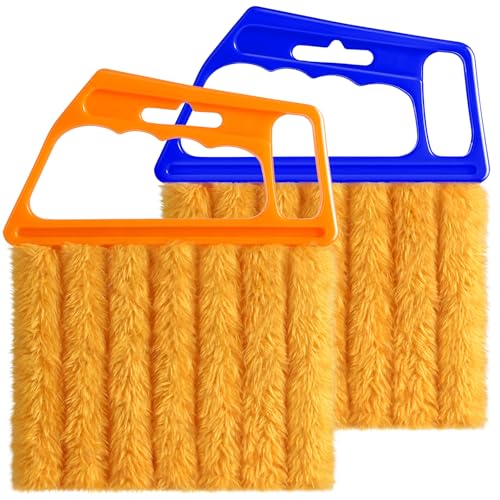
Before You Start
Prepare a clean, dry workspace and protect nearby surfaces with a drop cloth or old sheet. Close the blinds to access the slats and start from the top of each panel. Work gently to avoid bending or warping the slats. For washable blinds, test the cleaning spray on a small, inconspicuous area first. Time estimate: 15–30 minutes for a standard window pair.
Step-By-Step: How To Clean Faux Wood Blinds
- Lower the blinds fully and lock the tilt to keep slats in place while cleaning.
- Dust the top slat with an extendable blind duster to remove loose dust.
- Switch to a slat cleaning brush and glide along each slat from top to bottom, keeping the brush at a slight angle.
- If you encounter spots or fingerprints, lightly mist a microfiber cloth with the faux wood blind cleaning spray solution and wipe each slat in a steady, even motion.
- For thick grime, apply the spray directly to the cloth—not the slats—to avoid oversaturation; wipe with a second dry cloth to remove moisture.
- Flip the blinds to access the backside and repeat the dusting and wiping process.
- Rotate the slats to reach every edge by gently brushing along the underside with the cloth or wand.
- For large windows, repeat on each panel, moving from one side to the other to maintain rhythm and efficiency.
- After cleaning, raise the blinds and allow any residual moisture to evaporate before lowering again.
- For regular maintenance, perform a quick weekly dusting and a deeper wipe every 4–6 weeks as needed.
- Store cleaning tools in a dry place and replace worn microfiber cloths as they lose absorption.
- Discontinue use if the finish appears damaged or discolored; seek professional help for restoration.
Troubleshooting
| Symptom | Likely Cause | Fix | Prevention |
|---|---|---|---|
| Streaks after wiping | Moisture pooling or dirty cloth | Use a dry microfiber cloth to buff; avoid over-wetting | Wipe in small sections; use color-matched cloths |
| Slats feel tacky | Residual cleaner | Wipe with a clean dry cloth | Rinse cloth or switch to a fresh one |
| Finish fading or discoloration | Harsh chemicals or sun exposure | Switch to approved spray solution; keep blinds away from direct sun when cleaning | Clean during cooler parts of day |
| Slats bend or warp | Excessive pressure or moisture | Handle gently; avoid soaking the slats | Clean with light, even pressure |
Common Mistakes
- Using harsh cleaners on faux wood finishes
- Over-wetting slats or letting moisture seep into the headrail
- Skipping a test patch on a hidden area before full cleaning
- Cleaning from bottom to top, which can drag dust upward
- Overlooking the underside of slats during maintenance
By avoiding these missteps, homeowners protect the surface integrity and color of faux wood blinds while keeping them looking fresh.
Tips For Best Results
- Schedule routine dusting with an extendable wand to reduce buildup.
- Keep a dedicated microfiber cloth set for blinds to prevent cross-contamination with household dust.
- When possible, clean blinds outside in a sheltered area to prevent indoor mess.
- Use the lightest effective spray and work in small sections for uniform results.
- Consider a quick quarterly wipe-down to maintain a consistent appearance.
Call A Professional
Consult a pro if blinds show persistent discoloration, warping, or damaged slats that cleaning cannot restore. Stop cleaning and seek professional help if the blinds don’t return to their original color or if the mechanism shows signs of wear, such as hinge stiffness or tilt malfunction.
FAQ
Can I use water for cleaning faux wood blinds?
Lightly dampened cloths are acceptable; avoid soaking the slats and ensure complete drying after cleaning.
How often should I deep-clean faux wood blinds?
Deep clean every 4–6 weeks for high-use rooms, with weekly dusting between sessions.
Are there any safe cleaners for faux wood blinds?
Yes, use cleaners labeled for faux wood or wood finishes; test on a hidden area first.
Should I remove the blinds to clean them?
Not necessary for most homes; vertical cleaning with an extendable wand is typically sufficient.
Buying Guide
When choosing cleaning tools for faux wood blinds, consider size, compatibility, and frequency of use. For larger windows, an extendable blind duster reduces reach and effort, while a slat cleaning brush helps address stubborn grime. A microfiber cloth set ensures effective absorption without scratching surfaces. Look for tools with soft bristles and machine-washable fabrics to maintain hygiene between cleanings.
Key buying factors include size and reach, noise level during operation, and the ease of storage. For households with children or pets, select lightweight, durable products with quick-dry fabrics. Energy efficiency is not a primary concern in cleaning tools, but choosing compact, multi-purpose kits can save space. Pay attention to material compatibility with faux wood finishes and ensure the cleaning spray solution is non-abrasive and safe for indoor use.
Placement considerations involve accessibility to upper blinds and tight spaces like corner windows. If blinds are in high-traffic areas, opt for long-handled tools to minimize climbing or bending. Compare kits that combine multiple tools, such as a duster, brush, and microfiber cloth set, to maximize versatility. Finally, read product reviews for real-world performance on faux wood finishes and ease of maintenance.