Answering the demand for safe, drill-driven polishing, this guide highlights five versatile polishing mop sets. These kits are best for DIYers, automotive detailers, and hobbyists looking to restore luster on metal, wood, glass, ceramic, plastics, and jewelry. Each product is selected for ease of use, material compatibility, and the ability to adapt to different surface needs. Below is a quick summary to help you compare at a glance.
| Product | Best For | Notes |
|---|---|---|
| Tworider 6 Pcs Buffing Wheel Kit | General polishing, household metal and jewelry | Six shapes for multiple surfaces |
| Kshineni 11 Pcs Drill Buffing Pads Kit | Car detailing, waxing, sealing glaze | Thicker pads for longevity |
| IPELY 6 Pcs Wool Polishing Pads Kit (6 In) | Automotive detailing, final finishing | Includes glue-backed pad and adapter |
| SPTA 5 Conical Buffing Kit | Wide-surface and specialty polish | Five hardness levels |
| IPELY 6 Pcs Wool Pads (5 In) | Detail work on cars and furniture | Similar wool material, smaller diameter |
Tworider 6 Pcs Buffing Wheel for Drill
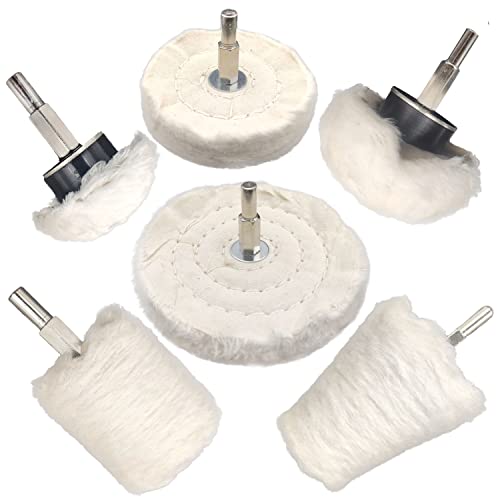
The Tworider kit offers six polishing wheels shaped for different contours. Polishing wheels are sewn with high-quality cotton wool to prevent scratching on furniture and cars. Best for general polishing tasks across metal, aluminum, chrome, jewelry, wood, and plastic surfaces. Use this kit when you need a ready-made set with varied shapes to tackle diverse polishing jobs.
Best for: DIYers handling multiple projects around the home and light automotive detailing. Better for: quick, surface-safe results on metal and jewelry without specialized equipment. Caution: avoid excessive pressure to protect delicate finishes; some shapes may not fit snugly in tight crevices.
Kshineni 3 Inch Drill Buffing Pad Kit
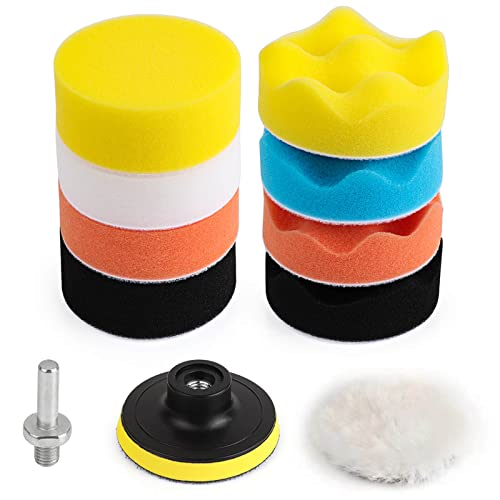
This 11-piece kit centers on 3-inch sponge polishing pads plus a woolen buffer pad and drill adapter. The color-coded sponges indicate softness, enabling tailored polishing, waxing, and glaze sealing for cars and detail work. Pads are thickened for longevity and are reusable after washing. Best for: car enthusiasts performing localized polishing and quick wax/seal tasks. Better for: fine surface work and edge detailing. Caution: ensure compatibility with your drill’s chuck and compatible adapter fit to avoid wobble.
IPELY 6 Pcs Wool Polishing Pads Kit (6 In)

IPELY’s 6-inch wool pads include four wool polishing pads, a backer, and an M14 adapter. Thick wool fibers provide strong cutting and effective cleaning, with washable, reusable pads for repeated use. Best for: automotive polishing and final finishing where aggressive buffing is needed. Better for: larger surface areas and consistent wool-driven results. Caution: wool pads require gentle handling to avoid heat buildup on sensitive finishes.
133 PCS Sanding Disc Drill Polishing Kit (Pomsare)

This kit combines sanding discs with polishing capability, enabling transitions from sanding to buffing. It includes various grits from coarse to ultra-fine for smooth transitions on car, wood, metal, glass, and resin. Best for: users needing a versatile flow from rough finishing to final polish. Better for: projects requiring multiple grit levels without swapping tools. Caution: ensure compatibility with your drill’s speed and shank; uneven backing may affect finish consistency.
Banmo Abrasive 5Pcs Non Woven Buffing Wheels

This set provides five non-woven abrasive mushroom wheels with a 1/4″ shank. Designed to remove rust and perform surface cleaning with a uniform finish. Best for: metal finishing and quick rust removal on light to medium coatings. Better for: flexible, heat-dissipating operations. Caution: non-woven wheels can wear quickly under heavy pressure; use light to moderate pressure for best results.
Sunxeke 6Pcs Buffing Wheel Kit

Sunxeke offers six shapes in a single kit designed for metal, wood, ceramic, stainless steel, glass, and jewelry polishing. The wheels use layered cotton cloth with suede-edged layers to minimize scratches while delivering a high-gloss finish. Best for: DIYers and professionals creating a showroom-ready surface. Better for: consistent gloss on wide surfaces. Caution: ensure central hole alignment to avoid wobble at high speeds, especially on durable metals.
Buying Guide: Key Purchase Considerations
- Surface compatibility: Match pad material (foam, wool, non-woven) to your project’s surface. Wool delivers cutting power; foam is gentler on delicate finishes; non-woven is good for rust and corrosion removal without aggressive cutting.
- Pad size and shape: Choose a kit with multiple diameters and contours to reach curves, edges, and flat areas. Larger pads cover more area; smaller pads excel at detail work.
- Shank and adapter: Confirm your drill accepts the included M14 or 1/4″ shanks and adapters. A loose fit can cause wobble or safety risks at high speeds.
- Hardness and abrasiveness: Five-level hardness or color-coded sponges help tailor the buffing for soft metals vs. hard metals or plastics.
- Maintenance: Reusable pads require washing and proper drying to maintain performance. Check that pads resist flattening and shed minimal lint.
- Safety: Always wear eye protection and gloves. Avoid overheating finishes by using moderate speeds and light to moderate pressure.
FAQ
- What drill speed should I use with these polishing mops? Answer: Start at a low to medium speed to avoid heat buildup, then adjust based on the pad and surface response.
- Can I use these pads on car paint? Answer: Yes, but use soft foam or wool pads with light pressure for clear coats; avoid aggressive wool on delicate finishes.
- Are wool pads reusable? Answer: Most wool pads are washable and reusable; follow the manufacturer’s cleaning instructions to preserve fibers.
- Do I need different pads for metal and wood? Answer: Yes. Metal polishing often benefits from denser wool or hard-wrapped pads, while wood may require softer foam or microfiber to prevent scratching.
- What is the risk of using a non-woven wheel? Answer: Non-woven wheels provide consistent finishing but can load with heavy use; monitor wear and replace when effectiveness declines.
- How do I choose the right pad size? Answer: Larger pads cover broader surfaces; smaller pads reach tight corners and intricate profiles more effectively.