Answering the buyer’s search for a high build latex primer, this guide highlights top options that deliver strong adhesion, leveled surfaces, and improved topcoat success. These primers are best for DIY enthusiasts tackling wood, metal, or previously painted substrates where a durable base is essential. The list favors those with flexible, breathable films to resist peeling in variable weather, plus easy-to-use formulas for quicker project completion. The following sections present five strong choices with practical notes on ideal uses and limitations.
Summary of Selected Products
| Product | Best For | Key Benefit | Limitations |
|---|---|---|---|
| INSL-X High Build Peel Bonding Primer BP110009A-01 | Rust-prone, exterior-ready projects | Remains flexible and breathable; blocks rust stains and tannin bleed | May require multiple coats for very heavy porosity surfaces |
| U-POL 1 Gallon High Solids High Build Urethane Primer Kit | Direct-to-metal projects | High build with excellent opacity and hiding power | Requires precise mixing ratio for best results |
| Speedokote High Build 2K Urethane Primer Kit | Automotive and metal applications | Fast dry; strong adhesion | Typically requires proper ventilation and safety measures |
| Tetrion Hi-Build Gray Primer | Wood, metal, plastic, ceramic surfaces | Fast coverage; versatile applications | Aerosol can limits batch size for large projects |
| Zinsser Peel Stop Triple Thick Primer | Peeling or worn interiors/exteriors | Gluing edges and filling gaps; fast dry | Clear finish may require color overcoat for some projects |
INSL-X High Build Peel Bonding Primer

Best for surfaces with rust stains or tannin bleed, this primer remains flexible and breathable as temperatures shift. It is a solid choice for projects where the substrate has weather-related constraints. It’s ideal for buyers seeking a latex-based primer with strong sealing properties and moderate film thickness. The primer supports up to about 20 mils wet for enhanced coverage in single coats, reducing the need for multiple layers in some situations.
Best for: Homeowners addressing exterior wood, metal, or previously painted surfaces where zinc or tannin bleed is a concern. Choose this if you need a flexible film that resists cracking with seasonal temperature changes. A limitation is that heavy porosity surfaces may still require a second coat for full hiding power.
U-POL High Solids Urethane Primer Kit
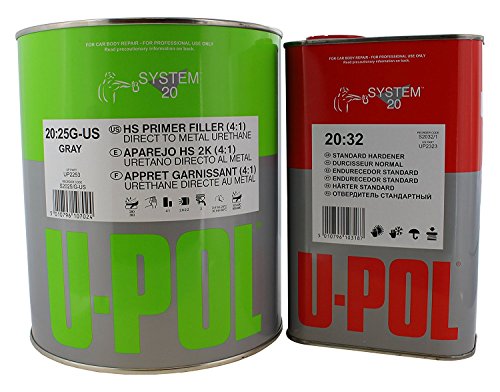
Designed for direct-to-metal use, this kit emphasizes a high build urethane primer with a 4-to-1 mixing ratio and strong opacity. It suits projects where a robust base coat is needed to level and seal metallic substrates before topcoats. It’s best for applications that require a thicker, uniform film in fewer coats, which helps save time on larger metal surfaces.
Best for: Pros and DIYers working on bare metal or rust-prone areas that demand good hiding power. Better for: projects needing a reliable, direct-to-metal primer with a solid build. Avoid if: you lack the proper mixing tools or ventilation for urethane formulations.
Speedokote Automotive High Build 2K Urethane Primer Kit
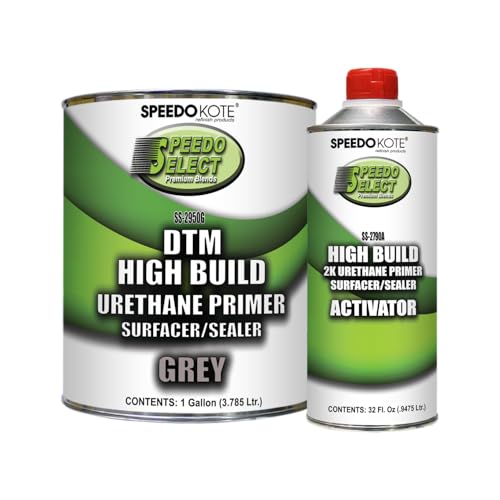
This high build urethane primer is designed for automotive and metal applications, offering fast drying and strong adhesion. The kit is suited for projects requiring a rapid turnaround with a durable base. It’s best for users who can manage a well-ventilated workspace and follow safety guidelines due to the two-component nature of 2K primers.
Best for: Smaller auto body jobs or metal surfaces where a quick-drying, high-build layer is beneficial. Better for: users who can handle activator mixing and pin-point application. Caution: 2K products require proper respirators and ventilation during application and curing.
Tetrion Easy Spray Hi-Build Primer

A versatile gray primer suitable for wood, metal, plastic, and ceramic surfaces. It offers fast coverage and quick-drying properties, making it practical for DIYers who want good base coats without long waits. The aerosol format supports smaller projects or spot priming but may be less economical for large areas.
Best for: Projects requiring a fast, broad coverage primer that works across multiple substrates. Better for: small to medium DIY tasks, or initial coats before topcoats. Caution: aerosol cans have limited throughput for large surfaces; consider bulk formats for big jobs.
SEM 42013 Grey High Build Acrylic Primer

SEM’s high build acrylic primer is a straightforward option for projects needing reliable adhesion with a gray base. Marketed as a new product, it aims to offer a solid foundation with good coverage. Users should verify compatibility with topcoats and substrates in their specific workflow.
Best for: Projects seeking a standard high build acrylic base with predictable performance. Better for: surfaces that respond well to gray primers and a simple, uniform film. Caution: verify topcoat compatibility and film thickness requirements for your project.
Zinsser Peel Stop Triple Thick Primer

Peel Stop is designed to tackle peeling or worn interior and exterior surfaces by bonding to cracked materials and filling gaps. The triple-thick formula helps seal edges and create a smoother base in fewer coats, drying to touch in about 30 minutes. This makes it a practical pick for restoration work on vintage or heavily weathered surfaces.
Best for: Surfaces with existing peeling or cracking that need robust adhesion to stop further damage. Better for: quick stabilization before topcoating. Limitation: clear/neutral finish may require color coats to achieve a desired final appearance on certain substrates.
Buying Guide: Key Considerations For High Build Primer Selections
What substrate will you prime? Wood, metal, plastic, or previously painted surfaces each respond differently to high build primers. Choose a product known to adhere well to the specific substrate to minimize sanding passion and maximize film integrity.
Is a direct-to-metal option important? If you are priming bare metal, a primer that offers direct-to-metal performance can save time by eliminating a dedicated etching step.
What film thickness is required? Some projects benefit from a thicker wet film (mil range) to cover porosity and irregularities. Understand how much film you need and whether multiple lighter coats will perform better than a single heavy coat.
Two-component vs. water-based? 2K urethane primers often deliver higher build and durability but require proper ventilation and safety equipment. Water-based or acrylic primers are easier to handle for interior or hobby projects with lower odor and simpler cleanup.
Drying time and recoat windows matter. Fast-drying formulas speed up workflows but demand careful timing to avoid trapping solvents. Slower-drying options can offer extended working time for complex surfaces or larger areas.
Finish compatibility. Ensure the primer’s base and the intended topcoat are chemically compatible to prevent lifting, poor adhesion, or finish anomalies. Test on a small area when unsure.
Safety and ventilation. Many high build primers are solvent-based or 2K systems. Use appropriate respirators, eye protection, and work in a well-ventilated space, especially for automotive or metal applications.
FAQ
- What is a high build primer good for? It creates a thick, uniform base that fills minor imperfections, improves topcoat adhesion, and reduces the number of coats needed on rough or porous surfaces.
- Should I choose a 2K urethane primer? If you need fast curing and a very strong base for metal or automotive surfaces, a 2K primer is appropriate, but requires safety measures and mixing accuracy.
- Can I use high build primer on wood? Yes, many high build primers are suitable for wood and help achieve a smooth, durable finish before painting.
- Do I need to sand between coats? In most cases, light sanding between coats improves adhesion and film smoothness, especially with high build formulations.
- How do I know which primer to pick? Consider substrate, intended topcoat, required film thickness, and whether direct-to-metal capability is needed for your project.
- Is reviving peeling surfaces possible with primer alone? Primers like Peel Stop are designed to stabilize peeled areas, but ensure proper surface preparation for best results before painting.