Finding the right primer and paint for plastic surfaces requires selecting products that bond well, dry quickly, and resist chipping. This guide highlights top primers tailored for plastic or multi-surface use, with clear guidance on who each product is best for. It is ideal for DIYers, hobbyists, and professionals tackling plastic parts, automotive accents, furniture, or garden accents. The following five products were chosen for their ability to create a strong base layer on plastic, achieving better topcoat adhesion and durable finishes. A quick summary table follows to compare core attributes at a glance.
| Product | Best For | Key Benefit | Saver Note |
|---|---|---|---|
| Rust-Oleum 334019 Painter’s Touch 2X Ultra Cover Primer Spray | General plastic and multi-surface prep | Low odor, fast-drying, good coverage | Oil-based; consider ventilation |
| Rust-Oleum 209460 Plastic Primer Spray | Direct plastic priming (hard-to-paint plastics) | Fast bonding to tricky plastics | Specialized for plastics; ensure compatibility with topcoat |
| Hycote White Plastic Primer Spray | Automotive and DIY plastic projects | Optimal adhesion to plastic; smooth base | 13.5 oz can; check topcoat compatibility |
| Polar All Surface Primer Matte White | Multi-surface projects (wood, metal, plastic) | High-build, enhanced adhesion, quick dry | Broad use; may require exterior sealing on wet conditions |
| Zinsser Bulls Eye 1-2-3 All Surface Primer | Interior/exterior on multiple surfaces | Water-based, sticks to glossy surfaces without sanding | Water-based; odor and cleanup considerations |
Rust-Oleum Painter’s Touch 2X Ultra Cover Primer Spray, 12 oz

Product type: Oil-based primer designed for interior and exterior use on wood, plastic, plaster, metal, masonry, and unglazed ceramic. It dries to touch in about 20 minutes and covers up to 12 sq. ft. per can. The formula resists chips and provides long-lasting protection, making it a practical all-around base coat for many plastic projects. Best for general-purpose priming on plastics before applying both water- and oil-based topcoats.
Who it’s best for: DIYers needing a fast-drying, low-odor option for plastic and other surfaces. Why selected: wide compatibility and solid coverage help ensure a reliable base layer for topcoats. Caution: oil-based products can emit strong odors; ensure adequate ventilation and proper respirator use when spraying indoors.
Rust-Oleum Automotive Adhesion Promoter Spray

Product type: Clear adhesion promoter designed to improve bonding of topcoats to automotive plastics, vinyl, trim, bumpers, fiberglass, and related surfaces. Dries to touch in about 10 minutes and covers approximately 10-12 sq. ft. per can. Best for: projects where plastic trim or automotive surfaces require enhanced chemistry before painting. Why selected: it can complement a primer when topcoats require extra adhesion strength. Caution: not a substitute for primer on very porous or highly uneven surfaces.
Rust-Oleum Painter’s Touch 2X Ultra Cover Spray Primer, 12 oz, Flat Gray

Product type: Multi-surface primer featuring light-gray (flat) finish, suitable for interior/exterior use on wood, plastic, plaster, metal, masonry, and unglazed ceramic. It dries to touch in 20 minutes and covers up to 12 sq. ft. per can. Best for: projects needing a neutral base that reduces showing through topcoats, especially light colors. Why selected: similar performance to the white variant with a gray base that can help gauge coverage under lighter finishes. Caution: oil-based format requires ventilation and cleanup with mineral spirits.
Rust-Oleum 209460 Plastic Primer Spray

Product type: Plastic primer formulated to bond quickly to hard-to-paint surfaces such as polypropylene, polystyrene, epoxy resin, PVC, fiberglass, vinyl plastics, and select 3D printer filaments. Topcoat with any Rust-Oleum paint finish. Best for: plastics with challenging textures or surfaces that require strong adhesion for durable topcoats. Why selected: specifically targets plastics, offering a reliable base for high-adhesion finishes. Caution: verify compatibility with your chosen topcoat, since some paints may require specific primers.
Polar All Surface Primer Matte White
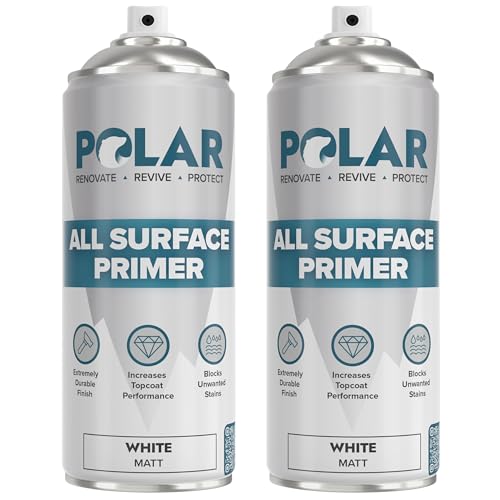
Product type: Enhanced all-surface primer in matte white, designed for wood, metal, plastic, brick, and more. It provides high-build adhesion with quick drying and is suitable for multi-surface use. Best for: projects requiring a single primer for diverse materials, reducing the need to switch products. Why selected: broad compatibility and strong base for topcoats. Caution: as a high-build primer, it may fill minor surface imperfections; test on delicate surfaces first to avoid excessive fill.
Zinsser Bulls Eye 1-2-3 All Surface Primer

Product type: Water-based all-surface primer suitable for interior and exterior use on new or previously painted drywall, concrete, wood, masonry, metal, and glossy surfaces. It seals uniformly, sticks without sanding, dries to touch in about 30 minutes, and recoats in about an hour. Best for: users seeking an easy-to-use, low-odor primer that works across many materials, including plastics with proper surface preparation. Why selected: versatility and quick turnaround. Caution: although easy to apply, ensure compatible topcoats, especially on glossy plastics.
Buying Guide: Key Purchase Considerations
What should you ask before buying? Consider plastic type, surface smoothness, and topcoat compatibility. If you work with polypropylene, polystyrene, or vinyl, choose a primer designed for plastics to maximize adhesion and durability. For mixed-material projects, multi-surface primers offer convenience but test the finish on a small area first. If odor is a concern, opt for water-based primers. If you need ultra-fast drying, look for primers that dry to touch within 20-30 minutes and provide ready-to-coat surfaces quickly. For automotive or high-adhesion applications, use an adhesion promoter together with a suitable topcoat for best results.
Surface preparation matters. Lightly sanding glossy plastics improves adhesion, and removing oils with a mild cleaner helps primer bite. Always follow the topcoat manufacturer’s recommendations to ensure compatibility and the best bond. Consider the project environment; for enclosed spaces, select low-odor or water-based formulas to minimize fumes. Finally, check coverage per can to estimate how many cans you may need for your project size.
Frequently Asked Questions
- Do plastic primers work on automotive plastics? Yes, many plastic primers are formulated to bond with automotive plastics and can prepare surfaces for topcoats on trim, bumpers, and interior pieces.
- Can I use any topcoat over a plastic primer? Most primers are designed to work with a wide range of topcoats, but always verify compatibility between the primer and the paint you plan to apply.
- Is an adhesion promoter necessary? It can be beneficial on challenging plastics or when applying gloss finishes. It helps improve bonding for some topcoats.
- How should I prepare plastic surfaces before priming? Clean to remove oils, lightly sand smooth surfaces, and ensure dryness. For glossy plastics, a light scuffing helps adhesion.
- Is water-based primer less durable on plastic? Modern water-based primers can be durable on plastics when properly applied and topcoated with compatible finishes. They also offer easier cleanup and lower odor.
- How long should I wait between coats? Follow the product’s recoat time, typically 30 minutes to 1 hour for many primers, but allow full cure per label before topcoating.