Maintaining a clean humidifier is essential for healthy indoor air and efficient operation. Vinegar provides a simple, economical method to dissolve mineral buildup and remove mold or mildew residues that can accumulate in humidifiers over time. This guide explains a practical, step-by-step approach using vinegar and common tools, with product-specific recommendations to support the process.
Whether you own an ultrasonic, evaporative, or warm-mog humidifier, regular cleaning helps prevent white dust, unpleasant odors, and potential bacteria growth. The steps below focus on safe disassembly, proper rinsing, and thorough drying to extend the unit’s lifespan.
Quick Answer
Dish-plain method: Mix one part white vinegar to one part clean water, fill the tank or reservoir, soak removable parts for 30–60 minutes, scrub with soft brushes, rinse thoroughly, and air-dry completely before reassembly. For mineral buildup, repeat as needed and consider a descaler kit for stubborn deposits.
What You’ll Need
- White distilled vinegar
- Soft-bristle brushes to reach corners
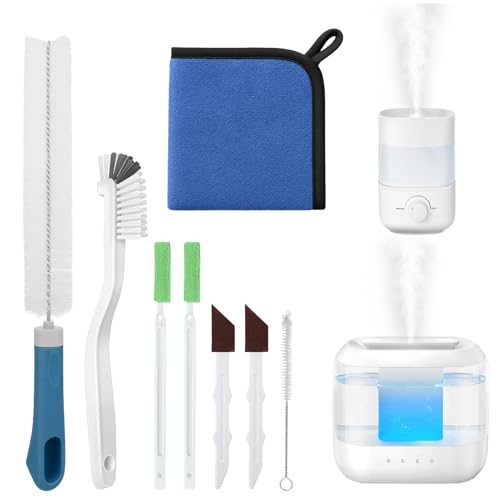
- Humidifier cleaning brush set
- Ultrasonic humidifier cleaning brush
- Replacement humidifier tank cleaning brush
- Humidifier descaler kit
- Humidifier descaling tablets
- Clean, lint-free cloths
- Clean water for rinsing


Before You Start
Safety first: unplug the humidifier and unplug any power cords from outlets before disassembly. Refer to the user manual for disassembly guidance specific to your model. Vinegar is a mild acid that can help dissolve mineral buildup but may not be suitable for all surfaces; test on a small area if the manual allows. Allow ample ventilation during cleaning to minimize lingering vinegar odors. Time estimate: 30–60 minutes for a standard cleaning cycle, plus drying time.
Critical cautions: Do not soak electrical components or the motor housing in vinegar. Avoid mixing vinegar with bleach or ammonia, as this can release hazardous fumes. Always rinse thoroughly after soaking to prevent residue on bedding or skin contact with mist.
Step-By-Step: How To Clean A Humidifier With Vinegar
- Unplug and disassemble the humidifier according to the manual. Remove the water tank and any detachable parts that come into contact with water.
- Empty the tank, then fill it with a solution of equal parts white vinegar and clean water. If mineral buildup is heavy, use undiluted vinegar for the soaking step on removable parts only, following manufacturer guidance.
- Soak removable parts in the vinegar solution for 30–60 minutes. This helps dissolve mineral deposits, mold, and slime.
- While soaking, use a humidifier cleaning brush set or ultrasonic humidifier cleaning brush to scrub the interior of the tank, cap, and nozzle areas. Focus on corners and hard-to-reach spots where buildup hides.
- Rinse parts thoroughly with clean water. Use the replacement humidifier tank cleaning brush to ensure a spotless rinse on stiff deposits if needed.
- If mineral scale persists, apply a humidifier descaler kit or humidifier descaling tablets as directed by the product instructions. Soak or scrub again as required, then rinse well.
- Wipe the exterior and interior surfaces with a clean cloth, then air-dry all parts completely before reassembly. Ensure all components are fully dry to prevent mold growth.
- Reassemble the unit, fill with clean water, and run the humidifier for a short period to clear any remaining vinegar scent. If desired, run it with plain water for a few minutes to reduce residual odor.
- Inspect for leaks or unusual noises after reassembly. If any issues occur, consult the troubleshooting section or the manufacturer’s manual before continued use.
- Establish a routine: clean every 1–2 weeks during heavy use and after any visible buildup or odor changes.
- For ongoing maintenance, consider pairing vinegar cleaning with periodic descaler treatments to maintain performance and minimize mineral buildup.
Troubleshooting
| Symptom | Likely Cause | Fix | Prevention |
|---|---|---|---|
| Visible white dust after cleaning | Mineral deposits not fully removed | Re-soak and scrub with brush set; use descaler tablet if needed | Regularly clean and use distilled water when possible |
| Foul odor persists | Mold or mildew inside tank | Thorough cleaning with vinegar, scrub, rinse, and dry completely | Dry all parts completely after each use |
| Unit won’t produce mist | Blocked nozzle or buildup in tank | Disassemble, scrub nozzle areas, rinse thoroughly | Routine maintenance and avoid mineral-heavy water |
| Leaking from base | Improper reassembly or degraded seals | Disassemble, inspect seals, reseat parts | Follow manual for reassembly steps; replace worn seals |
Common Mistakes
- Using vinegar for too long on certain plastic components not rated for acid exposure
- Leaving parts soaking longer than recommended, which can wear seals
- Rinsing inadequately, leaving vinegar residue that can mist back into the air
- Neglecting to dry parts completely before reassembly
Tips For Best Results
- Use distilled or demineralized water to minimize mineral buildup between cleanings.
- Maintain a regular cleaning schedule aligned with usage to prevent heavy scaling.
- Keep spare brushes handy to reach narrow passages and ensure thorough scrubbing.
- Label and store cleaning tools with the humidifier for ease of ongoing maintenance.
- Always perform a final rinse with fresh water after vinegar treatments to prevent taste or odor transfer.
Call A Professional
Stop signs to seek professional help include persistent leaks, cracks in the tank, or recurring odors after cleaning. If electrical components show damage or you suspect mold contamination that cannot be safely addressed with at-home cleaning, contact a qualified appliance technician or the humidifier manufacturer’s support line for guidance.
FAQ
Can I use other acids besides vinegar to clean a humidifier?
Vinegar is commonly recommended because it’s inexpensive and gentle on mineral deposits. Other acids may damage plastics or seals, so follow manufacturer guidelines.
How often should I clean my humidifier with vinegar?
For regular use, cleaning every 1–2 weeks is typical; more frequent cleaning may be needed with hard water or heavy use.
Is it safe to run the humidifier after cleaning with vinegar?
Yes, but ensure all vinegar has been rinsed away and the unit is dry before running it again with clean water.
Should I use a descaler kit along with vinegar?
Descaler kits or tablets can help with stubborn mineral deposits. Use them as directed after an initial vinegar soak if deposits persist.
What water type is best for reducing buildup?
Distilled or demineralized water minimizes mineral deposits and reduces the frequency of deep cleanings.
Buying Guide
When choosing a humidifier and maintenance tools, consider factors that influence long-term cleanliness and performance. The following aspects help Americans compare options effectively.
Size and capacity: Larger tanks require less frequent refilling but may take longer to clean. Choose a size that fits your room and cleaning routine.
Noise level: Ultrasonic models can be quieter, which is important for bedrooms and nurseries. Look for decibel ratings if available.
Energy efficiency: Energy-efficient units consume less power during operation, a consideration for continuous use.
Controls and features: Retrieve easy-to-use controls, automatic shutoff, and timer features that align with cleaning schedules.
Placement: Position units away from walls and furniture to prevent moisture damage. Ensure ample airflow and access for cleaning.
Cleaning accessories compatibility: Check compatibility with listed tools such as the humidifier cleaning brush set, ultrasonic humidifier cleaning brush, and descaler kits to support routine maintenance.
Water quality: If your water is hard, your unit may require more frequent descaling and brushing. Consider a water softener or distilled water to reduce mineral buildup.
In practice, select a model that matches your room size, maintenance preferences, and budget. A well-chosen humidifier paired with accessible cleaning tools ensures healthier air and longer appliance life.