Vinegar-based weed control is a popular, low-cost option for homeowners who want to manage unwanted plants without harsh chemicals. This guide explains practical steps, safety considerations, and best practices to maximize effectiveness while protecting nearby desirable plants.
Quick Answer
Vinegar weed control works best on young, non-rooted weeds and in hot, sunny conditions. Use a spray containing at least 5% acetic acid for best results, target the foliage, and avoid spraying desirable plants. For larger or deeply rooted weeds, consider mechanical removal or additional treatments.
What You’ll Need
- 1 gallon garden sprayer for weed killer vinegar
- hand pump sprayer 1 gallon adjustable nozzle
- chemical resistant spray bottle for herbicide application
- stainless steel garden sprayer 2 liter weed killer
- calibrated spray bottle for vinegar weed control
 |
Zep New Bleach Resistant Professional Sprayer 2.0 Bottle 32 Ounces – 30 Foot Spray, Adjustable Nozzle | |
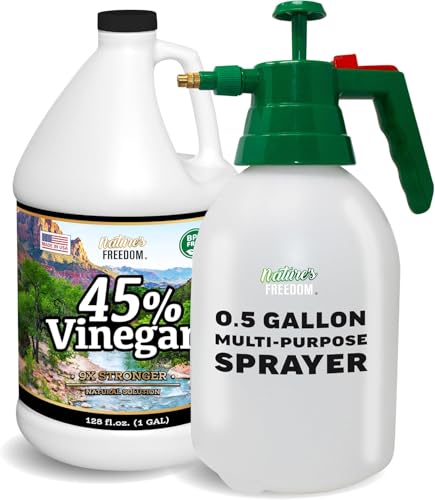 |
Nature’s Freedom 45% Concentrated Vinegar, 1 Gallon with Garden Pump Sprayer |
Before You Start
Prepare the area by removing mulch or ground cover from target weeds to expose leaves. Work in dry, sunny conditions when the vinegar solution will be most effective. Wear protective gloves and eye goggles to prevent contact with skin and eyes. Avoid drift onto desirable plants and turf, as acetic acid can damage them. Time your treatment for a dry forecast with no rain for at least 24 hours.
Step-By-Step: How To Apply Vinegar For Weed Control
- Fill the spray container with household or horticultural vinegar at 5% or higher acetic acid, following label guidance.
- Calibrate the sprayer for a targeted spray. Use a fine mist for small weeds and a direct jet for stubborn leaves.
- Test Spray: Apply to a small weed patch to confirm effectiveness and ensure no drift onto nearby plants.
- Target foliage: Spray leaves until droplets bead but avoid soaking soil or non-target vegetation.
- Re-check in 24–48 hours for browning leaves. For resilient weeds, reapply only to affected growth to prevent soil damage.
- Limit repeated applications to the same area to minimize harm to beneficial organisms and soil life.
- Monitor regrowth and perform spot treatments as weeds reappear, focusing on the same patches to reduce chemical exposure.
- Clean the sprayer after use by rinsing with water and mild soap if needed, then air dry before storage.
- Store containers out of reach of children and pets in a cool, shaded location.
- Consider additional measures such as weed barriers or mulch to reduce future weed emergence.
- Document weed types and outcomes to improve future treatment strategies and timing.
Troubleshooting
| Symptom | Likely Cause | Fix | Prevention |
|---|---|---|---|
| Weeds not browning after application | Weeds are mature or this is a cool/wet period | Reapply when conditions are favorable | Apply during hot, dry days for rapid uptake |
| Drift damages adjacent plants | Wind or overspray | Use directional spray, shield plants, spray on calm days | Set nozzle to narrow pattern, reduce spray area |
| Sprayer clogged | Sugar or residue from prior treatments | Rinse thoroughly, use warm water, and reclean | Rinse after each use and store properly |
| Ineffective on stubborn perennials | Root systems require more than foliage contact | Combine with mechanical removal or repeated treatments | Implement mulch or landscape fabric to suppress regrowth |
Common Mistakes
- Spraying on windy days and causing drift onto desirable plants
- Applying vinegar to roots or soil instead of foliage
- Using overly concentrated solutions on sensitive plants
- Relying on a single application for tough weeds
To maximize efficacy, target only healthy foliage of young weeds and avoid roots. Reapply as needed and maintain a routine for regular upkeep.
Tips For Best Results
- Apply on sunny, dry days when leaves are dry for optimal absorption.
- Use a spray bottle with a calibrated nozzle to control droplet size and coverage.
- Combine vinegar treatment with physical weed removal for larger patches.
- Protect nearby plants with shields or barriers during application.
- Label and store tools safely after each use to prevent mishaps.
Call A Professional
Seek professional help if weeds cover large areas, are deeply rooted perennials, or if attempts to manage an invasive weed fail. Signs suggesting professional intervention include persistent regrowth after multiple treatments, damage to lawn or garden beds, or uncertain plant identification where misapplication could harm desirable species.
FAQ
Is vinegar safe for all plants?
Vinegar can damage or kill many plants, especially on waxy or broadleaf species. Apply carefully to target weeds only and avoid desirable vegetation.
What concentration of vinegar should I use?
Use vinegar with at least 5% acetic acid. Higher concentrations may be more effective but increase risk to surrounding plants and surfaces.
How often should I reapply vinegar for weeds?
Reapply after 24–48 hours if weeds remain green or regrow. Do not overdo it; repeated applications can harm soil health.
Can I use household vinegar for weed control?
Household vinegar (5% acetic acid) is common, but horticultural vinegar with higher strength is often more effective for stubborn weeds. Always follow product directions.
Will vinegar kill grass?
Yes, vinegar can injure or kill grass if applied directly. Use barriers or shields to protect turf and avoid spraying onto lawns.
Buying Guide
When choosing equipment for vinegar weed control, consider size, durability, and compatibility with vinegar formulations. A 1–2 gallon sprayer balances portability and coverage for small to medium patches, while a larger stainless steel or chemical resistant bottle offers longer life and easier cleaning.
Size and capacity: For home use, 1–2 gallon sprayers are convenient and maneuverable. Larger capacity is helpful for bigger yards but adds weight when full.
Sprayer type: Chemical resistant options reduce corrosion from acetic acid. Stainless steel units resist staining and are easy to clean, though cost may be higher than plastic.
Nozzle and spray pattern: Adjustable nozzles let users switch between coarse spray for broad patches and a focused stream for specific weeds. A calibratable bottle helps measure coverage precisely.
Durability and maintenance: Look for sprayers with reinforced seals, UV-resistant plastics, and compatible gaskets. Rinse after every use and store dry to prevent residue buildup.
Controls and ergonomics: Easy-to-use triggers, comfortable grips, and clear measurement marks reduce mistakes during application.
Placement considerations: Choose tools that fit the target area, whether garden beds, sidewalks, or gravel paths. Consider storage space and whether a wheeled option is beneficial for mobility.
With the right equipment, vinegar-based weed control can be a practical, low-cost option for maintaining clean, weed-free areas without relying exclusively on synthetic herbicides.