Finding the right white china paint brush improves results for oil-based finishes, varnishes, and clear coats. This guide highlights five top picks that balance finish quality, durability, and ease of use. Best for DIYers and professionals alike, these brushes cater to indoor and outdoor projects, from furniture refinishing to trim work. Below, compare each option and learn who each brush is best for, plus practical buying tips.
| Product | Brand | Format | Why It Stands Out |
|---|---|---|---|
| Purdy 144024425 White Bristle Adjutant Paint Brush | Purdy | 2.5 in | Ultra-smooth finish with natural bristle blend; designed for oil-based coatings |
| Purdy 2″ Angle Sash Ultra Smooth White China Bristle | Purdy | 2 in | American-made, versatile for tight areas and trim |
| Wooster 1-1/2″ White Bristle Angle SASH Brush | Wooster | 1.5 in | Chisel construction and velvet feel; good for precise angles |
| Pro Grade Chip Brush Set (24 Pack) | Pro Grade | Various (0.5–2 in) | Value pack with multiple sizes; disposable option for messy tasks |
| Wooster Z1222-2 White Majestic China Bristle Angle Sash | Wooster | 2 in | Chisel, white China bristle; durable ferrule |
Purdy 144024425 White Bristle Adjutant Paint Brush

Best for oil-based stains and clear coatings. Natural bristle blend provides an ultra-smooth finish, helping you avoid brush marks on wood surfaces. The alderwood handle is lightweight and moisture-wicking for comfortable, extended use. Caution: brushed finishes may require longer drying times with certain varnishes.
Who it’s for: Professional painters and serious DIYers tackling furniture, cabinets, or exterior wood with oil-based coatings. Why chosen: Combines premium finish with durable construction for frequent use.
Purdy 2″ Angle Sash Ultra Smooth White China Bristle

Best for precise angles and trim work. Made in the United States with white china bristle for smooth application. The angle sash design helps you reach corners and tight spaces in cabinets and along trim. Limitation: may be less ideal for heavy-body coatings.
Who it’s for: Cabinet refinishing and detailed woodwork where control matters. Why chosen: High precision without sacrificing finish quality.
Wooster 1-1/2″ White Bristle Angle SASH Brush
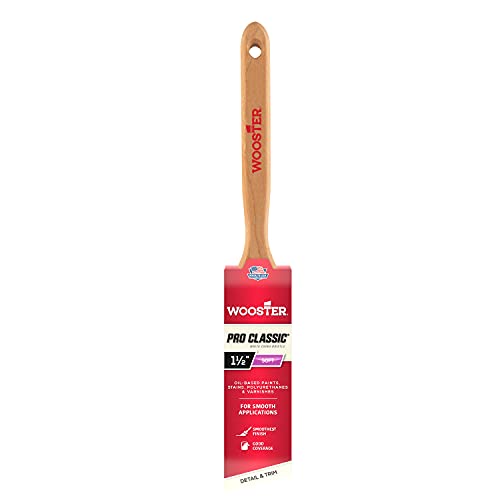
Best for smooth, velvet-feel application on small to medium surfaces. White China bristle with chisel construction supports soft formulations while delivering an even glaze or stain. The round ferrule resists rust for longer tool life. Caution: not ideal for heavy thick paints.
Who it’s for: Homeowners touching up furniture or trim with oil-based products. Why chosen: Delivers controlled coverage with a soft finish.
Pro Grade Chip Brush Set (24 Pack)

Best value option for large projects, crafts, or experiments with different coatings. The set includes multiple sizes with all-natural china bristles and square trim for even application. The solid wood handles add durability for diverse tasks. Limitation: disposable nature means more waste for single-use jobs.
Who it’s for: Budget-conscious painters and seasoned DIYers who need several brush sizes in one bundle. Why chosen: Offers versatility and cost efficiency for mixed projects.
Wooster Z1222-2 White Majestic China Bristle Angle Sash

Best for precise edge work with white China bristle. The chisel construction and square ferrule support durability in oil-based paints, stains, and varnishes. The 2-inch size is a versatile choice for doors, trim, and windows. Caution: handle ergonomics vary—test comfort if you have long projects.
Who it’s for: Professionals and hobbyists finishing trim and cabinets with clean lines. Why chosen: Balanced control and finish with a robust brush body.
Buying Guide: White China Bristle Brushes
Consider these key factors when selecting a white china brush for oil-based finishes and varnishes. Brush type, bristle quality, and handle design directly affect finish quality and comfort during long tasks.
- Bristle type and feel: White China bristles provide a smooth, even laydown, especially for oil-based coatings. Look for natural bristle blends for best results with glazes and polyurethanes.
- Brush width and shape: Wider brushes cover more area; angled sash brushes improve control along edges and trim. Narrow chisels are ideal for corners.
- Ferrule and handle: A rust-resistant ferrule and a comfortable, moisture-wicking handle reduce fatigue and keep bristles aligned.
- Project scope: For furniture and cabinets, choose smaller, precise brushes (1–2 in). For larger surfaces, select wider brushes (2.5–3 in) to speed coverage.
- Maintenance: Natural bristle brushes need proper cleaning after use with compatible solvents. Dry thoroughly to prevent bristle damage.
Which brush to choose by project type
- Cabinet refinishing: Purdy 2″ Angle Sash Ultra Smooth or Wooster Z1222-2 for precise edges.
- Furniture staining: Purdy 2.5 in Adjutant for a smooth, glass-like finish.
- Outdoor wood coatings: Larger brushes from Purdy or Wooster for quick coverage with even results.
- Budget tasks or large-scale projects: Pro Grade 24-pack supplies multiple sizes for versatility and cost efficiency.
Care tips to extend brush life
- Clean brushes promptly after use with compatible solvents; avoid hard scrubbing against bristles.
- Reshape bristles while damp and store upright to prevent deforming the brush edge.
- Store away from heat sources to maintain bristle integrity and ferrule alignment.
Frequently asked questions
- What is white china bristle best used for? It offers smooth application for oil-based paints, stains, and varnishes, delivering an even finish.
- Are natural bristles better than synthetic for polyurethane? Natural bristles typically absorb and lay down coatings smoothly; synthetic options may handle thicker paints.
- Should I choose an angled sash brush? Angled sash brushes provide better control along edges and trim, reducing brush marks in tight areas.
- How many brushes do I need for a project? A mix of sizes (1–2.5 inches) typically covers most furniture and trim tasks efficiently.
- Can I use the same brush for oil-based products and water-based coatings? It’s best to use brushes formulated for the specific coating type to maintain bristle performance and finish quality.