Find the right wall paper seam roller to press down seams, smooth edges, and minimize air bubbles across a range of projects. This guide compares top rollers suited for wallpaper, contact paper, and related applications. Use cases vary from home decoration to car sound-deadening mat installation. The table below highlights five strong options and what makes each a good pick.
| Product | Best For | Key Benefit |
|---|---|---|
| FCHO Wallpaper Smoothing Roller | General household wallpaper and decorative projects | Double-headed design with 90-degree edge compatibility; ergonomic wooden handle |
| LUMITECO Bearings Equipped Roller | Auto deadening mats and heat abatement | Upgraded bearings for smoother rolling and better adhesion |
| tiptopcarbon Seam Roller | Seams, corners, borders in large vinyl or wallpaper work | Versatile kit with a durable wooden handle |
| Zinsser 1″ Seam Roller | Wallpaper edges and corners with added shine | Side-arm design for tight spaces; easy seaming |
| iwooduubb 3rd-Gen Seam Roller | Sound deadening mats and wallpaper installations | Industrial-grade sealed bearings and ergonomic beechwood handle |
FCHO Wallpaper Smoothing Roller

The FCHO unit is designed for a variety of projects beyond wallpaper, including sign making, vehicle side curtains, and glass tinting. It features a high-hardness wood and plastic construction with a rubber and plastic double-headed wheel system. The rubber head works on 90-degree edges, helping seal seams and prevent curling. Best for home decorators who need a versatile tool that also handles other flexible materials. A potential limitation is that some users may prefer lighter, single-head models for delicate wallpaper textures.
LUMITECO Bearings Equipped Roller
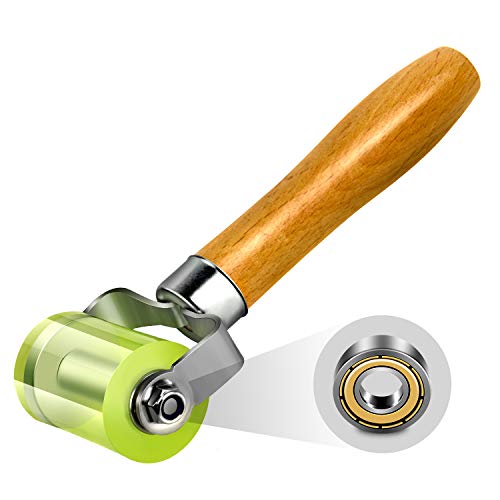
This seam roller emphasizes durability with upgraded bearings and a PU roller mounted to a wooden handle. It is particularly well-suited for automotive deadening mats and heat abatement panels, while also performing well on wallpaper. The main advantage is smoother rolling and better adhesion consistency under demanding use. A limitation is that the heavier build may be less comfortable for very long delicate wallpaper tasks.
tiptopcarbon Wallpaper Smoothing Tool

The tiptopcarbon kit offers a practical, versatile set for wallpaper seams, corners, borders, and squeegeeing out bubbles. The wooden handle provides a durable, comfortable grip, making it a good choice for larger wallpaper projects and vinyl wrapping. Best for DIY enthusiasts who want a straightforward, reliable tool with multiple uses. A potential downside is that the kit might lack extra specialized attachments found in premium brands.
Zinsser 98005 Wallpaper 1″ Seam Roller

The Zinsser 1″ seam roller is designed to seal wallpaper seams, corners, and borders while smoothing air bubbles. Its side-arm style helps reach tight corners, and it can add a subtle gloss to the finished surface. Best for users who want an accessible, traditional option with strong edge sealing. A limitation is that it may be less effective on very large flat panels compared to larger rollers.
iwooduubb 3rd-Gen Seam Roller

The iwooduubb tool features industrial-grade sealed precision bearings and a beechwood handle designed for long sessions. It balances firmness with a comfortable grip and is well-suited for auto sound-deadening installations and wallpaper work alike. Choose this if you need maximum stability and precision. A caution is that the tool is heavier than some basic models, which may affect long-term use for very detail-heavy tasks.
Buying Guide: Key Considerations For Wall Paper Seam Rollers
- Project type: Choose based on whether you mainly install wallpaper, wrap vinyl, or work with auto sound-deadening mats. Some rollers excel at corners; others offer better adhesion across larger surfaces.
- Material and grip: Wooden handles tend to be ergonomic and durable. Look for smooth, non-slip grips for long sessions.
- Roller composition: PU rollers provide rigidity with some flexibility; rubber rollers excel at soft edges and gentle pressure. Consider whether a double-headed or single-headed roller suits your task.
- Bearings and durability: Sealed bearings reduce wobble and wear. If you intend heavy use, prioritize a model with reinforced brackets and quality bearings.
- Edge access: For tight corners and borders, a side-arm or angled design helps achieve a clean seam without bubbles.
- Maintenance: Clean rollers after use to prevent adhesive buildup. Some materials may require light lubrication or occasional tightening of brackets.
FAQ: Quick Answers For Buyers
- What is the main purpose of a wall paper seam roller? Answer: To press and seal seams, smooth edges, and reduce air bubbles for a clean, durable finish.
- Which roller is best for auto sound-deadening mats? Answer: Rollers with PU material and upgraded bearings, like the LUMITECO option, offer smoother adhesion and better control on mats.
- Are wooden-handled rollers better than plastic? Answer: Wooden handles generally provide a sturdier grip and comfort for long projects, though plastic handles can be lighter.
- Can I use these rollers on vinyl wrapping? Answer: Yes, many are suitable for vinyl wrap and contact paper; check the product features for compatibility notes.
- Do I need a double-headed roller? Answer: A double-headed design can help when working on larger seams and corners, offering more versatility in one tool.
- Is this tool recommended for beginners? Answer: Yes, but choose a lighter, simpler model to start, then upgrade to bearings-equipped or multi-use rollers as skills grow.