When selecting velcro-backed sanding pads, look for strong hook-and-loop backing, durable abrasive material, and a design that matches your sander’s hole pattern. These five options cover mouse detail sanders, orbital sanders, and pad protectors, making them suitable for hobbyists and professionals alike. The top picks emphasize dust collection, vibration control, and long-lasting performance for wood, paint prep, and finish work.
| Product | Best For | Key Benefit |
|---|---|---|
| Mouse Detail Sander Sandpaper (55Pcs) | Precise detailing | 5-hole pattern for dust collection |
| 4 Pack 5 Inch 8 Holes Foam Sanding Pads | General sanding | Soft foam for vibration damping |
| Coceca Mouse Detail Sander Sandpaper (50pcs) | Budget sets | Assorted grits in one package |
| 5 Pcs 5 Inch 44 Hole Pad Protectors | Pad protection | Extends backing pad life |
| 52 Pack 5 Inch 8-Hole Discs | Versatile sanding | Wide grit range |
55Pcs Mouse Detail Sander Sandpaper Set

The 55-piece set uses a high-strength resin bond and aluminum oxide abrasive for durable, uniform results. It features a strong velcro backing that resists peeling off during use and a 5-hole pattern that enables dust collection with compatible backing plates. Best for detail work on curved surfaces, small trim, and tight corners. Caution: avoid over-sanding delicate surfaces to prevent gouging.
4 Pack 5-Inch 8-Hole Foam Sanding Pads

These 4 pads provide soft-density foam for reduced vibration and edge burn prevention. The 5″ diameter and 8-hole design fit most orbital sanders with hook-and-loop discs. Best for smooth finishing on contoured surfaces and delicate edges. Choose this if you want better edge control and less bounce. Limitation: foam may wear faster on aggressive grits or heavy material removal.
Coceca Mouse Detail Sander Sandpaper Set (50pcs)
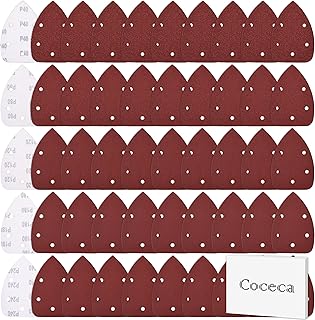
This budget-friendly package includes 50 sheets in five grits (40/80/120/180/240), sized for 140mm detail sanders. Backing is hook and loop for quick changes. Best for projects needing multiple grits in one order and for beginners building a starter kit. Limitation: not all grits may be equally durable across heavy use.
5 Pcs 5-Inch 44-Hole Pad Protectors

These protectors sit between the sander base and the sanding disc to extend the backing pad’s life. They are designed for mesh abrasives and high-frequency sanding, reducing wear on the hook-and-loop interface. Best for professional shops or frequent sander users who want to minimize downtime. Limitation: not a replacement for worn backing pads; replacement is still necessary over time.
52 Pack 5-Inch 8-Hole Discs

Includes a broad range of grits with printed backgrit labels for quick identification. The discs are aluminum oxide, anti-static, and designed for dust collection with pre-punched 8 holes. Best for general sanding across wood, paint prep, and light metalwork. Avoid using the finest grits on very rough surfaces without a backing pad to prevent clogging.
Buying Guide: Velcro-Backed Sanding Pads
What to look for when choosing velcro-backed sanding pads:
- Backing compatibility: Ensure the hook-and-loop interface matches your sander’s disc and backing plate hole pattern (5-hole vs 8-hole).
- Abrasive material: Aluminum oxide is common for wood and paint prep; ceramic or zirconia may offer longer life for heavy tasks.
- Pad type: Foam pads damp vibrations for orbital sanding; solid paper discs provide aggressive cutting for fast material removal.
- Dust collection: 5-hole or 8-hole designs improve dust removal; check compatibility with your dust-collection system.
- Durability: Resin-bond glues and tightly distributed grit minimize shedding and optimize consistency across the sheet.
- Surface compatibility: Ensure grits and pad density suit the material—softer woods vs. hard hardwoods or finishing coats require different approaches.
How to choose by project type
- Detail work and corners: Mouse detail sanders with assorted grits provide precision and control. Best for trimming and fitment after rough shaping.
- Finish work on flat surfaces: Foam pads reduce heat and burn-through on oak, maple, or medium-density fiberboard finishes.
- Finish prep and paint removal: A wide grit range set helps progress from coarser to finer grits without changing discs often.
Maintenance and tips
- Keep discs clean from dust to prevent clogging and heat buildup.
- Inspect pad backing for wear; replace pad protectors or entire pad when loss of adhesion occurs.
- Store pads in a dry environment to prevent moisture-related edge wear or mildew on foam pads.
FAQ
- What does velcro-backed mean for sanding pads? – It refers to hook-and-loop fasteners that attach sanding discs to the backing pad, enabling quick changes and secure adhesion during use.
- Are 5-hole pads better than 8-hole? – 5-hole designs are optimized for dust collection with certain backplates; 8-hole pads fit many orbital sanders and can improve dust removal across larger surfaces.
- Can I use foam pads for all materials? – Foam pads are best for finishing and delicate surfaces; for heavy material removal, rigid discs perform better.
- How do I extend backing pad life? – Use pad protectors when applicable and avoid excessive heat or pressure that can wear the hook-and-loop interface.
- Is aluminum oxide suitable for metal? – Aluminum oxide is common for wood and paint prep; for metal, check grit and adhesive compatibility to avoid clogging.
- What should I do if discs keep slipping? – Confirm proper backing plate compatibility, ensure discs are properly seated, and check that the hook side is clean and intact.