If you’re sealing cedar with timber oil, you want a product that penetrates deeply, preserves natural grain, and resists moisture and UV damage. This guide highlights five timber oils that work well on cedar, with clear notes on suitability, application, and limitations. The selections focus on best-for scenarios such as DIY deck projects, outdoor furniture, and exposed cedar siding. Each pick includes what makes it ideal, plus practical cautions to help you decide.
Summary table of selected products:
| Product | Best For | Key Benefit | Typical Coverage Note |
|---|---|---|---|
| Thompson’s WaterSeal Timber Oil (Cedar) | General outdoor cedar projects | Penetrating formula with iron oxide pigments for rich cedar color | 1 gallon coverage varies by surface |
| Timber Oil Deep Penetrating Stain (Western Cedar) | Boards, decks, fences | Deep penetration with no lap marks or runs | 1 gallon typically covers ~150 sq ft |
| Cabot Australian Timber Oil (Natural) | Weather-exposed cedar surfaces | Three-way oil protection for deep penetration | Natural color options |
| Preserva Mountain Cedar Timber Oil | Architectural wood in high-traffic areas | Dual resin technology with low VOC | High-performance stain |
| Timber Oil Deep Penetrating Stain (Large quantity) | Large cedar projects | Same deep protection and smooth application | 5 gallon size |
Thompson’s WaterSeal Timber Oil, Cedar

Features: Penetrating Formula Nourishes & Beautifies. Delivers more depth of color, showing less wood grain while hiding minor wood imperfections. Premium iron oxide pigments add beautiful, natural color.
- Best for: Cedar decks and exterior cedar surfaces needing a rich, even finish.
- Why selected: Strong color retention with a smooth finish that reduces the look of defects.
- Caution: Some cedar tones may appear darker initially; test on a small area first.
Timber Oil Deep Penetrating Stain for Wood Decks, Western Cedar

Features: Deep penetrating protection, no lap marks or runs, trans-oxide pigments for color retention and UV resistance while highlighting natural grain.
- Best for: Cedar decks, fences, siding, and log cabins where deep protection and an even look are important.
- Why selected: Excellent for first-time users due to a smooth, drip-free application.
- Caution: May require multiple coats for very dry or resin-rich cedar; follow recoat recommendations.
Cabot Australian Timber Oil, Natural
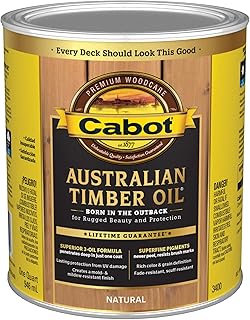
Features: Three-way oil protection for superior penetration; advanced blend for extreme weather exposure; rich, natural color to emphasize wood depth.
- Best for: Cedar surfaces subjected to harsh weather and moisture exposure.
- Why selected: Combines deep sealing with natural color, reducing the need for frequent reapplication.
- Caution: Natural color variants can look different across cedar varieties; apply evenly on fresh wood.
Preserva Mountain Cedar Premium Timber Oil

Features: Dual Resin Technology; penetrates deeply; low VOC; true oil-based stain.
- Best for: Architecturally finished cedar that requires durable protection and a refined appearance.
- Why selected: Low VOC helps outdoor projects meet environmental considerations while maintaining performance.
- Caution: Look for adequate ventilation during application and dry time between coats.
Timber Oil Deep Penetrating Stain, 5 Gallons

Features: Deep penetrating protection; no lap marks or runs; trans-oxide pigments for color retention and UV resistance while highlighting natural grain.
- Best for: Large cedar projects with long-term protection needs and space for multiple cans.
- Why selected: Cost-effective large-volume option with a consistent finish across big surfaces.
- Caution: Larger containers require careful handling and proper storage to maintain product quality.
Buying Guide: Timber Oil For Cedar
What should I look for in timber oil for cedar?
Prioritize deep penetration to protect cedar from moisture and UV damage. Look for pigments that enhance natural color without masking grain, and check for low VOC if environmental impact matters. A smooth, drip-free formula helps beginners apply evenly.
How do I choose based on cedar exposure?
For high-exposure areas (sun, rain, and wind), choose a product with strong UV resistance and deep sealing. For shaded or indoor applications, a lighter option that preserves color without excessive buildup may be preferable.
Is one gallon enough for a typical deck?
A gallon often covers about 150 sq ft on cedar decks, but coverage varies with porosity and surface texture. For large or multi-surface projects, a five-gallon option reduces refills and provides uniform color.
What about application tips?
Clean cedar before applying. Use a natural-bristle brush or a pad applicator for even coats. Work in the direction of the grain and avoid applying thick layers. Allow proper drying time between coats as directed on the product label.
Which product forms are best for cabins or fencing?
For fencing and log cabins, deep-penetrating formulas with robust UV protection are ideal. Oil-based formulas often provide more durable protection and longer life in outdoor settings, compared with water-based alternatives.
Are there safety considerations?
Wear protective gear during application, ensure good ventilation, and store cans upright. Avoid direct skin contact and inhalation of fumes. Dispose of rags safely to prevent spontaneous combustion.
Quick comparison by scenario
- Best for cedar decks: Timber Oil Deep Penetrating Stain (Western Cedar) and the 5-gallon version for large areas.
- Best for extreme weather: Cabot Australian Timber Oil (Natural) for deep penetration and color retention.
- Best for beginners or simple touch-ups: Thompson’s Timber Oil (Cedar) for its penetrating formula and color depth.
- Best low-VOC option: Preserva Mountain Cedar Timber Oil for architectural projects with environmental considerations.
FAQ
- Q: Can I apply timber oil on freshly stained cedar?
- A: Yes, but allow the cedar to cure if it’s newly installed, and follow product instructions for recoat windows.
- Q: Will cedar look darker after oiling?
- A: Some oils deepen the color; test on a small area to gauge final hue before full application.
- Q: How long does cedar finish last with oil?
- A: Longevity depends on exposure, preparation, and maintenance; recoat intervals are typically determined by weathering and use.
- Q: Do these products require sealing after oiling?
- A: Most timber oils provide sealing while enhancing color; an optional topcoat may be used depending on exposure and preference.
- Q: Are these safe for wildlife around cedar structures?
- A: Follow label instructions; use low-VOC options where possible to reduce environmental impact.