Answering the search intent for terra cotta concrete paint, this guide highlights durable, color-consistent options suitable for indoor or outdoor concrete, stucco, and masonry projects. The top picks cater to different buyers: those seeking heavy-duty floor coatings, colorants for mixed concretes, or easy-to-use decorative paints. The table below summarizes five strong options and who they’re best for.
| Product | |
|---|---|
| EVOLVE Porch & Floor Paint (Terracotta) 1-Gallon | High-traffic interiors and exteriors; multi-surface floors |
| EVOLVE Porch & Floor Paint (Terracotta) 5-Gallon | Large-area floors; long-term wear resistance |
| Quikrete Concrete Colorant Bottle, Terracotta | Coloring concrete mixes and finished surfaces |
| Classic Coatings Simple Stain (Terracotta Clay) | Eco-friendly, semi-transparent staining |
| Rust-Oleum Terracotta Chalked All-in-One | Furniture and decorative projects; no-primer convenience |
EVOLVE Porch & Floor Paint Terracotta 1-Gallon
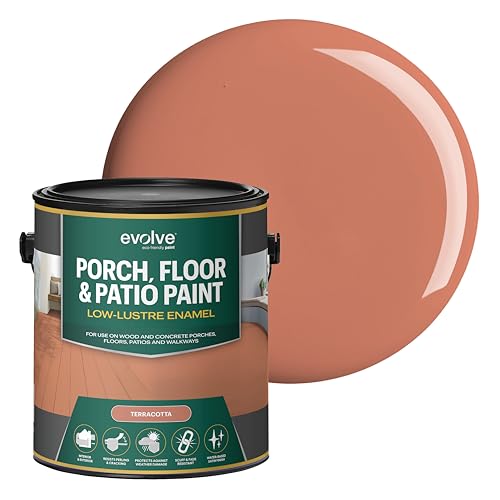
Best for high-traffic floors in porches, patios, basements, steps, and walkways. This interior/exterior multi-surface coating adheres well to wood, concrete, masonry, and previously painted surfaces. It offers long-term wear resistance, a hard, scuff-resistant finish, and low VOC emissions. The bottom line: choose this for durable, low-maintenance floors that look consistent across spaces. A potential limitation is that color uniformity may require proper surface preparation for optimal adhesion.
EVOLVE Porch & Floor Paint Terracotta 5-Gallon

Best for expansive floor coatings where long-term wear resistance matters. The 5-gallon version provides the same high-traffic durability and scuff resistance as the 1-gallon, suited for larger porches, decks, and walkways. Choose this if you’re coating extensive concrete or wood surfaces and want a uniform finish. Limitation: larger containers may require more thorough mixing and stirring to ensure consistent color and texture.
Quikrete Concrete Colorant Bottle, Terracotta

Best for adding terracotta hues to concrete mixes and cement-based projects. This colorant is designed to resist fading and can be integrated into new or existing mixes, offering a stable color throughout the material. It’s ideal for walkways, planters, or decorative concrete. Limitation: it colors mixes rather than applying as a standalone coating on cured surfaces, so it’s essential to plan application with the concrete job stage.
Classic Coatings Simple Stain Terracotta Clay

Best for eco-conscious projects needing a semi-transparent, water-based stain. This product is zero VOC and UV-stable, making it suitable for both interior and exterior concrete or masonry that requires color without hiding the underlying texture. It’s a strong pick when you want a natural terracotta look with minimal odor and environmental impact. Limitation: as a stain, it alters appearance rather than providing a solid color or heavy protection; for high-wear floors, consider a topcoat option.
Buying Guide: Terra Cotta Concrete Paint And Color Options
- Durability vs. appearance: For floors and exterior concrete, prioritize high-traffic coatings with scuff resistance and weather protection. For decorative surfaces, semi-transparent stains or colorants may be preferred.
- Surface compatibility: Check whether the product adheres to wood, concrete, masonry, or previously painted surfaces. Some products are multi-surface, while others are formulated for specific substrates.
- Finish type: Matte vs. satin vs. gloss affects slip resistance, maintenance, and the look of terracotta hues. Chalked paints provide easy aging effects but may require sealing for durability.
- Application and cleanup: Water-based formulas with low VOCs are generally easier to apply and clean. Some products require primer or extra prep steps for best results.
- Color longevity: UV stability and fade resistance are key for outdoor exposure. Colorants mixed into cement should be mixed thoroughly to avoid streaks.
- Volume considerations: For large areas, buying in gallons may reduce seams and provide consistent coverage. Stir thoroughly to maintain color uniformity across batches.
Frequently Asked Questions
- Is terra cotta a suitable color for concrete floors? Yes, terra cotta tones are popular for warm, earthy looks on concrete floors and can be used indoors or outdoors with durable coatings.
- What is the difference between a concrete stain and a concrete paint? A stain adds color while preserving the surface texture; paint provides a solid color and protective film. Stains are often lower in coverage per gallon but eco-friendly, while paints deliver higher protection for floors.
- Can I use terracotta colorants in existing concrete? Colorants can be added to fresh mixes to achieve uniform color. For existing concrete, stains or surface coatings are typically used.
- Do I need a topcoat over terracotta paints? For high-traffic or outdoor surfaces, a topcoat can improve durability and wash resistance; follow product guidelines for recoat times and compatibility.
- Are these products low-VOC? Several options listed are low-VOC or zero-VOC, which is preferable for indoor use and for rooms with limited ventilation.
- Which product is best for a DIY beginner? Look for products marketed as easy to apply with minimal prep and no primer requirements, such as chalked paint sprays or all-in-one coatings.