Finding the right swivel pole sander head can speed up drywall finishing and reduce rework. This guide compares top options designed to fit standard poles, with different threading, quick-release systems, and anti-flip features. It highlights who each head is best for, plus practical cautions. Ideal buyers include DIY homeowners tackling wall and ceiling sanding, pro drywall finishers needing quick tool changes, and renovators seeking reliable, durable components for long projects.
Summary table of selected products:
| Product | Best For | Notes |
|---|---|---|
| Warner Plastic Pole Sander Head, Female Threaded, 3410496 | Budget setups, simple attachment | Plastic, straightforward threading |
| Hyde 09977 Radial Sander | Pro sanding with hinge protection | Pivoting hinge; attaches to Acme pole |
| No-flip Pole Sander Head for Drywall (Aluminum) | Durable, versatile use | Aluminum alloy; universal threads |
| Trim-Tex Black Widow Web Spinner Round Pole Sander Head | Large-area, smooth finish | 9″ round, hook-and-loop |
| Hicarer No-flip Pole Sander Head (Quick Release) | Adjustable, anti-flip design | Coarse thread; quick clip |
Warner Plastic Pole Sander Head, Female Threaded, 3410496

The Warner Plastic Pole Sander Head uses a female thread to fit standard pole assemblies. It offers a low-cost option suitable for light to moderate drywall finishing tasks. Its plastic construction keeps weight down, which can be advantageous for overhead sanding. Best for beginners or homeowners installing a basic pole system who want a simple, no-fuss head. A potential limitation is durability under heavy, repeated pressure; for tough surfaces, consider a metal alternative.
Hyde 09977 Radial Sander

The Hyde 09977 Radial Sander features a pivoting hinge to minimize accidental wall damage and a hook-and-loop system for quick abrasive sheet changes. It attaches to an Acme-threaded pole (pole not included). This head is well-suited for pros who want faster pad changes and improved protection against wall contact. Choose this if you value efficiency during frequent sanding passes and have compatible pole hardware. Caveat: the pole is not included, so you’ll need a compatible pole to use this head.
No-flip Pole Sander Head for Drywall (Aluminum)

This aluminum alloy pole sander head emphasizes durability with a no-flip design and external 3/4-inch threaded compatibility. It measures about 9 x 3.25 inches, offering a robust option that works with various pole lengths. Best for finishers who need a reliable, interference-free head for both walls and ceilings. The heavy-duty construction helps resist bending, though it may be heavier than plastic options, which can affect overhead use for very long sessions.
Trim-Tex Black Widow Web Spinner Round Pole Sander Head

The Black Widow Web Spinner Round Pole Sander Head uses a 9-inch round design with hook-and-loop fasteners for quick pad swaps and a smooth finish. This head is designed to provide even sanding coverage with reduced swirl marks. It’s best for projects requiring broad, consistent material removal and a high-quality surface finish. Limitation: the handle is sold separately, so you’ll need a compatible pole to complete the setup.
Hicarer No-flip Pole Sander Head with Quick Release
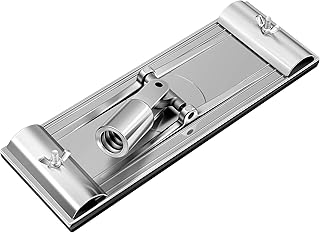
The Hicarer head emphasizes an anti-flip design and a quick-clip system for fast changes. It uses a coarse thread compatible with many poles and offers adjustable angles so you can reach corners and gutters more easily. This makes it a versatile choice for both wall and ceiling work. Caution: check thread compatibility with your current pole setup to ensure a secure fit.
Buying Guide: Key Purchase Considerations
What threading does your pole system require? Heads with Acme or universal threads fit different pole standards. Confirm compatibility before purchase to avoid incompatibilities that require adapters.
Is anti-flip a priority? Anti-flip designs reduce rework by stabilizing the head during sanding, especially on vertical surfaces. This is useful for longer projects and ceilings.
What is the intended use—walls, ceilings, or both? Larger round heads cover more area and can speed up flat sanding, while smaller or rectangular heads offer precision in corners and edges.
How important is quick pad replacement? Quick-release or hook-and-loop systems save time on abrasive changes, which is valuable on large projects or when using multiple grits.
Do you need lightweight or durable materials? Plastic heads are lighter and inexpensive, while aluminum or metal heads offer higher durability and longer life under pressure.
Is the handle included? Some products are head-only and require a separate pole; others come as a head with integrated handle attachments. Plan accordingly for your tool stack.
What is the maintenance requirement? Look for heads with easily replaceable sanding pads and straightforward cleaning to maintain performance over time.
Frequently Asked Questions
- What is a pole sander head with swivel?
It is a sanding head designed to attach to a pole, enabling sanding at various angles to reach walls and ceilings without bending.
- Which head is best for ceilings?
Heads with anti-flip design and larger sanding surfaces, such as 9-inch round heads, tend to perform well for ceilings.
- Do I need a specific thread type for my pole?
Yes. Check your pole’s thread standard (Acme, universal, or other) and match the head to avoid incompatibilities.
- Are no-flip heads more durable?
Anti-flip or no-flip designs improve stability and reduce rework, which can extend the life of the sanding head in demanding tasks.
- Can I use any sanding pad with these heads?
Most heads use hook-and-loop or quick-release pads, so confirm pad size and attachment type to ensure proper fit and finish.
- Should I buy a head and a pole separately or as a set?
Sets are convenient and ensure compatibility, but individual heads let you tailor a kit to your existing pole system.