When choosing watercolor paper for a student or beginner, look for cold-press texture, 140 lb or 230 gsm weight, and a sturdy, warp-resistant surface. These papers tolerate wet techniques, preserve color, and minimize buckling. The following five options balance affordability with reliable performance for schools, homes, and art clubs. Best for: students, kids, and beginners who want forgiving surfaces and consistent results without a steep learning curve. A quick summary table below helps compare suitability and strengths at a glance.
| Product | Weight / Size | Best For | Notes |
|---|---|---|---|
| Prudiut 80 Sheets | 110 lb / 230 gsm, 5 x 7 in | Kids and beginners painting small studies | Cold press; good pigment absorption; warp-resistant |
| UCreate 90 lb | 90 lb, 9 x 12 in | Classroom projects and mixed media | Smooth front/back finish; versatile |
| KOVIEDE 100 Sheets | 102 lb / 230 gsm, 8.5 x 11 in | Group work and practice sheets | Heavyweight; warp-resistant; printer compatible |
| KINLINK 100 Sheets | 140 lb / 300 gsm, 5 x 7 in | Daily practice for young artists | Cotton blend; cold press; textured surface |
| Pacocoast 20 Sheets | 140 lb / 300 gsm, 9 x 12 in | Travel or binders; high-quality practice | Cold press; removable pages option; durable |
Prudiut 80 Sheets Watercolor Paper Bulk

What you get: 80 sheets of 5 x 7 inch watercolor paper, 110 lb/230 gsm. The dry-to-wet performance supports even pigment distribution and reduced warping. Best for: early learners, kids, and students who want multiple small-format studies without frequent reloading.
Why selected: The cold-press texture provides visible tooth while absorbing color evenly, which helps new painters control washes and layering. This bulk option suits classroom use and family art time.
Caution: The smaller 5 x 7 inch size limits large compositions and may feel cramped for ambitious pieces.
UCreate Watercolor Paper

What you get: 90 lb watercolor paper, white, bulk, 9″ x 12″, 250 sheets. Best for: classrooms and clubs that require ample sheets for multiple projects and mixed-media work.
Why selected: The paper features a smooth finish on both sides with uniform texture, supporting clean lines and even color application. A practical, high-volume option for teachers and students.
Caution: Lighter weight than heavier papers; may warp if used with very wet techniques on oversized sheets.
KOVIEDE 100 Sheets Watercolor Paper

What you get: 100 sheets of 8.5 x 11 inch, 102 lb/230 gsm cold-press paper. Best for: students and beginners who want a sturdy surface for daily practice and classroom projects.
Why selected: Thick paper minimizes bleed-through and buckling, supporting wet-on-wet experiments and mixed media. It’s compatible with printers for outlines and preliminary sketches.
Caution: Some beginners may find the 8.5 x 11 inch size less portable for travel or quick studies.
KINLINK 100 Sheets Watercolor Paper
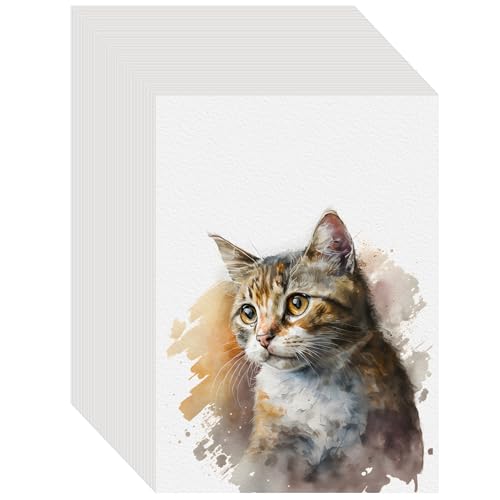
What you get: 100 sheets of 5 x 7 inch watercolor paper, 140 lb/300 gsm cold-press. Best for: young artists and small-format study practice that benefits from a textured surface.
Why selected: The cotton content and higher weight improve pigment adhesion, helping color stay vibrant and reducing warping during washes. It suits daily doodles and school projects.
Caution: The compact 5 x 7 format may require more frequent reloading for larger compositions or group work.
Pacocoast Watercolor Paper
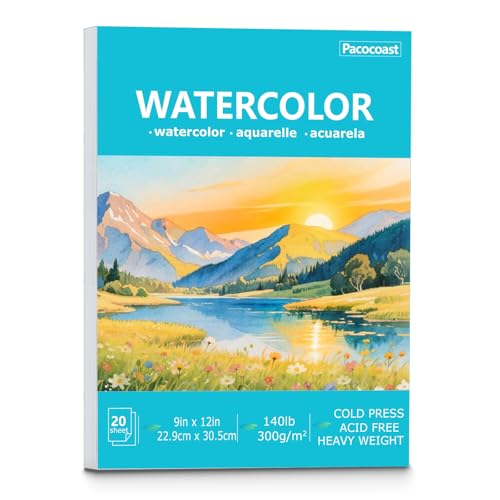
What you get: 20 sheets of 9″ x 12″ cold-press paper, 140 lb/300 gsm. Best for: art journaling, sketchbooks, and studio practice that benefits from a high-weight surface.
Why selected: The professional-grade weight and cold-press texture deliver strong color lift and controlled pigment spread, ideal for wet-on-wet and layered washes. Glue-bound option adds flexibility for removable pages.
Caution: Fewer sheets per pack; better for occasional use or travel rather than heavy classroom workloads.
Buying Guide
What matters most when selecting student-grade watercolor paper is balance between weight, texture, and format. Consider these practical questions:
- What painting method will be used most—wet-on-wet, washes, or dry brush? Heavier paper (140 lb / 300 gsm) handles water better with less buckling.
- Will projects be large or small format? Small formats (5 x 7 in) reduce paper waste and are suitable for daily practice, while 9 x 12 in or 8.5 x 11 in work well for class demonstrations.
- Is portability important? Smaller pads travel easily; loose sheets or bound books offer flexible use in classrooms and clubs.
- Is durability a priority for young artists? Cold-press textures provide a forgiving surface and more forgiving pigment spread than hot-press.
- Does a classroom require bulk quantities? Bulk packs reduce per-sheet cost and support group activities and assignments.
FAQ
- What size is best for beginners? Start with 9 x 12 inches or 5 x 7 inches for manageable studies.
- Is 140 lb paper necessary for beginners? It offers better warping resistance and handling of washes compared with lighter papers.
- Should I choose cold-press or hot-press? Cold-press gives texture for easier pigment control; hot-press gives smooth surfaces for detailed line work.
- Are student-grade papers good for mixed media? Yes, many 140 lb options support watercolors, gouache, markers, and pencil.
- Is binding important? Glue-bound or loose sheets both work; bound notebooks can be more portable and organized for students.
- What should I avoid? Avoid ultra-thin papers for base layer washes to prevent buckling and bleed-through during multiple washes.