Looking for stain resistant interior paint that keeps walls looking fresh longer? This guide highlights five top options ideal for homes across the United States. Each pick is explained with target buyers in mind, plus practical pros and cautions to help you choose confidently. Whether you’re refreshing a kitchen, living room, or ceilings, these paints are chosen for their durability, interior durability, and ease of use.
Summary of selected products (quick reference):
- Zinsser 02774 PERMA-WHITE Mold & Mildew Proof Interior Paint – Best for mold-prone spaces and bathrooms.
- 1 Quart Bulls Eye 1-2-3 Primer Sealer Stain Killer – Best for sealing and stain blocking on tricky surfaces.
- Rust-Oleum 369384 Advanced Dry Door & Trim Paint – Best for doors and trim with fast drying.
- KILZ Stainblocking Ceiling Paint – Best for ceilings with built-in stain blocking and a color-changing dry-time indicator.
- Zinnser 03688 Covers Up Stain Sealing Ceiling Paint – Best for ceilings needing reliable stain sealing.
Zinsser PERMA-WHITE Mold & Mildew Proof Interior Paint (Eggshell White)

Best for bathrooms, laundry rooms, and other high-humidity interior spaces. This self-priming formula minimizes extra steps, while the mold and mildew-proof paint film is guaranteed for five years. Choose this when interior walls need durable resistance to moisture and dirt, with minimal prep work. A potential limitation is that performance relies on proper surface cleaning and ventilation during application.
Bulls Eye 1-2-3 Primer Sealer Stain Killer (1 Quart)

Best for interior and exterior surfaces where gloss is an issue or staining is stubborn. Bonds to glossy surfaces without scuff sanding and performs well at low temperatures, making it a versatile stain-blocking primer sealer. Ideal when you need a reliable base coat before topcoat application. Limitation: may require a dedicated topcoat to achieve the final look you want in busy spaces.
Rust-Oleum Advanced Dry Door & Trim Paint (Quart, Satin White)

Best for doors, trim, and indoor/outdoor metal, wood, or fiberglass surfaces needing a fresh look. This water-based formula emits less odor and dries quickly to a durable satin finish. Choose this when you want faster project completion and lower odor, but be aware it dries faster, so surface handling should be deliberate to avoid lap marks.
KILZ Stainblocking Ceiling Paint (White, 1 Gallon)

Best for all interior ceilings where you want both stain-blocking coverage and a convenient drying process. It adds a pink color that dries white in under an hour, helping you track coverage. A potential limitation is that multiple coats may be required for complete hide on tough stains, and surface stains must be addressed before painting for best results.
Zinsser Covers Up Stain Sealing Ceiling Paint (White, 13 oz)
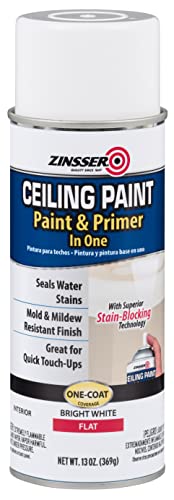
Best for quick-ceiling touchups where a stain-sealing solution is needed, with a simple spray-on option. This product aims to seal interior ceiling stains and provide a solid base coat for finishing. Consider this if you want low-odor touch-ups, but note that spray application may require more careful masking and ventilation to avoid overspray in the room.
Buying Guide
What matters most when choosing stain resistant interior paint?
- Stain resistance and mold/mildew protection: Look for specially formulated films designed to resist dirt, moisture, and mildew growth in high-humidity areas.
- Primer and coverage: Some products are self-priming, while others require a separate primer for better stain blocking or adhesion. Consider the surface type and texture before deciding.
- Drying time and odor: Fast-drying formulas help finish projects sooner, especially in occupied spaces. Low-odor options are preferable for bedrooms or nurseries.
- Finish and sheen: Eggshell and satin finishes tend to balance durability with a soft look, while ceilings often benefit from flat or matte finishes to minimize glare.
- Surface compatibility: Ensure the product suits walls, ceilings, trim, or doors as needed. Some paints are optimized for specific substrates (drywall, wood, metal).
How to choose between primers and five-year protection claims?
- For mold-prone areas, prioritize mold/mildew resistant formulas with durable film protection and easy cleaning.
- For glossy or slick surfaces, a stain-blocking primer like Bulls Eye 1-2-3 improves adhesion and hides previous finishes.
- For ceilings, consider stain-blocking and fast coverage with clear drying indicators to ensure even coats.
What practical steps improve outcomes?
- Prep surfaces properly: clean, repair, and sand as needed for best adhesion before painting.
- Ventilate during and after painting to reduce odor and speed curing.
- Apply multiple thin coats if required rather than a single thick coat to avoid peeling or uneven finish.
Frequently asked questions
- What is the best interior paint for mold resistance? – Look for paints labeled mold and mildew resistant with a durable film finish and long-lasting protection.
- Can I use stain-blocking primer on glossy surfaces? – Yes, primers designed to adhere to glossy surfaces reduce sanding and improve topcoat adhesion.
- Do ceiling paints require special primers? – Some ceiling paints include stain-blocking primers; if not, use a dedicated primer suitable for ceilings.
- Is low odor always less durable? – Not necessarily; many low-odor formulas offer comparable durability with the benefit of a more pleasant application.
- How long should I wait between coats on interior walls? – Follow product guidelines; many surfaces are ready for recoat within 1–4 hours depending on humidity and temperature.
- Are water-based options better for interiors? – Water-based paints generally dry faster with lower odor and easier cleanup, suitable for most rooms.