Looking for a spray paint exhaust fan that can safely vent fumes, reduce overspray, and keep your workspace comfortable? This guide highlights top options designed for paint booths, spray booths, basements, and industrial spaces. Each pick is evaluated for suitability by environment, noise, power, and build quality. The top buyers are professionals needing robust industrial performance, hobbyists seeking portable options, and small shops requiring reliable, compact ventilation.
Summary of selected products
- Fenjidrop 16 Inch Paint Booth Exhaust Fan — Best for large, industrial-grade ventilation in paint booths.
- Fenjidrop 10 Inch Paint Booth Exhaust Fan — Better for mid-size spaces and budget-conscious setups.
- GMSLuu 16″ Axial Fan Cylinder — Best for strong suction with durable copper motor and corrosion resistance.
- GXFCHYL Explosion Proof Exhaust Fan 110V — Best for hazardous environments needing explosion-proof operation.
- Bghdas Utility Blower 8 Inch — Best compact, flexible option for small spaces or portable setups.
Fenjidrop 16 Inch Paint Booth Exhaust Fan

The 16-inch Fenjidrop model delivers high airflow, with 5400 m³/H and a 370W pure copper motor that spins at 1420 RPM for strong ventilation in paint booths or warehouses. This explosion-proof design includes protective grids at both ends for additional safety in hazardous spaces. It’s suited for professionals running large spray applications or industrial facilities where robust air exchange is essential.
Best for: large paint booths and factories needing powerful, reliable exhaust. Limitations: installation may require ample space and proper electrical wiring to accommodate its size and power.
10-Inch High-Velocity Portable Utility Blower

This 10-inch unit features a 3150 RPM motor with a 2600 m³/h airflow capacity and a low-noise operation at about 65 dB(A). It includes a 16.4-foot flexible duct hose, seven metal blades, and flame-retardant materials for safety. Use it for mid-sized spray booths, basements, or workshops where portability and steady airflow are priorities.
Best for: portable use in mid-sized spaces. Caution: may be louder than compact residential fans, and power needs should be considered for long runs of ducting.
GMSLuu 16″ Axial Fan Cylinder
This 16-inch axial fan combines a carbon steel shell with a pure copper motor and multiple corrosion-resistant components. It offers a wide airflow range (2675-5400 m³/h) at 1420 RPM with high air pressure (98-150 Pa). The strong suction makes it suitable for factories, warehouses, and kitchens where robust exhaust is needed.
Best for: environments requiring high-volume air movement with sturdy, corrosion-resistant construction. Limitations: heavier unit may require more robust mounting and electrical support.
GXFCHYL Explosion Proof Exhaust Fan 110V

GXFCHYL’s 110V explosion-proof exhaust fan features a durable carbon steel shell, cast-iron motor housing, and aluminum blades designed for long-term service. It delivers 2880 m³/h air volume at 1450 RPM with a wind pressure around 74 Pa. This unit is ideal for paint booths and industrial facilities where hazardous environments demand explosion protection and reliable performance.
Best for: safety-critical industrial spaces needing explosion-proof ventilation. Caution: installation should follow strict electrical and safety standards for hazardous locations.
Bghdas Utility Blower, 8 Inch
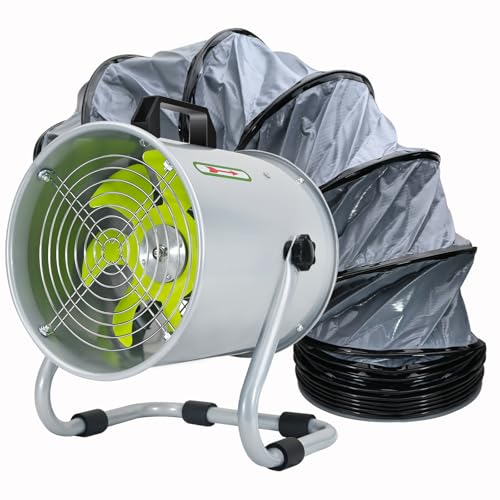
This 8-inch blower provides a solid balance of airflow (around 1300 m³/h) and speed (≈2800 RPM) with a durable steel housing and 60W copper motor. The included 16.4-foot duct and hanging capability add flexibility for small shops, basements, or portable spray booths. It’s a practical choice when space is limited and you need quick setup.
Best for: compact, temporary or portable ventilation needs. Limitation: smaller diameter reduces overall airflow compared to larger units, which may matter for larger spaces.
Buying Guide: Key Considerations For Spray Paint Exhaust Fans
- Space and capacity: Match the fan’s CFM or m³/h rating to the booth size. Larger spaces demand higher airflow to prevent fume buildup.
- Explosion-proof and safety features: In hazardous environments, choose explosion-proof models with protective grilles and robust electrical ratings.
- Motor and materials: Copper windings and stainless or carbon steel housings provide durability and efficiency in fumes-heavy settings.
- Noise levels: Noise can affect comfort and productivity. Compare dB(A) ratings and consider sound-dampening options or placement strategies.
- Portability vs. fixed installation: Portable vents offer flexibility for small shops, while fixed units are better for permanent booths.
- Power and voltage: Ensure compatibility with available electrical supply and consider energy efficiency.
- Maintenance: Look for easy-access grilles, filters, and components to minimize downtime.
- Safety and compliance: Verify adherence to local codes for electrical installations and ventilation in paint operations.
Frequently Asked Questions
- What size exhaust fan do I need for a spray booth?
Answer: It depends on booth volume and the desired air changes per hour; larger booths typically require fans with higher airflow ratings (CFM or m³/h). - Are explosion-proof fans necessary for all spray booths?
Answer: Only when hazardous atmospheres or flammable vapors are present that require protection against ignition sources. - Can I install a portable blower in a fixed spray booth?
Answer: It’s possible but ensure it doesn’t interfere with ventilation design, exhaust ducting, or safety equipment. - How important is copper motor windings for longevity?
Answer: Copper windings generally contribute to better heat tolerance and efficiency, which can extend motor life in continuous operation. - What maintenance steps keep an exhaust fan performing well?
Answer: Regularly inspect and clean grilles, replace filters if present, check duct connections, and verify electrical connections are secure. - Is noise a major concern with spray booth exhausts?
Answer: Yes, persistent loud operation can indicate flow restrictions or mounting issues; consider quieter models or sound-dampening strategies if needed.