Answer: A silicone sealant smoothing tool set helps you achieve clean, professional seal lines with minimal effort. This guide highlights five top silicone caulking tools and shows who each product is best for, plus practical tips to choose the right tool for your project. Ideal buyers include DIY homeowners refinishing bathrooms, kitchen remodelers, and renters seeking neat, durable caulk finishes. The table below compares key products at a glance.
| Product | Best For | |
|---|---|---|
| Saker Silicone Caulking Tool 3-in-1 | All-around DIY grout work | Three functions in one with durable materials |
| STONE REEF 5-in-1 Tool Set | Multiple sealants and large jobs | Five spatulas for varied edges |
| Goopreen 5 in 1 Caulking Tool | Wet bathrooms and kitchens | Replaceable pads and stainless steel head |
| Outus Caulking Tool Set | Simple, budget-friendly tasks | Two-piece set with varied edges |
| ALLWAY CT31 3-in-1 Caulk Tool | Removal and application | Rotatable silicone triangle for three profiles |
Saker Silicone Caulking Tool 3-in-1

The Saker tool combines three functions in one: internal angle scraper, flat angle scraper, and silicone smoother. It is designed for removing old seal, resealing, and smoothing new silicone, with a durable stainless steel blade and white silicone pads. Best for: DIYers who want a compact, all-in-one solution for bathroom or kitchen sealant work. Limitations: small components may require careful handling to avoid gouging delicate edges.
Best use and why
- Best for: Quick, one-hand smoothing and replacement in tight spots.
- Why chosen: The integrated design reduces tool changes and speeds up small to medium jobs.
Caution
Loosen screws slightly for smoother glide, but avoid over-loosening to prevent wobble or loss of control.
STONE REEF Silicone Caulking Tool Set – 5-in-1

This set includes five silicone spatulas designed for silicone, acrylic, and grout sealants. It emphasizes smooth, professional finishes across tiles, sinks, windows, and countertops. Best for: users handling multiple substrates or large tiling projects who want distinct edge profiles. Limitation: requires swapping tools for different sealant types to maintain neat results.
Best use and why
- Better for: Users needing multiple edge profiles for varied joints.
- Why chosen: Five tools provide options without reusing the same edge on different gaps.
Caution
Avoid using the same pad on aggressive surfaces to prevent scratches; clean between uses for durability.
3 in 1 Silicone Caulking Tools (Stainless Steelhead)
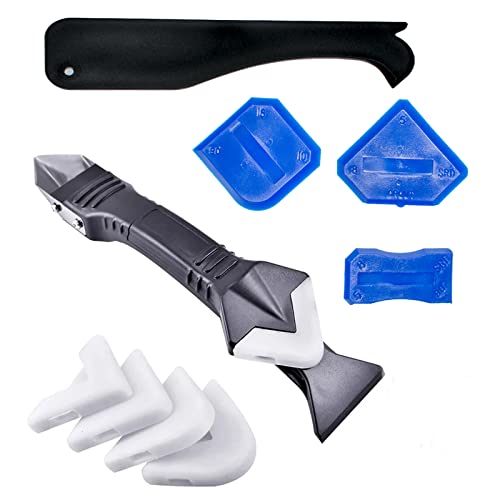
This set provides three functions: stainless steel scraper, silicone trowel, and a join-edge finishing tool with replaceable silicone pads (five pads included). Best for: DIYers who want versatile metal scraping plus smoothing capabilities. Limitation: stainless steel head can be heavier and may require more control for delicate surfaces.
Best use and why
- Best for: Tight corners and stubborn old caulk removal.
- Why chosen: The stainless steel blade handles tougher removals while silicone pads finish edges smoothly.
Caution
Use a light touch on fragile surfaces to avoid gouging or scratching.
Goopreen 5 in 1 Caulking Tool

Goopreen’s tool adds a silicone finishing blade, stainless steel scraper, and replaceable silicone pads with six radii. It also emphasizes reusable pads and a push-pull mechanism for pad replacement. Best for: mixed projects in kitchens and bathrooms, especially where waste reduction matters. Limitation: pad replacements require keeping track of compatible sizes for different gaps.
Best use and why
- Best for: Projects needing both removal and precise finishing in multiple joints.
- Why chosen: Flexible 5-in-1 design with replaceable silicone pads lowers long-run costs and waste.
Caution
Choose the appropriate pad radius to match gap size; mismatched radii can lead to uneven beads.
ALLWAY CT31 3-in-1 Caulk Tool
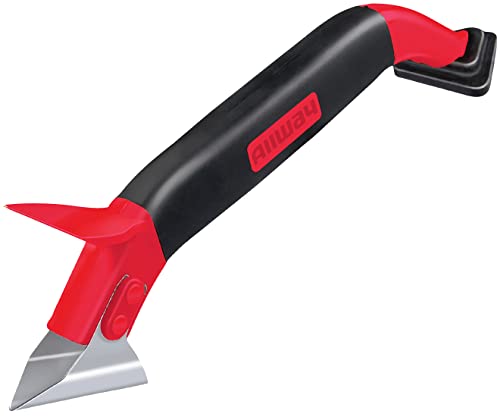
ALLWAY CT31 offers a soft-grip, rotatable silicone triangle for three bead profiles alongside a stainless-steel blade for old caulk removal. Best for: users who value comfort and quick switching between bead profiles. Limitation: blade rotation can feel stiff for very small joints; ensure a comfortable grip before long sessions.
Best use and why
- Best for: Balanced tasks combining removal and smoothing without multiple tools.
- Why chosen: 3-in-1 design with ergonomic grip supports longer, steadier work.
Caution
Test the grip and blade angle on a small area first to avoid slips in tight spots.
Buying Guide: Silicone Caulking Tools For Smooth, Durable Seals
- What to look for: Edge options, blade material, and pad compatibility. Silicone pads prevent surface damage and ensure a smooth finish, while stainless steel blades help remove hardened caulk.
- Material matters: Silicone tools are typically flexible and forgiving for corners; steel blades handle old caulk removal but can scratch surfaces if misused.
- Bead profiles: Look for tools with multiple bead profiles or radii to match joint size and shape. This improves finishing consistency across tiles, sinks, and windows.
- Replaceable pads: Tools with replaceable silicone pads reduce waste and extend tool life. Ensure pad sizes fit common joint gaps.
- Ease of cleaning: Reusable silicone pads and rust-free components simplify maintenance and improve sanitation in kitchens and bathrooms.
- Ergonomics: Soft grips and balanced weight help reduce hand fatigue on larger projects.
- Project scope: For small touch-ups, a compact 3-in-1 design is ideal. For larger tiling jobs, a 5-in-1 or a kit with multiple edge options may save time.
Frequently Asked Questions
- What is the best tool for smoothing new silicone caulk? A silicone smoothing tool with a gentle edge and smooth glide, such as a dedicated silicone trowel or an integrated 3-in-1 tool, is ideal for finishing lines without gaps.
- Should I use a metal head on bathroom tiles? Metal scrapers work well for removing old caulk, but use care to avoid scratching delicate surfaces like polished tile or glass.
- Are replaceable pads worth it? Yes, replaceable pads reduce waste and let you tailor bead size to the joint, improving results over time.
- Can I smooth silicone without masking tape? Yes, but masking tape helps achieve crisper lines on very clean edges and tight corners.
- How do I choose the right bead profile? Match the bead profile to the joint width and depth; narrower gaps need finer beads, wider gaps require broader beads.
- Do these tools work with all sealants? Most tools accommodate common silicone and acrylic sealants; check each product’s listed compatibility for best results.