When choosing a shellac-based stain-blocking primer, the goal is to block tough stains while providing a smooth, paint-ready surface. This guide highlights five top options suited to different project needs, from odor sealing to quick-dry performance. Ideal buyers include homeowners tackling water or smoke stains, painters working on trim and doors, and DIY enthusiasts refinishing furniture. The table below summarizes each product’s best use and ideal scenario.
| Product | Best For | Key Benefit |
|---|---|---|
| RUST-OLEUM 1 qt Zinsser 271009 White Zinsser, B-I-N Advanced Synthetic Shellac Primer | Odor-sensitive spaces, strong stain blocking | Superior odor sealing; high hiding white finish |
| Zinsser Bulls Eye 1-2-3 Water-Base Primer & Sealer, White, Quart | All-surface priming for interior/exterior | Bonds to glossy surfaces; low-temperature application |
| Rust-Oleum 01008 Primer Spray, 13-Ounce, White | Spray-on shellac primer for quick coverage | Shellac-base; versatile for interior and spot exterior use |
| Zinsser Bulls Eye 1-2-3 Plus Spray Primer, White, 13oz | Spray primer for various substrates | High-hide stain-blocking; bonds without sanding |
| Rust-Oleum 271009 Advanced Synthetic Shellac Watercolor Primer | Bulk value pack for small projects | Ultimate stain blocking; value bundle |
RUST-OLEUM 1 qt Zinsser 271009 White Zinsser, B-I-N Advanced Shellac Primer

Best For: Odor-sensitive rooms and heavy stain blocking before painting. This shellac-based primer seals odors and prevents stains from bleeding through finished surfaces. It is particularly effective on knotty wood, smoke, and water stains, making it a go-to for closets, basements, and interiors with strict odor requirements.
Why chosen: It combines superior odor sealing with high hiding power for a clean, uniform base. The white shellac base dries quickly and accepts paint well, reducing recoat cycles.
Caution: Proper ventilation is still recommended due to odor components; allow sufficient curing time before priming against highly porous surfaces.
Zinsser Bulls Eye 1-2-3 Water-Base Primer & Sealer
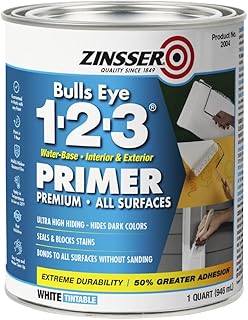
Best For: Interiors and exteriors requiring a versatile, all-surface primer. This moisture-friendly option bonds well to glossy surfaces and works across multiple substrates, making it suitable for walls, trim, doors, and exterior surfaces that need stain blocking without extensive surface preparation.
Why chosen: It eliminates the need for heavy sanding on slick surfaces and performs in cooler conditions than many oil-based primers. It’s a reliable choice when you want a simple, universal solution.
Caution: As a water-based formula, it may not be the best fit for extremely porous or highly fragranced areas without additional sealing steps.
Rust-Oleum Primer Spray, 13-Ounce, White

Best For: Quick, spot priming on interior surfaces or small exterior accents. The spray format accelerates coverage on vertical surfaces and hard-to-reach areas, ideal for doors, trim, and furniture refinishing projects.
Why chosen: This shellac-base primer-sealer offers strong stain sealing and dries relatively fast, enabling a faster project timeline with less mess.
Caution: Spray cans can release stronger odors and require proper ventilation and protective gear. Use in well-ventilated spaces and avoid heavy application in enclosed areas.
Zinsser Bulls Eye 1-2-3 Plus Spray Primer, White, 13oz

Best For: Spray priming on drywall, concrete, wood, metal, and glossy or difficult surfaces. It is designed to block stains and provide uniform adhesion without sanding.
Why chosen: It covers multiple substrates and dries to the touch quickly, which helps reduce downtime between coats on interior and exterior projects.
Caution: While versatile, ensure compatibility with the topcoat you plan to apply to avoid any finish mismatch on very dark colors or ultra-slick surfaces.
Rust-Oleum 271009 Advanced Synthetic Shellac Watercolor Primer

Best For: Bulk value for small projects requiring strong stain blocking and quick handling. This product provides an economical option for repeat use across multiple small jobs.
Why chosen: The shellac-based formula delivers robust stain sealing, which is essential for projects with persistent stains or odor concerns. It’s a practical choice when finishing multiple small surfaces.
Caution: Value packs can lead to higher upfront costs if your project scope is limited; plan usage to maximize benefit and avoid unused open cans.
Buying Guide: Choosing The Right Shellac-Based Stain-Blocking Primer
- What stain do you need to block? Consider knots, water, smoke, or color bleed. Shellac-based primers excel at blocking tough stains and odors.
- Interior or exterior use? Some products are designed for both, while others perform best indoors. Choose accordingly to exposure and environmental conditions.
- Application method preference: Brush/roller vs. spray. Sprays offer quick coverage on large flat surfaces but require masking and ventilation; brushes are more controllable for edges.
- Drying time and recoat window: Quick-drying formulas speed up project timelines, but ensure compatibility with your topcoat and surface.
- Surface compatibility: Glossy surfaces, raw wood, drywall, metal, and masonry may require different primers. All-in-one or all-surface options simplify decisions for mixed projects.
- Ventilation and safety: Shellac-based primers can emit strong odors. Work in a well-ventilated area and use appropriate respirators or masks as needed.
Frequently Asked Questions
- What is a shellac-based primer best used for?
It is primarily used to seal stains and odors and to provide a uniform base for topcoats on various surfaces. - Can shellac-based primers be overpainted with latex paint?
Yes, most shellac-based primers accept latex and oil-based topcoats, but always check the product’s recommendations. - Are there odor concerns with shellac primers?
Some products seal odors effectively but may emit stronger odors; ensure ventilation during application. - Which primer dries fastest?
Many shellac-based primers dry quickly, often within 30 minutes to an hour, depending on humidity and surface. - Can I use a shellac primer on metal?
Some products are suitable for metal; verify the label for metal compatibility and surface preparation steps. - Is priming necessary on previously painted surfaces?
Yes, priming helps with adhesion and stain blocking, especially on shiny or glossy surfaces.