When you need a smooth, even finish with minimal orange peel, these self-leveling sprays and related primers deliver reliable results. This guide highlights five suitable options, showing who each product is best for and why it stands out. Whether you’re refinishing automotive parts, woodworking projects, or metal surfaces, these selections help achieve a consistent, professional look. The buyer-friendly table below summarizes key details at a glance.
| Product | Best For | Key Benefit |
|---|---|---|
| Quicksilver Enamel Spray Paint Leveler | Marine engine components, cowls | Levels the finish after color paint to minimize orange peel |
| Varathane Triple Thick Polyurethane Clear Wood Finish Spray | Interior wood projects (doors, trim, furniture) | Self-leveling formula for quick, single-coat performance |
| Rust-Oleum Stops Rust 2-in-1 Filler & Sandable Primer | Wood, metal, fiberglass automotive surfaces | Filler and sandable base coat for smooth surfaces |
| Rust-Oleum 249279 Automotive Filler Primer Spray | Cars, trucks, other vehicles | Rust-resistant base coat with filler properties |
| SIKA Sikalevel Self-Leveling Underlayment Primer | Concrete and cement screeds preparation | Fast-drying primer that prevents water loss from underlayment |
Quicksilver Enamel Spray Paint Leveler

Best for: outboard engine components where a finished color coat is followed by leveling. The spray is designed to even out the surface after applying a finish coat, reducing a textured or “orange peel” look. It’s a 12 oz can aligned to Mercury Marine specifications, making it suitable when adherence to OE standards matters. Use this on engine covers or cowls that require a uniform final appearance.
Why selected: It targets a specific application with a dedicated leveling purpose, helping ensure a smooth final appearance on automotive or marine parts. Limitation: not a general-purpose wood or metal finish; compatibility is strongest with related OE finishes or coatings.
Varathane Triple Thick Polyurethane Clear Wood Finish Spray

Best for: interior wood surfaces such as doors, trim, and furniture where a fast, one-coat finish is desirable. The self-leveling formula minimizes brush marks and allows a smooth, even coat in a single application. This makes it ideal for DIY wood refinishing projects where time and coverage matter.
Why selected: The product promises self-leveling properties that reduce application steps, delivering a durable, scratch- and stain-resistant finish there is less need for multiple coats. Caution: oil-based finishes can have longer curing times and odor considerations; ensure proper ventilation during use.
Rust-Oleum Stops Rust 2-in-1 Filler & Sandable Primer

Best for: surfaces requiring a smooth, flat base before color coats on wood, metal, or fiberglass. The two-in-one formula provides filler action and sandability, enabling a ready-to-paint surface in fewer steps. This makes it a solid choice for automotive or household projects where a uniform base coat is essential.
Why selected: The additive filler coverage helps reduce the number of coats, and it dries quickly to the touch. Limitation: as a primer, it’s not a topcoat; select compatible topcoats for final color and finish.
Rust-Oleum 249279 Automotive Filler Primer Spray
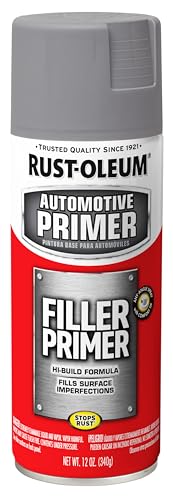
Best for: base coats on cars, trucks, and other vehicles where a high-build primer is needed to fill surface imperfections before top-coating. It provides a rust-resistant base coat while filling in minor imperfections for a smoother final finish. Use this when repairing panels or large surface blemishes.
Why selected: The filler properties help achieve smoothness efficiently. Caution: it is an oil-based primer; ensure proper ventilation and surface compatibility with intended topcoats.
SIKA Sikalevel Self-Leveling Underlayment Primer

Best for: prepping concrete and cement screeds prior to applying underlayment or flooring surfaces that require a uniform base. This primer is designed to prevent water loss from the underlayment and to improve bonding. It’s a practical choice when preparing large floor or substrate projects for leveling operations.
Why selected: It’s a dedicated underlayment primer with fast drying and strong bonding characteristics. Limitation: designed for underlayment preparation, not typical spray-on finishes for furniture or automotive surfaces.
Buying Guide: Self-Leveling Spray Paint And Primer Considerations
- Surface compatibility: wood, metal, fiberglass, or concrete each requires specific formulations for best leveling and adhesion.
- Topcoat compatibility: primers and levelers must pair with the intended final coating to avoid issues such as poor adhesion or cracking.
- Drying time and cure: some products dry quickly, while others require longer cure times; plan project timelines accordingly.
- Finish type: choose between clear polyurethanes, enamel levelers, or filler primers based on whether you need a protective topcoat or a perfectly smooth base.
- Application technique: self-leveling sprays often require even, sweeping motions and appropriate distance from the surface to minimize runs and ensure uniform coverage.
FAQ
- What is self-leveling spray paint best used for?
It is ideal for achieving a smooth, uniform finish on surfaces that tend to show brush or spray texture, such as wood furniture, metal parts, or automotive panels. - Do I need a primer with self-leveling spray paint?
Yes, primers or filler primers can help improve adhesion and create a uniform base before the final color or topcoat. - Can self-leveling sprays be used on automotive surfaces?
Some products are designed for automotive use or compatible with OE finishes; verify product specifications and compatibility with your vehicle’s coatings. - How do I avoid orange peel when using leveling sprays?
Maintain a consistent distance, use light, even passes, and apply in a well-ventilated area to reduce rapid drying that can cause texture buildup. - Are there any safety considerations?
Use in a ventilated space, wear a mask if solvents are involved, and follow label directions for ventilation, temperature, and curing times.