To protect damp interior walls, choose sealant paints and primers designed to block moisture and resist mildew. This guide highlights five top Amazon picks, showing who each product is best for and why. The top picks target basements, bathrooms, and other moisture-prone areas, helping you decide between mold-resistant paints, damp-wall primers, and transparent sealants.
The following quick-reference table summarizes the five products covered in this article. It helps you compare purpose, ideal environment, and key strength at a glance.
| Product | Best For | Main Benefit |
|---|---|---|
| Zinsser PERMA-WHITE Mold & Mildew-Proof Interior Paint | Dry, mold-prone interiors | Mold & mildew resistance with self-priming formula |
| Zinsser WaterTite Damp Wall Primer | Direct-to-damp concrete and masonry | Direct-to-damp bonding and water-blocking primer |
| Zinsser WaterTite General Purpose Waterproofing Paint | Damp basements and cellars | Waterproofing paint for wet spaces |
| 1000g Clear Waterproof Sealant (Water-based) | Indoor/outdoor renovation with invisible coating | Transparent, anti-leak protection for multiple surfaces |
| Waterproof Sealant 35oz (Water-Based Transparent) | Visible protection in moisture zones | Invisible waterproof coating for roofs, walls, and baths |
Zinsser PERMA-WHITE Mold & Mildew-Proof Interior Paint

Best for: small to medium indoor damp rooms where mild-to-moderate moisture is expected and mold resistance is a priority. This interior paint is self-priming, reducing prep time, and offers a mold- and mildew-proof film guaranteed for five years. It resists dirt and moisture on the film coating, helping maintain a cleaner surface in humid interiors.
Why selected: The product targets interior damp walls with a specialized mold-and-mildew-resistant film. It is ideal for bathrooms, laundry rooms, and basements with consistent humidity. The self-priming feature simplifies project steps and accelerates application, beneficial for DIY homeowners and quick-turn projects.
Caution: This is a paint product designed for interior use; for extreme hydrostatic or persistent water intrusion, pairing with a dedicated waterproofing primer may be more effective. Maintain ventilation during painting to reduce drying time and odor.
Zinsser WaterTite Damp Wall Primer

Best for: damp or damp-prone walls where you need a direct-to-damp bonding primer on concrete and masonry. This primer is engineered to bond to interior or exterior concrete, masonry, and cast-in-place surfaces, making it suitable for basements, cellars, garages, and other moisture-prone areas.
Why selected: It stops water leaks and moisture at the source by forming a durable barrier. The product is built to withstand hydrostatic pressure up to 34 psi, providing robust protection in high-moisture environments and creating a better base for subsequent paints or coatings.
Caution: Results depend on proper surface preparation. Surfaces with active leaks or structural water intrusion may require additional waterproofing steps before painting. Not a substitute for professional waterproofing in severe cases.
Zinsser WaterTite General Purpose Waterproofing Paint
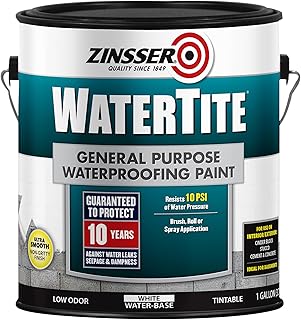
Best for: larger damp areas such as basements or cellars that may become damp or wet. This paint provides waterproofing properties for walls that are susceptible to moisture intrusion and can help reduce dampness over the long term.
Why selected: It covers broad damp-protection needs and adds a protective layer against water exposure, helping to maintain interior surfaces in moisture-prone spaces. The product is suitable when you need an all-in-one option for waterproofing walls without multiple products.
Caution: Coverage varies with porosity and method of application. For very porous surfaces, priming or multiple coats may be necessary to achieve uniform waterproofing.
Waterproof Sealant (Transparent Coating)

Best for: projects where a visible sealant is undesirable but a moisture barrier is needed. This 35oz water-based, transparent coating offers anti-leak performance for roofs, walls, bathrooms, kitchens, terraces, and gardens.
Why selected: It provides an invisible protective layer that can be applied over various surfaces, helping to block moisture without altering appearance. It can be useful for extending the life of exterior and interior surfaces in mixed-damp environments.
Caution: As a transparent sealant, it may require multiple coats for very porous surfaces to achieve uniform coverage. Ensure proper surface cleaning prior to application for best adhesion.
Buying Guide: Practical Considerations For Damp Interior Walls
What to choose: paint vs. primer vs. sealant
Paints like the PERMA-WHITE model add color and mold resistance in one step, suitable for rooms where aesthetics matter alongside moisture control. Primers such as WaterTite Damp Wall Primer are ideal when you need a moisture-anchored base for subsequent coatings. Clear or transparent sealants provide a moisture barrier without changing appearance, best for surfaces where you want to maintain the original look.
Surface compatibility and preparation
Direct-to-damp bonding primers are designed for concrete and masonry. For painted surfaces, ensure the existing film is stable and clean. Remove loose material and treat any active leaks before applying coatings. Always follow manufacturer directions for drying times and layering.
Moisture and hydrostatic considerations
Products with hydrostatic resistance are preferable where water pressure is a concern, such as basements. Look for ratings like PSI resistance and recommendations for damp or wet environments to avoid reversion of materials over time.
Maintenance and longevity
Long-lasting films resist dirt and mildew. Choosing a product with a guaranteed film protection period can reduce touch-up frequency. Consider whether you need repainting cycles aligned with seasonal humidity changes in your area.
Application environment and safety
Work in well-ventilated spaces and use protective gear as needed. Some damp-area coatings may have odor or require curing time before reoccupying the space. Consider whether you need low-odor formulations for shared living areas.
Suggested project scenarios
Bathroom or laundry room with frequent moisture: PERMA-WHITE interior paint for combined color and mildew resistance, possibly paired with WaterTite Damp Wall Primer for added moisture-blocking.
Basement walls with persistent dampness: WaterTite Damp Wall Primer followed by WaterTite General Purpose Waterproofing Paint provides a robust moisture barrier for concrete surfaces.
Exterior or indoor surfaces needing invisible protection: Clear Waterproof Sealant options offer moisture barriers without altering appearance, suitable for roofs and walls that require sealing without color changes.
FAQ
- Do these products require priming before sealing damp walls? Typically, damp-primer products like WaterTite are applied directly to damp surfaces, but prep steps may include cleaning and removing loose material.
- Is mold resistance the same as waterproofing? No. Mold resistance prevents mildew growth on the film, while waterproofing blocks water intrusion. Some products address both, but not all.
- Can I use clear sealants on painted surfaces? Yes, if the surface is clean and compatible with the sealant, but ensure the sealant is rated for interior use and the specific substrate.
- How long does it take for coatings to cure? Curing times vary by product and conditions; always refer to manufacturer guidance for dry and recoat times.
- Will these products fix ongoing water leaks? They reduce moisture intrusion but are not substitutes for structural waterproofing if you have active leaks from the exterior or plumbing failures.
- Can I repaint over these coatings later? Most coatings are designed to accept subsequent coats, but verify compatibility with your next paint or sealant choice.