Answering the search for a durable countertop sealant, these products offer clear protection, water resistance, and a natural finish for wood surfaces. This guide highlights options suited for homeowners, hobbyists, and professional remodelers seeking a food-safe or interior wood finish that minimizes yellowing and wear. The top five picks focus on clear, low-odor formulas, easy application, and long-lasting protection for kitchen counters, islands, and bar tops. The following buyer table summarizes what each product best supports.
| Product | Best For | Key Benefit |
|---|---|---|
| Minwax Polycrylic Protective Finish | Light-colored woods; interior projects | Crystal-clear satin coat; non-yellowing |
| YKF Transparent Waterproof Sealant | Small repairs; visible surfaces | Water-based, flexible film |
| OOTDART Water-Based Sealer | DIY crafts; quick-drying projects | Multi-purpose; included brushes |
| Seal-Once Nano Clear Penetrating Sealer | Outdoor/indoor wood | Penetrating, long-lasting |
| Godora Tung Oil | Countertops, furniture; natural finish | Food-safe, waterproof finish |
Minwax Polycrylic Protective Finish, Clear Satin

Best for light woods and interior projects, this product provides a crystal-clear satin finish that protects against scratches, spills, and dirt. It’s non-yellowing and low odor, making it suitable for kitchen counters that see daily use. It can be applied over both oil- and water-based stains, helping maintain a natural wood look. Caution: while durable, it is a surface coating, not a penetrating sealant, so reapplication may be needed with heavy wear.
YKF Transparent Waterproof Sealant

Best for small repairs and visible surfaces, this water-based coating cures into a dense protective film that blocks water, air, and moisture. It dries clear to preserve the surface appearance, making it suitable for countertop edges, tile seams, and surrounding areas where a transparent layer is desired. Limitation: not a heavy-duty countertop sealer; best for smaller spots or touch-ups and light-duty protection.
2 Pack 120ml Water-Based Sealer With Brush – Multi-Purpose
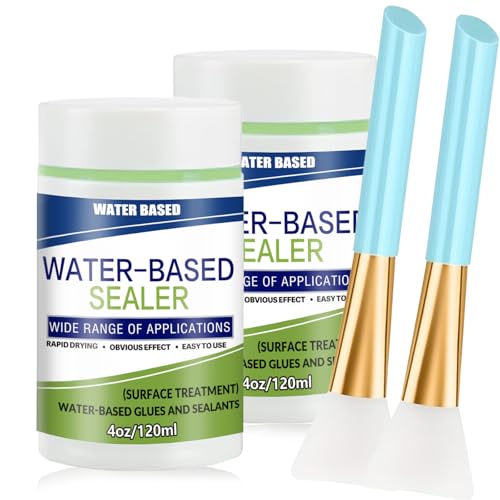
This kit is ideal for DIY crafts and small projects requiring a quick-drying, non-yellowing finish. The included silicone brushes promote even application, reducing streaks. Best for indoor crafts on wood, plastic, or paper where you want a clear seal without strong odor. Caution: not a heavy-duty countertop finish; may require reapplication sooner under high-wear conditions.
Seal-Once Nano Clear Penetrating Wood Sealer

Best for exterior or high-traffic areas, this penetrating sealer forms a long-lasting, water-resistant shield by soaking into the wood. It’s odorless and ultra-low VOC, making it a strong choice for those who want protection beneath the surface. Limitation: penetration depth varies with wood porosity; porous countertops may require multiple coats for even protection.
Godora Tung Oil For Wood Finishing

Best for a natural, food-safe finish on countertops, this tung oil provides protection with a warm luster. It’s praised by woodworkers for interior and some outdoor applications when properly applied. It is waterproof and suitable for cutting boards and furniture. Caution: tung oil requires multiple coats and drying time between applications for an even, durable film.
Buying Guide
What should you consider when choosing a wood countertop sealant? Start with the surface type and use case. For interior counters with light to medium traffic, surface sealants like polycrylics offer a clear protective layer that preserves color. For visible or crafts-focused projects, water-based sealants that dry clear prevent altering the wood’s grain. For a natural look with food safety, penetrating oils and tung oils provide an authentic finish but may require regular upkeep.
- Finish type: Surface sealant vs penetrating sealant. Surface coatings are easier to apply and renew; penetrating seals absorb into wood for long-term protection.
- Drying time and application: Quick-dry formulas save time, especially for kitchens. Look for included brushes if you want an all-in-one package.
- VOC and odor: Low odor options are better for indoor use and small spaces.
- Food safety and durability: If the countertop sees frequent contact with food, choose a finish that’s labeled food-safe after curing and resistant to spills and stains.
- Woods and porosity: Lighter woods can amber or yellow with certain finishes; choose a crystal-clear satin finish for minimal color change.
- Maintenance: Some finishes require periodic reapplication; consider your willingness to refresh the surface regularly.
Frequently Asked Questions
- What type of sealant is best for wood countertops?
For interior countertops, a clear surface sealant such as polycrylic with a satin finish is common, while tung oil or wax-based products provide a natural look with periodic maintenance.
- Are water-based sealants food-safe after curing?
Many water-based sealants are formulated to be food-safe after curing, but always check the product label for specific guidance and cure time.
- How often should countertops be resealed?
High-use counters may need resealing every 1–3 years, depending on wear and cleaning practices. Epoxy and penetrating seals can last longer between applications, but may not be as forgiving with scratches.
- Can I seal an unfinished countertop with multiple products?
Layering multiple products is generally not recommended unless the manufacturer explicitly allows it. Use one compatible finish per surface for best results.
- What is the difference between a penetrating sealer and a topcoat sealant?
A penetrating sealer soaks into wood to form a protective barrier, while a topcoat sits on the surface to guard against scratches and moisture at the top layer.