Answering the search for cabinet sanding tools, these kits and blocks are designed to tackle tight spaces, fine finishes, and durable surface prep. This guide highlights five top options suited for woodworkers, DIY enthusiasts, and professional cabinet refinishing. Each product is evaluated for accessibility, grit range, and versatility in tight corners and flat surfaces.
Below is a quick summary of the chosen products to compare core features at a glance.
| Product | Grit Range | Best For | Key Benefit |
|---|---|---|---|
| TOVPADE 54PCS Premium Micro Sander | 80–800 | Detail work in tight spaces | Smart 3-color grit system and quick-swap backing |
| Sanding Sticks 50 Pcs | 120/280 | Fine detailing in small areas | Double-ended design with matchstick accessibility |
| SKIL Corded Multi-Function Detail Sander | Various (attachments) | Versatile larger projects | 4-in-1 with extra attachments and dust control |
| 24 Pcs Sanding Sponge Assortment | 80–3000 | All-around refinishing and finishing | Wet/dry use with long-lasting abrasive blocks |
| Milescraft 1622 Sand-It Block | Coarse to Fine (grits not specified) | Multiple profiles for flat and curved surfaces | Four profiles with quick-grip sand paper lock |
TOVPADE 54PCS Premium Micro Sander
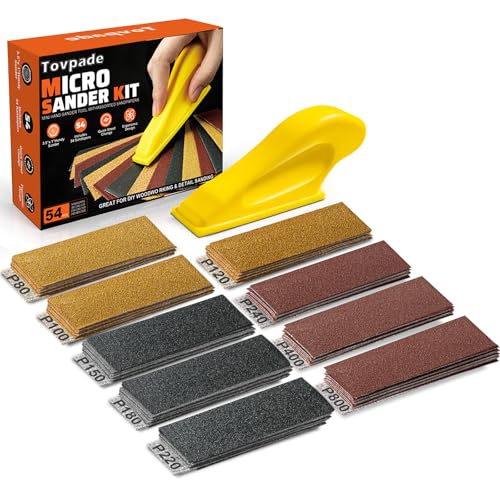
The TOVPADE 54-piece kit combines a compact sanding block with 54 sandpapers spanning 80 to 800 grit. It’s designed for micro finishing, detail work, and hard-to-reach areas inside cabinets. The three-color grit system helps you select coarse, medium, or fine grit quickly, reducing the chance of over-sanding. Tool-free hook-and-loop backing enables rapid paper changes for uninterrupted sessions.
Best for: detailed cabinet work, tight gaps, and frequent grit-changing tasks. Choose this if you want an all-in-one compact kit that covers both coarse material removal and fine finishing in a single kit.
Caution: The kit focuses on detail sanding; for large surface panels, you may want a larger random-orbit sander to speed up material removal.
Sanding Sticks 50 Pcs
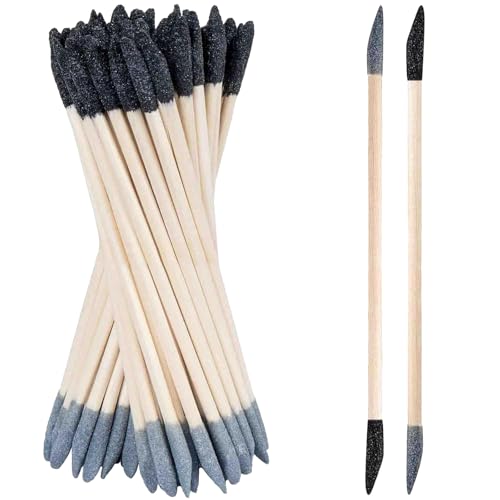
This set provides 50 double-ended sanding sticks with 120 and 280 grit options. The matchstick design helps you reach tiny features, edges, and corners common in cabinet construction. Its dual-ended approach can reduce tool changes and save time on detail tasks. Durable sticks are suitable for fast preliminary work and gentle finishing.
Best for: precise corners and tight spaces in cabinet doors and frames. Opt for this when your job requires frequent access to narrow profiles and careful surface leveling.
Limitation: Grit range is narrower than multi-pack kits, so you may need to switch to other tools for broader material removal.
SKIL Corded Multi-Function Detail Sander
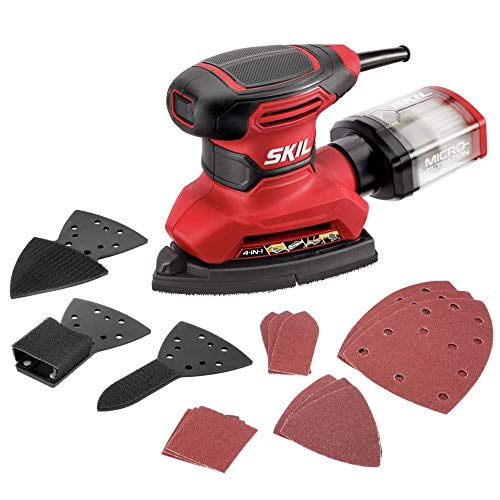
The SKIL SR232301 is a 4-in-1 detail sander with a 1.2 amp motor delivering up to 13,500 orbits per minute. It includes three additional detail attachments for shaping corners, edges, and contours. A micro-filtration system plus a 1-1/4″ dust port helps manage dust during cabinet refinishing. The tool is suitable for projects requiring variable detail work plus dust control.
Best for: larger cabinet refinishing tasks where you need multiple attachments in one tool and prefer integrated dust management. Choose this if you want a versatile sander that covers flat surfaces, edges, and tight contours.
Note: Attachments are designed for easy changes, but ensure you select compatible grits for your specific wood type to avoid over-sanding delicate finishes.
24 Pcs Sanding Sponge Assortment

This all-in-one sponge set covers a wide grit range from 80 to 3000, including ultra-fine polishing. It’s designed for wood furniture refinishing, automotive prep, and general surface smoothing. The sponges are washable, reusable, and provide a comfortable grip with a soft buffering layer to reduce fatigue during long sessions.
Best for: comprehensive cabinet finishing, especially when you need both aggressive material removal and ultra-smooth polishing in the same kit. Ideal for multi-step refinishing projects.
Caution: For extremely detailed work, you may still need a dedicated micro-sanding tool to reach the smallest crevices.
Milescraft 1622 Sand-It Multi-Surface Block

This 4-in-1 sanding block offers flat, convex, concave, and tight-edge profiles, plus compatibility with any ¼ sheet of sanding paper. It speeds setup with quick-snap locks and accommodates a variety of shapes for stock cabinet surfaces and curves. It’s a practical choice for both broad surfaces and detailed edges.
Best for: cabinets with varied contours, including curved rails and tight corners. Choose this when you need a single block that adapts to many shapes without swapping tools.
Limitation: Requires a separate ¼ sheet paper, so plan for paper availability across grits you’ll use.
HYCHIKA Detail Sander

HYCHIKA’s detail sander runs at 14,000 OPM with a compact 1.6-amp motor and includes 12 sheets of sanding paper (P80, P120, P240). It’s designed for tight spaces, paint stripping, and rust removal in metalwork. The 6-hole dust collection system helps keep the work area cleaner, which is beneficial when sanding within cabinet joints.
Best for: quick finishing and paint removal tasks inside cabinet frames or edging. Opt for this when you need a compact, quiet tool with efficient dust control.
Limitation: The included grits are basic; you may want to supplement with a broader grit range for extensive refinishing projects.
Buying Guide: Cabinet Sanding Tool Essentials
What to consider when choosing sanding tools for cabinets
- Grit range coverage: Cabinets benefit from a progression from coarse to very fine grits. Look for kits offering wide ranges or multiple tools that cover from around 80 to 800 grit and beyond for finishing.
- Access to tight spaces: For cabinet interiors, doors, frames, and panel edges, choose tools with compact blocks, double-ended sticks, or contoured blocks that fit narrow gaps.
- Dust management: Dust control helps maintain a cleaner work area and prolongs the life of finishes. Consider tools with dust collection bags, vacuum ports, or micro-filtration systems.
- Versatility vs. specialization: Multi-function sanders save space and setup time, but dedicated detail blocks excel in tight areas. Match your project mix to tool capabilities.
- Durability and reusability: Reusable sanding sponges and durable foam blocks reduce waste and cost over time. Check for strong adhesive backing and tear resistance.
- Ease of paper changes: Hook-and-loop backsides and quick-swap systems minimize downtime between grits, improving workflow on cabinets with multiple stages of sanding.
Which setup is right for you?
- For frequent tight-space work: A micro sander kit (like the TOVPADE set) or a flexible sanding block with multiple grits is ideal.
- For larger cabinet panels: A corded detail sander with additional attachments (like SKIL) helps cover flat areas and corners efficiently.
- For finishing and final polish: A wide-range sponge assortment (like the 24-piece set) provides ongoing finishing options from rough to ultra-fine.
Maintenance tips
- Clean dust from sandpaper and blocks after use to extend life.
- Store sanding sheets and blocks in a dry place to prevent wear and moisture damage.
- Inspect hook-and-loop backs and replace worn pieces to maintain secure attachment.
FAQ
- What grit should I start with when refinishing cabinet surfaces? – Start with a coarser grit (around 80–120) to remove old finish and level surfaces, then progressively move to finer grits (220–400) for smoothing, and finish with 600–800 for polishing, if needed.
- Are sponge sanding blocks better than traditional sheets for cabinets? – Sponge blocks offer comfortable handling and even coverage, especially on curved or contoured surfaces, but you may still need rigid blocks for flat panels.
- Can I use the same sandpaper on multiple tools? – Yes, most sandpapers are compatible with standard blocks and detail sanders, but ensure correct backing type (hook-and-loop) for quick changes.
- Is dust collection essential for cabinet work? – While not mandatory, dust collection improves finish quality and reduces health risks, particularly in enclosed cabinet spaces.
- Which tool is best for tight corners? – Double-ended sanding sticks or contoured blocks are typically best for tight corners and narrow gaps in cabinetry.
- Should I wet-sand cabinet finishes? – Wet sanding reduces dust and can improve finish in the final steps, but ensure the material and finish are compatible with water-based methods.