Answering the common buyer question: which roof coatings deliver long-lasting protection, heat reflectivity, and easy application? This guide highlights five top options suited for different roofs and climates. Best for metal or flat roofs, high-elongation startups, and RVs, these selections balance reflectivity, durability, and ease of use. The top picks are ideal for DIY projects, RV owners, and homeowners looking to extend roof life while reducing cooling costs. The following buying table summarizes key traits for quick comparison.
| Product | Best For | Key Benefit | Limitations |
|---|---|---|---|
| Rust-Oleum 710 Elastomeric Roof Coating | Flat or metal roofs | High reflectivity; rain resistance within hours | White finish may require recoat in heat |
| AMES MSS1 Maximum Stretch Roof Coating | Low-slope roofs; repairs on bendy surfaces | 650% elongation; 88% reflectivity | White only; may require multiple coats for full coverage |
| Gardner Sta-Kool 15-Year Turbo-Dri | Residential and RV roofs | Rain safe in 30 minutes; cool-core pigments | 5-gallon size heavy to handle |
| APOC 208 Silver Guard-F Fibered Aluminum | Coated metal roofs | Bright silver reflective finish; reduces cooling costs | Silver finish may reflect less in certain lighting |
| Liquid Rubber RV Roof Sealant (1 Gallon) | RV, campers, trailers | Flexible, solar-reflective membrane | Limited to smaller rigs; may require recoat |
Rust-Oleum 710 Elastomeric Roof Coating

Brand: Rust-Oleum. Features: 84% initial reflectivity, 74% weathered reflectivity, rain resistant in 6 hours. This elastomeric coating provides a broad white finish designed to reflect sunlight and reduce roof temperatures. Best for metal or flat roofs where quick rain resistance is valuable. Caution: white coatings can require maintenance in hot sun to minimize chalking over time. Suitable for DIY enthusiasts seeking a straightforward, all-weather sealant with quick cure times.
AMES MSS1 Maximum Stretch Roof Coating
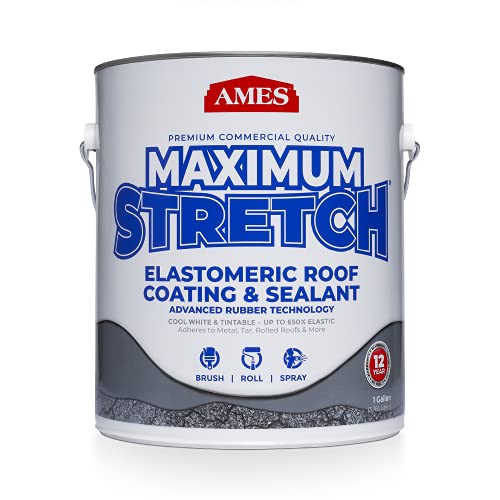
Brand: AMES. Features: 650% elongation; 88% light reflectivity; adheres to metal roofing, tar, rolled roofs. It’s a white, elastomeric acrylic sealant with rubberized properties, ideal for low-slope roofs and RV roof maintenance. Best for roofs that flex or move, where cracking is a risk. Choose this if you need a high-elasticity coating that maintains flexibility. Limitation: application may require multiple coats for full coverage and uniform finish.
Gardner-Gibson Sta-Kool 15-Year Turbo-Dri
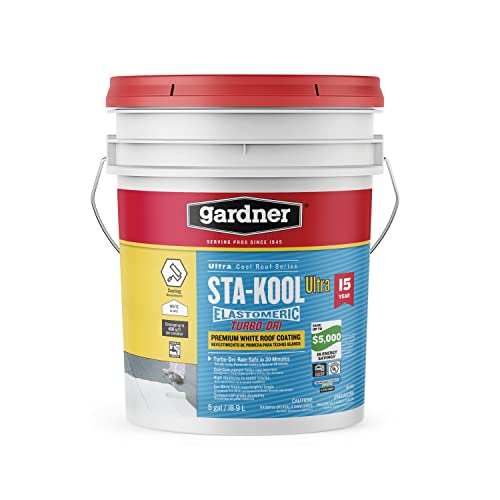
Brand: Gardner. Features: “Rain Safe” in 30 minutes; cool-core technology; single-day recoating. This white roof coating uses heat-reflective pigments to keep interiors cooler and offers rapid protection against sudden rain. Best for quick-turnaround projects and RVs where uptime matters. Caution: the 5-gallon size can be heavy to transport and apply, especially on ladders or roofs with limited access. It’s a solid choice when you need speed and reflective performance in one package.
APOC 208 Silver Guard-F Fibered Aluminum Roof Coating

Brand: Gardner. Features: Aluminum pigment with a reflective silver shield; lowers cooling costs; fibered protection with ASTM D2824 compatibility. Best for metal roofs requiring a bright, durable finish that resists heat gain. Choose this for durable, long-lasting reflectivity and enhanced roof life. Limitation: lighter colored finishes may require more frequent re-coating in harsher sun exposure to maintain reflectivity.
Liquid Rubber RV Roof Sealant (1 Gallon)

Brand: Liquid Rubber. Features: Flexible waterproof membrane; heat reflective properties; designed for EPDM, TPO, fiberglass and aluminum roofs. Best for RVs and travel trailers needing a durable, elastic sealant that tolerates temperature changes. Suitable for DIYers who want a versatile coating compatible with multiple roof substrates. Limitation: 1-gallon capacity may require more coats or multiple containers for larger RV roofs.
Buying Guide
What should you consider when choosing a roof coating?
- Roof type and surface: Metal, felt, EPDM, TPO, or fiberglass each interact differently with coatings. Look for compatibility notes in the features.
- Elongation and flexibility: Higher elongation helps coatings withstand contraction and expansion, reducing cracking on flexible substrates.
- Reflectivity and cooling: Light-reflective finishes reduce heat absorption and interior temperatures, influencing energy costs.
- Drying and rain safety: Some products dry to the touch quickly and offer rain-safe windows, which is crucial for unexpected showers.
- Coverage and ease of application: Consider cure times, required coats, and whether the product is brush, roll, or spray-friendly.
- Storage and handling: Larger containers provide long-term protection but require proper equipment for safe application.
Practical Buying Considerations
- Choose best-for-metal or flat roofs with high reflectivity for immediate heat relief.
- For RV roofs, prioritize elasticity and UV resistance to handle movement and weathering.
- If you need quick protection against rain, select a product marketed as rain-safe within minutes or hours.
- Consider multi-surface compatibility when you have diverse roof materials in one structure.
FAQs
- What coating is best for metal roofs? Answer: Look for aluminum or elastomeric coatings with high reflectivity and good adhesion to metal.
- Can roof coatings be applied in cold weather? Answer: Some products are formulated for flexible performance in cooler conditions, but follow manufacturer guidelines for temperature ranges.
- How soon can I rain-proof my roof after coating? Answer: Many products offer rain-safe times within minutes to hours; check the label for your specific product.
- Do roof coatings require priming? Answer: In some cases, priming improves adhesion; refer to the product instructions for specifics.
- Are white coatings better for cooling? Answer: Yes, brighter white finishes reflect more solar energy and can reduce interior heat.
- Is professional installation necessary? Answer: DIY installation is common for these products; ensure proper surface preparation and safety.