Find the right roof paint with sealant for long-lasting waterproofing and heat reflection. This guide highlights five top options, explaining who each product is best for and why to choose them. Ideal buyers include RV owners seeking flexible, durable coatings, homeowners protecting flat or metal roofs, and contractors needing reliable sealants for various substrates.
The following quick table summarizes the top picks and their key uses. This helps you compare at a glance before diving into detailed sections.
| Product | Brand | Capacity | Best For |
|---|---|---|---|
| Liquid Rubber RV Roof Sealant (1 Gallon) | Liquid Rubber | 1 Gallon | Travel trailers, campers, and RVs needing a flexible, heat-reflective membrane |
| Liquid Rubber RV Roof Sealant (5 Gallon) | Liquid Rubber | 5 Gallons | Larger RVs or multiple-coat applications with extended protection |
| Liquid Rubber Color Roof Sealant (1 Gallon) | Liquid Rubber | 1 Gallon | Flat, low-slope, and metal roofs needing a white, UV-reflective coat |
| RV Roof Sealant (White, 1 Gallon) | CUKWUYBY | 1 Gallon | Water-based, solvent-free option for year-round RV protection |
| TrailRV RV Roof Sealant (1 Gallon) | TrailRV | 1 Gallon | Bright white, solar-reflective coating with quick-dry performance |
Liquid Rubber RV Roof Sealant – 1 Gallon

Best for: RV owners who need a flexible, solar-reflective membrane for EPDM, TPO, fiberglass, and aluminum roofs. This product provides a complete roof protection system with heat-reflective properties to reduce interior temperatures and protect the interior year-round.
Why selected: It combines a flexible waterproof membrane with compatibility across common roof substrates. It pairs with compatible primers to improve adhesion and deliver durable leak-proof coverage. Caution: Ensure proper surface preparation for EPDM or TPO to maximize adhesion.
Liquid Rubber RV Roof Sealant – 5 Gallon

Best for: RVs with larger roof areas or projects requiring multi-coat protection. The larger volume helps reduce resealing frequency and supports complete roof coverage for long-term protection.
Why selected: This option extends the same flexible, solar-reflective benefits to bigger jobs. Limitation: Higher initial cost and heavier handling due to bulk quantity.
Liquid Rubber Color Roof Sealant – 1 Gallon
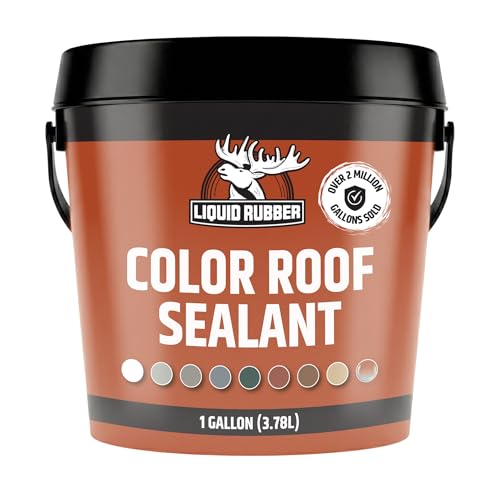
Best for: Flat, low-slope, and metal roofs needing a durable, white, UV-stable membrane. It builds a seamless, flexible coating that withstands roof movement without cracking.
Why selected: It applies like paint and cures into a resilient membrane with significant elongation (up to 900%). Caution: Heavier coats require multiple passes to build the membrane; full cure takes 24–48 hours.
RV Roof Sealant 1 Gallon (CUKWUYBY)

Best for: RVs seeking a water-based, safe-to-use sealant with heat-reflective benefits. This option emphasizes environmental considerations while delivering a protective, flexible membrane.
Why selected: It provides an effective, low-VOC alternative that still forms a durable, leak-resistant seal. Caution: Check compatibility with the exact roof substrate before application.
TrailRV RV Roof Sealant – 1 Gallon

Best for: RV owners who want a bright white, solar-reflective coating with quick-dry properties and a user-friendly, DIY approach.
Why selected: Features a cooling-focused formula with rapid drying and self-leveling benefits, making it suitable for beginners. Limitation: May require multiple coats for thicker membranes in harsher climates.
Buying Guide: Roof Paint With Sealant — Key Considerations
- Substrate compatibility: Confirm the roof material (EPDM, TPO, fiberglass, metal, or flat surfaces) to ensure proper adhesion and seal.
- Elongation and flexibility: Look for products with high elongation (over 900% in some cases) to handle roof movement without cracking.
- Heat reflection: For hot climates, prioritize solar-reflective or white formulas to reduce interior temperatures and energy use.
- Application method: Consider whether you’ll brush, roll, or spray. Some products require multiple coats to build an effective membrane.
- Safety and VOCs: Water-based formulas with low or no solvents are preferable for installations around people and pets.
- Curing time: Note cure times to plan maintenance windows. Some membranes fully cure in 24–48 hours.
- Coverage and budget: Larger containers provide better value for big roofs, but weigh weight and handling against project scope.
- Primer compatibility: Some coatings pair with primers for enhanced adhesion on sensitive substrates like EPDM and TPO.
Frequently Asked Questions
- What is the main advantage of roof sealant coatings over traditional tar?
- Can these products be applied to damp surfaces?
- How many coats are typically needed to build a complete membrane?
- Are these coatings suitable for metal roofs?
- Do I need a primer for EPDM or TPO surfaces?
- How soon can I walk on the treated roof after application?