Looking for an effective primer and paint combo to simplify a project? This guide highlights five top options that work well on interior and exterior surfaces, helping you block stains, improve adhesion, and achieve a uniform final coat. Each pick suits different buyers—from DIY hobbyists to professional renovators—depending on surface type, finish, and environmental conditions. Use this overview to compare how each product fits your needs and to choose a reliable base for your next painting job.
| Product | Best For | Key Benefit |
|---|---|---|
| Zinsser Bulls Eye 1-2-3 Water-Base Primer & Sealer (White, Quart) | Interior or exterior surfaces needing stain blocking | Sticks to glossy surfaces without sanding; low-odor |
| Rust-Oleum Painter’s Touch 2X Ultra Cover Primer (Flat White) | Large indoor/outdoor projects on wood, metal, plastic | Fast-drying, durable coverage from any angle |
| Zinsser 286258 Bulls Eye 1-2-3 All Surface Primer (Gray, Quart) | Varied surfaces including metal, masonry, drywall | Stain-blocking and adheres without sanding |
| 2-In-1 Rust Converter (Black, 35 Oz) | Rusty metal surfaces needing treatment and priming | Converts rust to a paint-ready surface in one step |
| Zinsser Bulls Eye Water-Base Primer & Sealer (White, Quart) | Interior walls, trim, plaster and drywall | Low-odor, fast-drying with strong stain hiding |
Zinsser Bulls Eye 1-2-3 Primer & Sealer, White
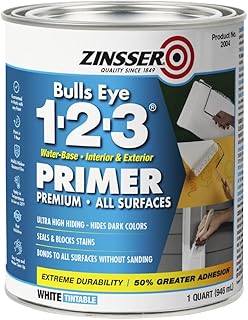
Best for: Interior and exterior projects needing stain blocking and easy adhesion. Why selected: This water-based primer-sealer bonds to glossy surfaces without heavy surface prep, saving time on repairs or refreshes. It tolerates low temperatures down to 35°F, expanding usable conditions. Caution: Performance may vary on severely chalky surfaces; light scuffing can help if adhesion concerns arise.
Rust-Oleum Painter’s Touch 2X Ultra Cover Primer

Best for: Large projects on wood, metal, plastic with fast results. Why selected: An oil-based formula that dries quickly and offers durable, long-lasting coverage. It can be applied to a range of substrates and can be used indoors or outdoors. Caution: Oil-based formulas may have higher odor and require ventilation during use; avoid applying in tight, unventilated spaces.
Zinsser Bull’s Eye 1-2-3 All Surface Primer (Gray)

Best for: Mixed surface types, including drywall, concrete, wood, and metal. Why selected: Water-based formula with strong adhesion and stain-blocking capabilities, ready to recoat in about an hour. Caution: May require multiple coats for very dark stains or heavily finished surfaces.
2-In-1 Rust Converter (Black)

Best for: Rusty metal surfaces needing both rust treatment and priming. Why selected: Serves as a converter and primer in one, forming a stable, paint-ready layer that resists further corrosion. Caution: Works best on surfaces with active rust present; flaking rust should be removed for optimal results.
Zinsser Bulls Eye Water-Base Primer & Sealer, White

Best for: Interior priming on walls, doors, and trim where odor control matters. Why selected: Low-odor formula with strong stain blocking and quick drying. Caution: May require additional coats for stubborn stains or very dark surfaces.
Buying Guide
What should you consider when choosing a primer and paint combo?
- Surface type: Determine whether you’re priming wood, metal, plastic, drywall, or masonry. Some primers are designed for all-surface use, while others excel on specific substrates.
- Light vs. heavy staining: If you need to cover smoke, tannin bleed, or water stains, choose a stain-blocking primer with proven coverage on those issues.
- Finish and odor: Interior projects benefit from low-odor, water-based primers; exterior or high-traffic areas can tolerate oil-based formulas for durability.
- Drying time and recoat window: Faster recoat times speed up workflows but may require more planning for multiple coats.
- Adhesion to glossy surfaces: Some primers bond directly to glossy finishes, skipping scuff sanding when appropriate.
How to plan your application
- Prepare the surface: Clean, repair, and dry the area before priming.
- Test a small area: Check adhesion and finish before committing to the whole project.
- Ventilation and safety: Open windows and use protective gear when applying solvent-based products.
- Application method: Use brushes or rollers for flat surfaces; spray primers for intricate areas if supported by the product guidelines.
What combinations work well together?
For a straightforward project, pair a stain-blocking water-based primer with a compatible acrylic or latex paint. For metal or heavily oxidized surfaces, consider a rust converter that also primes, followed by a suitable topcoat. If odor sensitivity is a concern, opt for low-odor, water-based primers and topcoats.
Best practices by project type
- Interior walls: Choose a low-odor acrylic primer like a Bulls Eye water-base option for good stain blocking.
- Exterior surfaces: A durable, weather-resistant primer such as an oil-based option can resist elements longer.
- Metal surfaces: Use a rust-converting primer if rust is present, then topcoat with a metal-appropriate paint.
- Rapid projects: Use fast-drying primers that allow quick recoat windows to shorten project time.
FAQ
- What is the main difference between water-base and oil-based primers?
Water-base primers typically dry faster, have lower odor, and clean up with water; oil-based primers often provide stronger stain blocking and better adhesion on tough surfaces but have stronger fumes. - Can I use a primer on glossy surfaces without sanding?
Some primers are formulated to adhere to glossy surfaces directly; check product specs and perform a spot test. - Do I need a primer if I’m painting over already painted walls?
If the existing paint is in good condition and the finish is stable, a primer may not be strictly necessary, but a stain-blocking or bonding primer can improve adhesion and coverage on problematic areas. - How long should I wait between primer and topcoat?
Many primers allow a recoat within 1–2 hours to 24 hours depending on the formula and conditions; read the product label for exact guidance. - Is rust converter safe for household use?
Rust converters are designed for metal surfaces and should be used with appropriate ventilation and protective gear as directed on the label. - Can I use these primers outdoors?
Some primers are designed for interior and exterior use; verify exterior suitability if painting outside or in damp environments.