Looking for a portable sander with a dust bag that keeps workspaces clean while delivering solid sanding results? This guide highlights five top options, each suited to different project needs—from compact detail work to belt-sanding big surfaces. The best pick depends on power, portability, and how easily you can connect a dust bag or vacuum. Below is a quick buyer’s snapshot to help you compare at a glance.
| Product | Best For | Key Benefit |
|---|---|---|
| WEN 6321 Belt Sander | General wood projects | Lightweight, detachable dust bag |
| Jellas 3 × 21-Inch Belt Sander | Versatile belt/bench sanding | 6-speed control, includes belts |
| THINKLEARN Cordless Detail Sander | Corners and tight spaces | Cordless with dust bag |
| Dong Cheng 5-Inch Random Orbital Sander | Large flat surfaces | 6 speeds, efficient dust handling |
| HYCHIKA Detail Sander | Fine detailing and finishing | Low-noise, 14,000 OPM |
Note: Each option includes a dust collection feature designed to minimize cleanup, making them suitable for small workshops, DIY projects, and professional tasks alike. The table above helps distinguish which model aligns best with your typical projects, whether that’s furniture refinishing, cabinetry work, or decorative woodwork.
WEN 6321 7-Amp Belt Sander With Dust Bag
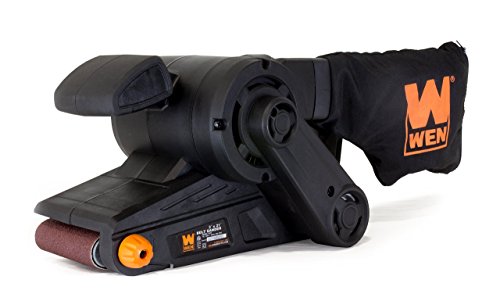
The WEN 6321 uses a 7-amp motor to drive the belt at over 13 feet per second, delivering material removal for medium-duty tasks. It is compact, weighing about six pounds to reduce user fatigue over extended sessions. The included detachable dust bag helps contain sawdust for easier cleanup. Best for: hobbyists and DIYers who want a portable, straightforward belt sander for doors, panels, and smaller surface areas. Caution: belt line visibility and dust bag capacity may require frequent emptying on large projects.
Jellas 3 × 21-Inch Belt Sander With Dust Bag
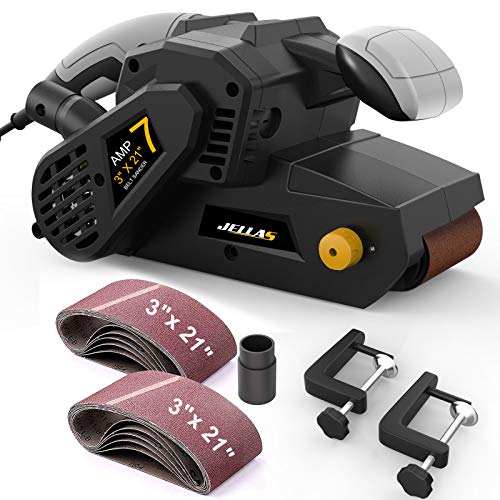
The Jellas sander features a 7-amp motor and a 3″ × 21″ belt with a variable-speed knob ranging from 120–400 rpm. It doubles as a bench sander with two metal C clamps, enabling stable, hands-free operation for larger flat surfaces or edge work. It also includes multiple sanding belts in a set. Best for: users who want a flexible belt sander that can convert into a benchtop tool. Limitation: belt changes may require a bit more setup time compared to simple handheld models.
THINKLEARN Cordless Detail Sander
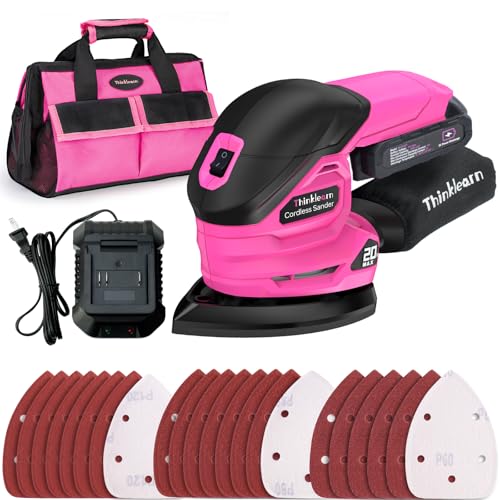
This cordless detail sander runs on a 20V battery and delivers up to 12,000 RPM, with a dust bag included for cleaner workspaces. The compact palm design makes it ideal for trimming corners, refinishing furniture, and tight spaces where larger sanders struggle. Best for: quick touch-ups and precision work without cords. Caution: battery life will influence how long you can sand before recharging.
Dong Cheng 5-Inch Random Orbital Sander
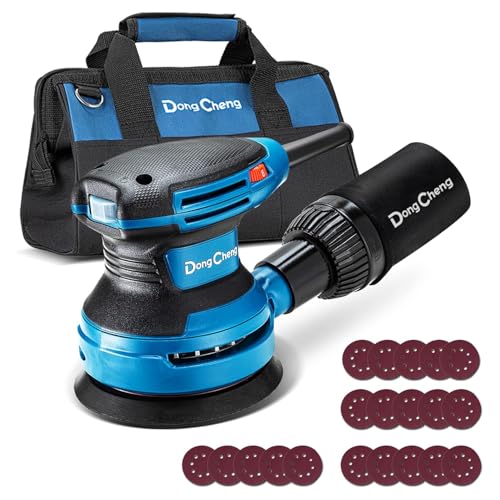
The Dong Cheng orbital sander uses a 380W copper motor with 8000–12,800 OPM and six variable speed settings. The 5-inch pad supports wide surface areas, and a dust box plus dust-sealed switch provide improved dust containment and longevity. Best for: users requiring efficient dust handling on larger panels. Caution: some users may prefer quick-grip belt changes on belt-driven models.
HYCHIKA Detail Sander

The HYCHIKA detail sander operates up to 14,000 OPM and includes 12 sanding sheets in assorted grits. Its dust collection system is designed to maximize dust extraction while you work in tight spots, such as corners and edges. Best for: finishing work and paint removal in constrained spaces. Limitation: higher RPM models can be more aggressive on soft woods, requiring careful control.
Buying Guide: How To Choose A Portable Sander With Dust Bag
Power needs and project scale matter. Belt sanders remove material quickly on flat surfaces, whereas orbital and detail sanders excel in finishing and tight spaces. Dust bags and vacuum compatibility influence cleanup and health considerations.
- Power and speed range: For aggressive material removal, look for higher amperage and wider speed ranges. For precise finishing, slower speeds can be more controllable.
- Portability: If you move between sites, a lighter tool with a compact form factor improves comfort and reduces fatigue over long sessions.
- Dust collection: A detachable bag is convenient for quick cleanup, while a dust port that accepts standard vacuums can offer stronger containment for fine dust.
- Versatility: Some sanders double as bench tools or include multi-grit belts, which adds value for varied projects.
- Accessories: Look for included belts or papers, quick-change features, and clamping options that suit your workflow.
Frequently Asked Questions
- What is a portable sander with a dust bag best for? It helps minimize airborne dust and makes cleanup easier, ideal for DIY projects, furniture refinishing, and small workshop tasks.
- Should I choose a belt sander or a detail sander? Belt sanders remove material quickly on flat, broad surfaces; detail sanders excel in corners and edges where precision matters.
- Is a cordless sander advantageous? Yes for mobility and tight spaces, but verify battery life matches your typical project duration.
- Can these sanders be attached to a vacuum? Many models offer a dust port or compatible dust bags to connect to standard vacuums for superior dust control.
- What grit range is typical for finishing work? Start with finer grits (120–240) for finishing; use coarser grits (60–80) for material removal and shaping.
- Do these sanders require tools for belt changes? Some models have quick-release levers for fast belt changes; others may require more manual steps.