Answering the question “which pool paint colors last and look great?” this guide highlights top-rated pool paints suited for different surfaces and climates. It targets DIYers, pool owners, and contractors seeking durable, UV-resistant finishes. The top picks below are chosen for longevity, ease of application, and compatibility with concrete, plaster, masonry, and pool decks. See a quick comparison table after the intro to help you decide fast.
| Product | Surface Fit | Finish Type | Best For |
|---|---|---|---|
| Dyco Ocean Blue 1 Gallon | Concrete/Plaster/Maccess | Waterborne acrylic | Small to mid-size residential pools |
| Olympic Zeron Bikini Blue 1 Gallon | Plaster, Fiberglass, Steel, Aluminum | Two-part epoxy | High-traffic or sun-exposed pools |
| Olympic Zeron Viking Blue 1 Gallon | Plaster, Fiberglass, Steel, Aluminum | Two-part epoxy | Durable, one-coat finish |
| INSL-X Aquamarine 1 Gallon | Fresh or saltwater pools | Semi-gloss acrylic | Easy-to-clean, casual pools |
| Dyco Ocean Blue 5 Gallon | Concrete/Plaster/Masonry | Waterborne acrylic | Larger projects or decks |
Dyco Waterborne Acrylic Pool Paint, Ocean Blue — 1 Gallon

What it is: A waterborne acrylic pool paint designed for concrete, plaster, or masonry surfaces, delivering a tile-like finish. Best for homeowners seeking an economical, UV-resistant option that also seals hairline cracks.
Best for: Small to mid-sized residential pools and decks where a durable, easy-to-clean finish is desired.
Why selected: It resists UV exposure, fading, water, salt, and chemicals, making it suitable for outdoor pools in sunny climates. The formula aims to minimize cracking and peeling. Consider this if you want a single-gallon solution for a straightforward project.
Cautions: Expect best results on properly prepared surfaces. Large or deep cracks may require additional attention or primer.
Olympic Pool Paint — Zeron Bikini Blue — 1 Gallon

What it is: A two-part epoxy pool paint, designed as a one-coat system for plaster, fiberglass, steel, and aluminum pools. Includes base and catalyst (with short fill for catalyst addition).
Best for: Pools needing a robust, chemical-resistant coating that can cover diverse substrates in a single application window.
Why selected: The two-part epoxy system offers strong durability and chemical resistance, making it a solid choice for sun-drenched or chemically treated pools. Choose this if you want a high-performance epoxy finish and are comfortable with mixing.
Cautions: Requires thorough mixing and timely use to prevent hardening; plan for adequate workspace and curing conditions.
Olympic Pool Paint — Zeron Viking Blue — 1 Gallon

What it is: A two-part epoxy pool paint intended for plaster, fiberglass, steel, and aluminum surfaces. It provides a durable, one-coat feel with a tonal blue finish.
Best for: Pools that require long-term resistance to chemicals, UV exposure, and physical wear, especially in busy backyards or rental properties.
Why selected: Strong adhesion and resistance profile make it suitable for challenging pool environments.
Cautions: As with epoxy systems, ensure complete mixing and timely usage to avoid premature hardening.
INSL-X Waterborne Semi-Gloss Pool Paint, Aquamarine — 1 Gallon
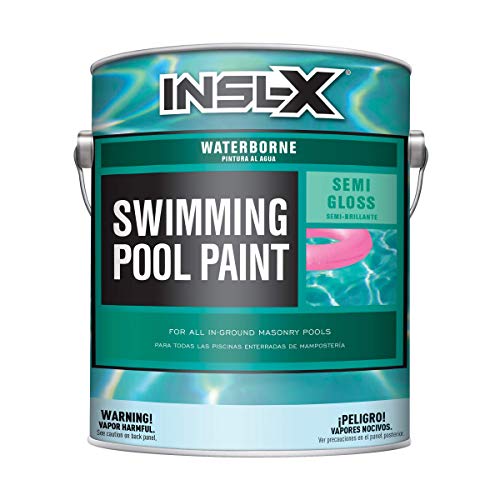
What it is: Waterborne acrylic pool paint with a semi-gloss finish suitable for fresh or saltwater pools. Quick-drying for faster project turnaround.
Best for: DIYers prioritizing easy application and quick coating cycles, especially on smaller or mid-sized pools.
Why selected: Acrylic formulation provides a comfortable balance between ease of use and durability, with compatibility for various pool water types.
Cautions: Seawater exposure can influence finish over time; ensure proper surface prep and curing conditions.
Dyco Ocean Blue Pool Paint — 5 Gallon

What it is: A larger-volume waterborne acrylic pool paint offering the same tile-like finish as the 1-gallon version, designed for bigger projects, decks, and expansive surfaces.
Best for: Larger residential or commercial pool areas where volume discounts and fewer seams matter, such as pool decks and expansive surrounds.
Why selected: Combines the same durability and UV resistance as the smaller option, with extended coverage per gallon.
Cautions: Ensure thorough surface preparation and proper application environment to maximize longevity on larger surfaces.
Buying Guide: Pool Paint Color And Coat Choices
What finish should you choose? Consider the surface type, exposure to sunlight and chemicals, and maintenance expectations. For plaster or concrete pools with heavy sun exposure, epoxy options (two-component systems) offer superior durability. For simpler projects or easier cleanup, waterborne acrylics provide good performance with less stringent mixing and curing requirements.
Do you need a color that hides staining or shows tile-like detail? Deep blues and aquamarines tend to emphasize water, while lighter tones can brighten shade and reduce heat absorption. Consider the impact of your pool surroundings (deck materials, landscaping, and fences) on color perception.
How important is maintenance? Epoxy-based coatings generally last longer and resist chemical attack but require careful mixing and timing. Acrylic coatings dry quickly and are easier to recoat, but may need more frequent touch-ups in harsh conditions. Plan your maintenance schedule and access for future recoats when selecting a color and system.
Surface preparation is critical. Clean and grind the pool surface, repair cracks, and remove any old coatings before applying new paint. Follow manufacturer guidelines for filtration and curing times to avoid peeling or staining. If you have a saltwater pool, confirm the coating’s compatibility with salt exposure and horizontal surface wear.
Frequently Asked Questions
- Which pool paint lasts the longest in sun and chemicals? Two-part epoxy pool paints typically offer the strongest chemical and UV resistance, making them a durable choice for sun-exposed pools.
- Is waterborne acrylic pool paint easy to apply? Yes, waterborne acrylics are generally easier to apply and clean up, with shorter cure times compared to epoxy systems.
- Can I use any paint on any pool surface? Paints are formulated for specific substrates (plaster, fiberglass, metal). Match the product to your pool surface and follow prep instructions for best results.
- Do pool paints require priming? Some systems include primers or require surface sealing; follow the manufacturer’s guidance for prep steps and coatings.
- Can I switch colors mid-project? If the surface is properly prepared and the previous coating is evenly abraded, you can switch colors, but ensure compatibility with the new product type and complete curing between coats.
- Are these colors suitable for outdoor use? All listed options are designed for outdoor pools, with UV-resistant formulations to minimize fading and degradation.