Find the right polyurethane sealant for concrete cracks and masonry joints with options designed for expansion, weatherproofing, and long-term elasticity. This guide highlights five top products—each suited to different repair needs—from high-adhesion concrete fixes to self-leveling sealants for expansion joints. Ideal for builders, DIY homeowners, and property managers, these selections balance flexibility, cure speed, and paintability. Review the quick table below to compare core features at a glance.
| Product | Best For | Key Benefit |
|---|---|---|
| Sika Pro Concrete Fix | Cracks and joints in concrete, brick, stucco | High elasticity with ±35% joint movement |
| Sika Self-Leveling Sealant | Expansion joints in driveways, garages, sidewalks | Self-leveling, quick cure, paintable |
| DAP Concrete & Mortar Filler | Interior/exterior concrete and masonry holes | Ready-to-use, low odor |
| Autosel High Elasticity Crack Filler | Driveways, walkways, patios | High elasticity, weatherproof, fast cure |
| Sika Construction Sealant | Joints and cracks in concrete, masonry, wood | Paintable, weatherproof, flexible |
Sika Pro Concrete Fix – Limestone

Best for sealing cracks and joints where strong adhesion and elasticity are essential. This polyurethane sealant bonds to most construction materials including concrete, brick, and stucco, and supports approximately ±35% joint movement. It is suitable for weatherproofing cracks around windows and doors—an important consideration for seasonal expansion. The cartridge is moisture-resistant and fits most applicator guns, aiding consistent application in DIY or professional projects.
Who it’s best for: Homeowners and contractors needing a versatile, paintable sealant with robust elasticity for concrete and masonry joints. Why chosen: Its combination of strong adhesion, elasticity, and compatibility with a variety of materials makes it a dependable choice for long-term sealing.
Caution: Store the cartridge in a dry place at 40–95 °F to maintain performance. Do not rely on it for continuous underwater exposure unless specified by the manufacturer.
Sika Sikaflex Self-Leveling Sealant – Gray

Best for expansion joints in driveways, garages, sidewalks, and pavement. This polyurethane sealant self-levels to create a smooth, even surface and cures quickly to a tack-free state within hours, with final cure under a week. It is waterproof after curing and maintains elasticity for long-term joint movement. Paintable after curing for a clean finish.
Who it’s best for: Projects requiring a level surface with quick curing and paintability. Why chosen: Self-leveling properties reduce manual smoothing and ensure uniform joints, which is ideal for large inline joints.
Caution: While versatile, avoid applications on damp substrates. Ensure the surface is clean and dry for best adhesion.
DAP Concrete And Mortar Filler – Gray

Best for filling cracks and holes in both exterior and interior concrete and masonry. This ready-to-use filler requires no mixing or additives, making DIY projects straightforward. It is flexible with low odor and cleans up easily with water, offering a practical solution when quick repairs are needed. It typically supports a fast return-to-service time.
Who it’s best for: DIYers and small repairs where ease of use and speed matter. Why chosen: No-mix formula reduces prep time and simplifies repairs in a variety of concrete and masonry contexts.
Caution: It’s a general-purpose filler, so consider a dedicated sealant for long-term joint movement or waterproofing needs in highly exposed areas.
Autosel High Elasticity Crack Filler – 2 PCS
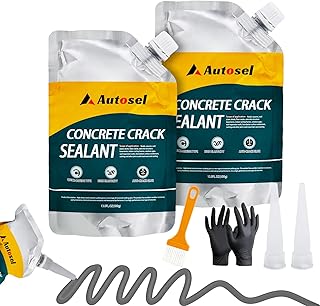
Best for outdoor crack repairs on driveways, walkways, and patios. This high-elasticity formula adapts to ground movement and settlement, helping prevent future cracking. It creates a waterproof barrier that resists rain, snow, and temperature fluctuations, reducing water infiltration and weed growth. The self-leveling nature helps achieve a seamless surface with heavy traffic tolerance.
Who it’s best for: Outdoor spaces with frequent freeze-thaw cycles or seasonal moisture changes. Why chosen: Its elasticity and waterproofing capability provide durable, long-lasting repairs for exposed concrete surfaces.
Caution: Suitable for exterior use, but verify substrate readiness; cleaning and drying the area before application improves adhesion.
Sika Sikaflex Construction Sealant – Limestone

Best for sealing joints and cracks in concrete, wood, brick, and metal framing. It provides tight, strong seals with high elasticity to prevent moisture infiltration. This paintable polyurethane sealant blends well into masonry and is easy to use for long-lasting weatherproofing. It also dries clear enough to avoid staining most surfaces and is versatile for mixed-material projects.
Who it’s best for: Projects requiring a flexible, paintable sealant across multiple substrates. Why chosen: Its blend of strong adhesion, weatherproofing, and paintability makes it a versatile option for combined masonry and wood framing tasks.
Caution: While paintable, some finishes may be easier to apply if surfaces are primed or prepared per guidelines. Ensure proper surface cleaning for best results.
Buying Guide
What to consider when choosing polyurethane sealants
- Expansion capability: Look for products that list allowable joint movement ranges to match your project—especially for exterior cracks and expansion joints.
- Surface compatibility: Confirm adhesion to concrete, brick, stucco, wood, and metal as needed for your project.
- Self-leveling vs. non-leveling: Self-leveling formulas are ideal for flat expanses like driveways; non-leveling are better for vertical joints or edges.
- Paintability and finish: If you want a seamless look, select a sealant that is paintable and compatible with your finish choice.
- Cure speed and weather resistance: Quick cures reduce downtime, while waterproofing after cure protects against moisture ingress.
- Application considerations: Cartridge compatibility with your applicator gun and storage conditions affect performance.
Practical tips for best results
- Prepare surfaces by cleaning, drying, and removing old sealant or debris to maximize adhesion.
- Apply in moderate temperatures and avoid applying on damp substrates unless specified.
- Finish joints with a compatible backer rod or masking for clean, professional edges.
FAQ
- Q: Can polyurethane sealants be painted over? A: Yes, many are paintable after curing; check product specifications for painting instructions.
- Q: Are these sealants suitable for outdoor use in freezing climates? A: Most listed options are designed for exterior use and weather resistance, but confirm freeze-thaw suitability for your region.
- Q: Do I need a primer before applying sealants to masonry? A: Generally not, but on certain surfaces or heavily porous substrates, priming can improve adhesion.
- Q: How long do these products take to cure? A: Cure times vary; some reach tack-free in hours and full cure within days to a week depending on product and conditions.
- Q: Should I use different products for vertical cracks vs. horizontal joints? A: Yes; self-leveling formulas are best for horizontal joints, while high-adhesion or flexible sealants suit vertical cracks and gaps.