These polymer cement waterproof coatings are designed to seal cracks, block moisture, and extend the life of concrete structures. They are best for homeowners tackling basements, roofs, bathrooms, and exterior masonry who want a durable, flexible, and easy-to-apply solution. The following selections cover deep-penetrating sealers, flexible membranes, and ultraviolet-stable finishes suitable for interior and exterior use. The quick-reference table below highlights key aspects to help you compare at a glance.
| Product | Best For | Type | Key Benefit |
|---|---|---|---|
| GOODTAKE Polymer Cement & Concrete Waterproof Coating | Basements and foundations needing deep seal & crack bridging | Deep-penetrating, fast-curing coating | Self-sealing crystal technology for permanent water-blocking seal |
| Liquid Rubber Basement and Foundation Repair Sealant | Active leaks and moisture-prone basement areas | Flexible liquid membrane | 900% elongation for durable, crack-bridging protection |
| Polar Waterproofing Sealant | Interior and exterior wood, brick, stone, and concrete with a clear finish | Clear, invisible sealant | UV-resistant, non-yellowing surface protection |
| SikaTop Seal 107 | Structural waterproofing with breathable protection | Polymer-modified cementitious coating | Good adhesion and breathable protection |
| Saavysil Silane Penetrating Sealer | Concrete, masonry, brick and pavers that benefit from deep protection | Penetrating penetrating sealer | Forms a durable water barrier without changing surface appearance |
GOODTAKE Polymer Cement & Concrete Waterproof Coating

The GOODTAKE coating combines deep penetration with self-sealing crystal technology to form a durable water-blocking layer inside concrete cracks and micro-fractures. It is designed to bridge hairline cracks in walls, floors, basements, bathrooms, kitchens, and roofs. This fast-curing formula is suitable for DIY projects on concrete, masonry, and drywall surfaces. Best for homeowners who want a one-step, interior/exterior solution that cures quickly and reduces future water intrusion.
Best for: basements and foundations needing permanent seal, bathrooms and kitchens with recurring moisture issues. Caution: surface must be clean and dry prior to application for optimum adhesion.
Liquid Rubber Basement and Foundation Repair Sealant

This sealant creates a permanent waterproof membrane for basement waterproofing and foundation repair. It offers high elongation (up to 900%), allowing the material to stretch with expansion and contraction. It acts as a versatile membrane that works well for basement leaks, shower liners, and planter boxes, and it partners with self-leveling concrete applications. Best for projects requiring a flexible, durable barrier that adapts to temperature changes. Caution: ensure compatible surface preparation with concrete or masonry prior to application.
Polar Waterproofing Sealant

The Polar Waterproofing Sealant provides a clear, invisible finish that creates a durable barrier for interior and exterior use. It adheres well to masonry, brick, stone, concrete tile, grout, and wood, delivering reliable moisture protection without altering the surface’s natural appearance. Best for surfaces where a transparent finish is preferred, or where UV resistance and non-yellowing properties matter. Caution: check color compatibility if used on light-colored substrates to avoid any visible sheen changes.
SikaTop Seal 107

SikaTop Seal 107 is a flexible, cementitious coating with polymer modification. It provides good adhesion on prepared substrates and can be mixed to a slurry or trowelable consistency. The coating protects against water penetration while remaining breathable to allow vapor diffusion. Best for projects that require a cementitious, breathable waterproofing layer. Limitation: ensure proper substrate preparation for optimal adhesion and performance.
Saavysil Silane Penetrating Concrete Sealer
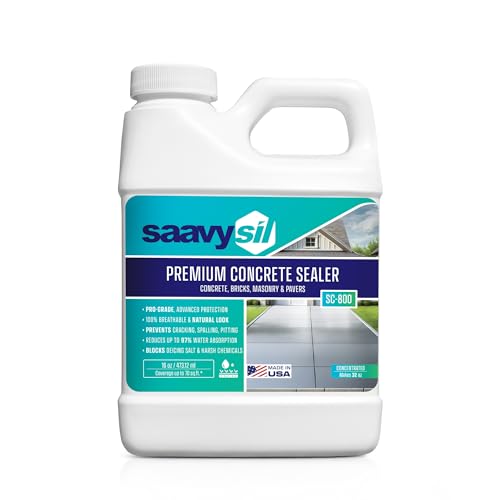
Saavysil Silane Penetrating Sealer offers water-repellent protection by penetrating the concrete surface to form a hydrophobic barrier. It preserves the surface appearance while blocking water ingress, making it suitable for driveways, walkways, and decorative features. Best for projects where maintaining the natural look of concrete or stone is important. Caution: penetrating sealers may require reapplication over the long term depending on exposure conditions.
Buying Guide: Key Considerations for Polymer Cement Waterproof Coatings
- Application environment: Choose a product designed for interior, exterior, or both, and consider moisture exposure, temperature range, and UV exposure.
- Penetration vs. surface film: Penetrating sealers protect by absorption; surface membranes provide a continuous barrier. Pick based on whether you want invisibility or a thick film.
- Flexibility and movement: Structures move. A flexible, crack-bridging formula helps prevent future leaks in hairline cracks.
- Breathability: Some coatings allow water vapor to pass, reducing blistering risks behind the coating. This is important for concrete substrates.
- Ease of application: Look for fast-curing formulas suitable for DIY jobs with brush or roller tools.
- Surface compatibility: Verify compatibility with concrete, masonry, brick, stone, tile, wood, or drywall as needed.
- Color and appearance: If a clear or invisible finish is important, select a transparent sealer; if color change is acceptable, choose accordingly.
Frequently Asked Questions
- What is the difference between penetrating sealers and surface membranes?
Penetrating sealers enter the material to block water internally, while surface membranes form a continuous barrier on top of the surface. - Can these products be used on basements?
Yes, several options are designed for basement waterproofing and foundation protection. - Do these coatings stop active leaks immediately?
Some provide immediate sealing due to self-sealing chemistry, while others depend on curing and penetration to prevent future leaks. - Are breathable coatings better for older concrete?
Breathable coatings reduce moisture buildup behind the coating, which can be beneficial for older or damp substrates. - How long do these coatings last?
Durability depends on substrate, exposure, and maintenance; many are designed for multi-season performance with proper prep. - Is surface preparation important?
Yes; cleaning, removing loose material, and ensuring a dry, sound substrate improves adhesion and longevity.