Plastic wood fillers provide a durable, paintable solution for repairing interior and exterior wood surfaces. This guide highlights five reliable options, explaining who each product suits best, how they perform, and practical considerations to help you choose. Ideal buyers include DIY homeowners tackling furniture repairs, cabinet touch-ups, and small exterior fixes, as well as hobbyists seeking smooth, workable fills that can be sanded, stained, or painted.
| Product | Best For | Key Benefit |
|---|---|---|
| DAP Plastic Wood All Purpose Latex Wood Filler | General interior/exterior wood repairs; corners and vertical surfaces | Planable and paintable with strong nail/screw anchoring |
| 3 Oz Dap 00580 Natural Plastic Wood Latex-Based All Purpose Wood Filler | Small repairs; quick fixes | Compact size for easy handling |
| DAP Plastic Wood-X with DryDex Wood Filler, Natural | Projects needing dry-time confirmation | DryDex pink-to-natural drying indicator |
| Wood Filler – Dark Oak & Walnut (7 oz) | Furniture, cabinets, doors; professional-level finish | Includes sanding papers and a patented spatula |
| DAP Plastic Wood-X with DryDex Wood Filler, Natural 16 oz | Routine repairs on larger surfaces | Large-volume option with DryDex indicator |
Note: All products listed are designed to mimic real wood in texture and workability, offering options for planing, cutting, drilling, nailing, sanding, staining, and painting. The following sections detail each option to help you compare at a glance.
DAP Plastic Wood All Purpose Latex Wood Filler

This white, latex-based filler is designed to look and behave like real wood, making it suitable for interior and exterior repairs. It can be planed, cut, drilled, screwed, nailed, sanded, stained, and painted. The formula resists shrinking, cracking, and crumbling, providing solid nail and screw anchoring for durable repairs. Best for users seeking a versatile, high-adhesion option that handles multiple fasteners and finishes. Caution: excess filler may require extra sanding to achieve a perfectly smooth surface on heavily textured woods.
3 Oz Dap 00580 Natural Plastic Wood Filler

This compact 3-ounce natural filler is ready for quick, on-the-spot repairs where a smaller amount is needed. It resembles natural wood and accepts staining and painting after drying. Best for small chips, edge repairs, and projects where a light touch is sufficient. Limitation: limited volume may require frequent reapplication for larger areas.
DAP Plastic Wood-X with DryDex Wood Filler, Natural

This product combines a wood-like filler with the DryDex Dry Time Indicator, which changes from pink to natural when dry. It’s ideal for interior or exterior projects where you want clear confirmation that the surface is ready for sanding, staining, or painting. Best for users who value a visible, easy-detectable drying cue. Caution: follow DryDex instructions for drying times in varying humidity and temperature conditions.
Wood Filler – Dark Oak & Walnut (7 oz)

Providing an improved formula for exterior and interior use, this filler emphasizes superior adhesion and durability on furniture, cabinets, doors, and tables. It ships with a patented spatula to promote smooth, precise application and reduce waste, plus two sanding papers for a ready-to-finish surface. Best for projects requiring efficient, professional-level finishing tools. Limitation: ensure color matches your wood tone, as variance can affect final appearance.
DAP Plastic Wood-X with DryDex Wood Filler, Natural 16 Oz
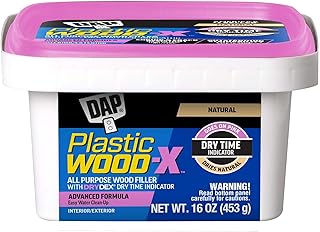
This larger option mirrors the DryDex system in a 16-ounce size, making it suitable for more substantial repairs or frequent use. It provides a wood-like finish and supports planing, cutting, drilling, screwing, nailing, sanding, staining, and painting. Best for ongoing projects or workshops where a reliable, sizeable supply is beneficial. Caution: larger volumes may require more storage space and careful sealing to prevent drying out between uses.
Buying Guide
What should you consider when choosing a plastic wood filler?
- Finish and match: Choose a color that closely resembles your wood or plan to stain/paint after curing.
- Drying and curing: Some products include DryDex indicators; others rely on standard drying times. Temperature and humidity affect drying.
- Surface compatibility: Most fillers work on interior and exterior wood; verify suitability for furniture, cabinets, doors, or trim.
- Workability: Look for latex-based formulas if you want easy sanding and painting; ensure the filler can be shaped for detailed edges.
- Packaging size: For small repairs, a compact tube is practical; for larger projects, a larger container reduces reordering frequency.
- Tool compatibility: Spatulas and included sandpapers can speed up restoration and provide a professional finish.
How to use plastic wood filler effectively
- Clean the repair area to remove dust, oils, and loose fibers.
- Apply filler in thin layers to fill voids, allowing each layer to dry before the next.
- Sand the surface smooth once fully cured; wipe away dust before finishing.
- Stain or paint to match surrounding wood, using compatible finishes for longevity.
What buyers should avoid
- Avoid fillers that shrink noticeably after drying if the repair sits in a high-visibility area.
- Do not rely on a single product for large structural repairs; use a filler designed for structural strength if needed.
- Avoid mismatched color tones if staining; consider tintable or paint-only options for better uniformity.
Frequently Asked Questions
- Is plastic wood filler suitable for outdoor use?
Yes, many formulas are designed for interior and exterior use, but verify the product’s weather resistance and sealing needs.
- Can I stain fillers after they dry?
Most latex-based fillers can be stained or painted, but some may require priming or a specific stain type for best results.
- How long does it take for the filler to dry?
Drying times vary by product, thickness, and environment. DryDex indicators can help confirm when it’s ready.
- Do I need to sand before finishing?
Yes, light sanding after drying helps achieve a smooth, paint-ready surface. Use fine-grit sandpaper for best results.
- What’s the best filler for furniture repair?
Look for filler with strong adhesion and good sandability. The products with included tools and larger volumes suit furniture repairs well.