If you’re painting exterior walls, fences, decks, or siding, a reliable paint sprayer can speed up the job and deliver a smooth, even finish. This guide highlights five top options that are well-suited for outdoor projects, with clear reasons for each pick and practical cautions. Look for models offering adjustable spray patterns, high psi or flow, and easy cleanup to handle large outdoor surfaces efficiently. Best for homeowners tackling fences, decks, or exterior siding, these picks balance power, control, and value.
| Product | Best For | Why It Stands Out |
|---|---|---|
| Graco Magnum 257025 Project Painter Plus | Medium to large exterior projects | Flexible suction from 1–5 gallon buckets; fully adjustable pressure for unthinned paints |
| HomeRight Super Finish Max HVLP | Small to medium outdoor projects | Versatile settings for horizontal, vertical, round patterns; good for furniture and fences |
| VEVOR 750W Stand Airless Sprayer | Large exterior areas | High pressure up to 3000 psi; fast coverage and even atomization |
| WORKPRO 700W Airless Sprayer | Quick outdoor painting jobs | 2900 psi, adjustable pressure; true airless spray for smooth finish |
| LUDERIGNITE 1000W Electric HVLP Sprayer | Wide exterior surfaces | Three spray patterns, large 1400 ml container; cordless variant for flexibility |
Graco Magnum 257025 Project Painter Plus Paint Sprayer
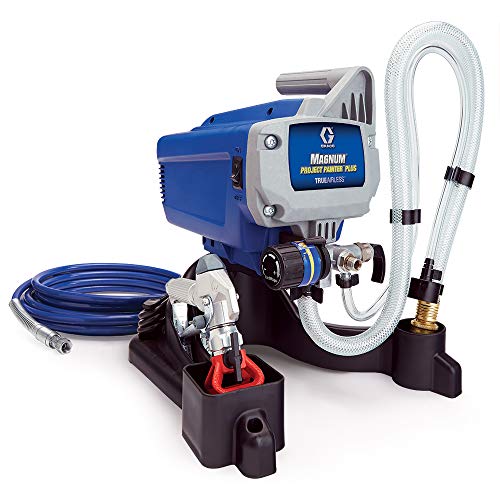
The Graco Magnum is designed for exterior projects that require painting from a bucket or small container. It supports flexible suction from a 1- or 5-gallon bucket and offers fully adjustable pressure to spray paints or stains unthinned at any setting.
Best for: homeowners who need a robust, high-capacity machine for fences, decks, or exterior siding. It is a fit when you value direct-from-bucket spraying and precise control over paint flow.
Limitation: Larger setups may require more space; heavier for prolonged use and cleaning can be more involved than smaller handheld sprayers.
HomeRight Super Finish Max HVLP Sprayer

The HomeRight Super Finish Max is a flexible HVLP sprayer suitable for outdoor projects and smaller structures. It offers adjustable settings for horizontal, vertical, and round spray patterns, plus a material flow control knob to dial in output. It handles chalk-type paints, latex, enamels, primers, sealers, and varnishes.
Best for: DIYers tackling fences, smaller decks, or outdoor furniture where precise control matters. Choose this if you want adjustable spray patterns without a heavy setup.
Caution: May require more passes or careful thinning for very thick coatings; cleanup is typically straightforward but attention to cleanup after heavy use is advised.
VEVOR 750W Stand Airless Sprayer

The VEVOR airless sprayer delivers up to 3000 psi and a maximum flow rate of 1.2 LPM, enabling fast coverage on large exterior surfaces. Its ironclad atomization helps achieve a uniform finish, with accessories that support easy setup, cleaning, and high-level work via an extension pole.
Best for: exterior projects with large area coverage where speed matters, such as exterior walls, fences, or siding. Better for users who want a high-pressure system with a straightforward cleanup process.
Limitation: Higher pressure systems can produce more overspray; ensure masking and protection for nearby plants and surfaces.
WORKPRO 700W Airless Sprayer

The WORKPRO 700W sprayer uses true airless technology to atomize paint directly, reducing overspray and delivering a smooth, even finish. It offers up to 2900 psi and a 0.317 GPM flow rate, with adjustable pressure for different surfaces and coatings.
Best for: projects requiring rapid coverage of outdoor surfaces like fences and walls. Choose this if you want strong, fast performance without thinning the paint. Caution: some thicker coatings may require thinning for optimal flow.
LUDERIGNITE 1000W Electric HVLP Sprayer

This 1000W HVLP sprayer supports three spray patterns (horizontal, vertical, circular) and includes a large 1400 ml container for fewer refills. It is designed for smooth, uniform finishes on outdoor walls, fences, and decks. It emphasizes a strong motor and precise flow control for even coverage.
Best for: outdoor painting tasks where large areas must be covered quickly and consistently. Choose this if you value cordless convenience and a sizable reservoir. Caution: cordless models may require battery management during extended outdoor work.
Buying Guide: Key Considerations For Exterior Spraying
- Project size and surface type: For large exterior areas, consider high PSI (or fast flow) and the ability to spray unthinned coatings. For smaller tasks, HVLP models with adjustable patterns can provide better control and reduce overspray.
- Airless vs HVLP: Airless sprayers excel at speed and unthinned paints, good for fences and siding. HVLP sprayers offer finer atomization and less overspray, which is helpful for furniture and detailed exterior trim.
- Pattern options: Look for horizontal, vertical, and round patterns. Variety helps adapt to different surface geometries and avoids ugly lap marks.
- Container size and refills: Larger reservoirs reduce downtime, especially for outdoor jobs. Consider whether you’ll spray from a bucket or a built-in reservoir.
- Portability and setup: Stand units are powerful but heavier; handheld or cordless models provide flexibility on stairs or ladders. Extension poles can help reach high surfaces without bending.
- Clean-up and maintenance: Easy cleaning, detachable parts, and accessible filters expedite reapplication and prevent clogging from thick coatings.
Frequently Asked Questions
- Q: Which sprayer is best for exterior siding? A: An airless sprayer with high psi (like 2900–3000 psi) can coat siding quickly; ensure the model supports unthinned paint or provide appropriate thinning as needed.
- Q: Do I need to thin exterior paints for sprayers? A: Some products require thinning for optimal atomization; always follow the manufacturer’s recommendations for your chosen product.
- Q: Is cordless spraying suitable for outdoor walls? A: Cordless sprayers offer mobility and convenience for outdoor areas, but verify runtime and battery swap options for lengthy jobs.
- Q: How do I reduce overspray on fences? A: Use a spray pattern that matches the surface, maintain a consistent distance, and practice on a scrap area first. Mask nearby plants and surfaces.
- Q: How should I prepare outdoor surfaces before spraying? A: Clean, dry surfaces, repair any rough spots, and remove loose paint, dirt, and debris for a smooth finish.
- Q: Can these sprayers spray thick primer or stain? A: Many models handle primers and stains; check viscosity guidelines and spray settings to avoid clogging.