Looking for the best paint to refresh a refrigerator interior or exterior? This guide highlights five Amazon-listed appliance paints that are suitable for metal and plastic surfaces commonly found in refrigerators, dishwashers, and other kitchen appliances. Each option is evaluated for its best-use scenario, so you can choose the right finish, adhesion, and durability for your project. The top picks are best for DIY renovators, renters, and homeowners who want a washable, long-lasting coating without complex preparation.
Quick reference: the table below summarizes each product’s core strengths to help you compare at a glance.
| Product | Best For | Finish | Key Benefit | Limitations |
|---|---|---|---|---|
| Rust-Oleum Appliance Epoxy White Spray Paint | Exterior metal surfaces, appliances | Epoxy, washable | Ultra hard, moisture resistant coating | Spray format may require masking and multiple coats |
| DWIL Appliance Paint for Refrigerator | Interior, plastic and metal surfaces | Water-based | Low odor, low VOCs, complete accessories included | Water-based; may require multiple coats for full coverage |
| SENVEN White Appliance Touch Up Paint | Scratch repair on interior/exterior metal | High gloss | Precise brush tip for detail work | Small bottle; best for targeted repairs |
| DWIL Black Appliance Touch Up Paint | Scratch repair on interior/exterior surfaces | Enamel | Built-in brush for easy DIY touch-ups | Limited color range; may be best for accent fixes |
| Rust-Oleum Appliance Epoxy Gloss White | Interior refurbishments, larger surfaces | Epoxy gloss | Fast handling time and broad coverage | Gloss finish may show dust more easily |
Rust-Oleum Appliance Epoxy White Spray Paint

Best for: Those refinishing exterior metal surfaces on refrigerators, dishwashers, or cabinets. The epoxy formula creates a hard, washable surface suitable for daily use. It dries to the touch in 2-4 hours and covers about 7 sq. ft. per can. This is a strong, moisture-resistant option for high-traffic kitchen appliances. A caution: spray application requires proper masking to avoid overspray and an even finish may need multiple light coats.
DWIL Appliance Paint for Refrigerator

Best for: Interior painting on plastic and metal surfaces within appliances such as refrigerators, dishwashers, and ovens. This 32 oz water-based kit includes masking tape, film, a roller, sandpaper, gloves, a brush, and a stir rod, making it a convenient all-in-one solution. It features low odor and low VOCs, which is ideal for indoor use. Caution: While low odor is a benefit, coverage may require multiple coats for even color and durability on textured surfaces.
SENVEN White Appliance Touch Up Paint

Best for: Quick, precise repair on interior and exterior metal surfaces like refrigerators, washers, and dishwashers. This high-gloss enamel touch-up paint is designed for professional-looking patches and includes a handy brush tip for neat, mess-free detailing. It is suitable for matte or glossy finishes depending on surrounding surfaces. Limitation: It is a touch-up product, so larger areas may require a separate base coat and multiple applications for uniform looks.
DWIL Black Appliance Touch Up Paint
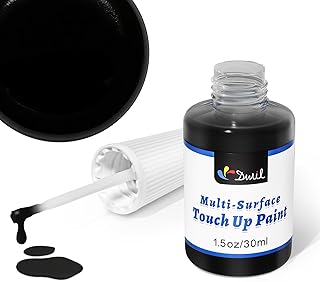
Best for: Repairs and refinishing on black appliance surfaces, including doors, cabinets, and metal fixtures. The bottle features a built-in brush for DIY usability, and it adheres to a range of surfaces. A caution: The color match may vary with adjacent finishes; test on a small area first to ensure a seamless blend with your appliance color.
Rust-Oleum Appliance Epoxy Gloss White

Best for: Interior refurbishments where a durable, glossy finish is desired. The epoxy enamel coating dries to a hard finish and can be handled after 5-9 hours. It provides broad coverage, typically 60-120 sq. ft. per can. Caution: Gloss finishes can show dust and fingerprints more easily, so ongoing maintenance may be necessary to keep the surface looking pristine.
Buying Guide: How to Choose The Right Appliance Paint
What to consider when choosing appliance paint:
- Surface type: Determine if you’re painting metal, plastic, or a mixed surface. Some formulas adhere better to metal, while others are formulated for plastic interiors.
- Finish desired: Glossy finishes are easier to clean but can show imperfections; matte or satin may hide flaws better but require more effort to keep clean.
- VOC content and odor: For indoor spaces, consider low-VOC products to minimize odor and emissions during drying and curing.
- Drying and cure times: If you need the appliance ready quickly, look for fast-drying options, but plan for full cure where possible.
- Application method: Sprays offer smooth coverage on flat exterior surfaces but require masking; brushes and kits are better for interiors and touch-ups with more control.
- Coverage: Compare square feet per can to estimate how many cans you’ll need for larger projects.
Practical Tips For A Successful Paint Job
- Clean and dry surfaces thoroughly before painting to improve adhesion and long-term durability.
- Mask off areas you don’t want painted, such as handles, seals, and nearby cabinetry.
- Apply in thin, even coats; multiple light coats yield better results than a single thick coat.
- Follow product-specific curing times before heavy use to maximize durability.
- Test a small area first to confirm color match and finish with the chosen surrounding surfaces.
FAQ
- Q: Can I paint inside a refrigerator or freezer?
A: Yes, with low-odor, low-VOC, water-based or enamel appliance paints designed for interior use. Follow product instructions for curing times and temperature considerations. - Q: Do appliance paints require a primer?
A: Some projects benefit from a primer for adhesion, especially on glossy surfaces or plastic. Check the product guidelines for primer recommendations. - Q: How long should I wait between coats?
A: Drying times vary by product; typically several hours between coats, with full cure taking longer. Follow manufacturer guidelines exactly. - Q: Are these paints safe for kitchen interiors?
A: Many are formulated for indoor use with low VOCs, but always verify the product’s safety data and use in a well-ventilated area. - Q: Will these paints withstand moisture in a refrigerator?
A: Epoxy-based formulas and some enamel paints are designed for moisture resistance, making them suitable for humid environments inside appliances.