Choosing the right high-heat paint for exhaust components is essential to protect metal from extreme temperatures, weather, and corrosive substances. This guide highlights top options designed to withstand automotive exhaust conditions, offering rust prevention, durable finishes, and easy application. Each product below is evaluated for heat tolerance, adhesion, curing time, and coverage to help you select the best coating for manifolds, headers, pipes, and mufflers. All selections are suitable for intermittent temperatures common to exhaust environments and provide at least a temporary aesthetic upgrade alongside functional protection.
| Product | Temperature Tolerance | Finish | Key Benefit |
|---|---|---|---|
| Rust-Oleum 248903 Automotive High Heat Spray Paint, Flat Black | Up to 2000°F intermittent | Flat Black | Rust resistant with stops rust formula |
| Rust-Oleum 248904 Automotive High Heat Spray Paint, Flat Aluminum | Up to 2000°F intermittent | Flat Aluminum | Ultimate protection with corrosion resistance |
| Rust-Oleum 249340 Automotive 12-Ounce High Heat Primer Spray Paint, Gray | Up to high heat; ideal as base coat | Gray Primer | Rust resistant base coat for engines and mufflers |
| VHT SP106 Flameproof Coating Very High Heat Spray Paint – Silver Flat | Very high heat, flame resistant | Silver Flat | Extended life for high heat surfaces, ceramic silicone base |
| Seymour 16-1201 Hot Spot High Temperature Paints, Aluminium | Up to 1200°F continuous | Aluminium | Porcelain-like bond, resists blistering and discoloration |
Note: The products listed here are widely used for automotive exhaust components and are selected for durable heat resistance, ease of application, and compatibility with metal surfaces. Always follow label directions for surface prep, drying times, and full cure before exposure to heat.
Rust-Oleum 248903 Flat Black High-Heat Spray

This Rust-Oleum coating is formulated to resist gas, oil, and environmental elements while remaining effective on exhaust components exposed to intermittent temperatures up to 2000°F. The Stops Rust technology helps prevent corrosion and rust, making it suitable for automotive manifolds, headers, and exhaust pipes. It dries to the touch in about 30 minutes and covers roughly 10 square feet per can. For best results, apply multiple light coats and allow full curing as directed by the label. The flat black finish can help reduce glare and provide a discreet look beneath the vehicle hood.
Rust-Oleum 248904 Flat Aluminum High-Heat Spray

Designed for automotive parts and surfaces subjected to intermittent high heat, this aluminum variant provides a metallic look while delivering robust protection against rust and corrosion. The enamel formula includes Stops Rust protective properties and dries to the touch in about 30 minutes, covering up to 10 square feet per can. This finish can help maintain the appearance of exhaust components under heat while maintaining protective performance during operation and exposure to automotive fluids.
Rust-Oleum 249340 High Heat Primer Gray

This high heat primer is formulated to be used on metal surfaces like automotive engines and mufflers. The oil-based paint with the Stops Rust formula provides a rust-resistant base coat that can be topped with a high heat topcoat. It covers up to 12 square feet and typically dries to the touch in 30 minutes, with topcoating possible after about one hour. Using a primer under a high-heat topcoat can improve adhesion and finish longevity on exhaust components that heat up during operation.
VHT SP106 Flameproof Coating, Very High Heat
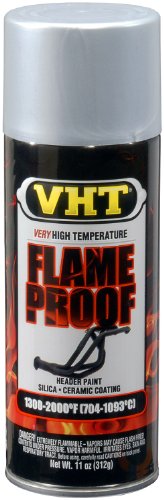
VHT SP106 offers a flame-proof coating designed for long life on high-heat surfaces. Its matte finish uses a ceramic silicone base, and it’s commonly used on automotive exhaust areas to resist scorching and cracking. It works best when paired with a primer color and clear coat process to extend durability and maintain color integrity across temperature cycles. This option is particularly suitable for pipes, manifolds, and areas facing direct exhaust heat exposure.
VHT SP998 Flameproof Coating, Cast Iron Flat

Another VHT flameproof option, SP998 provides a cast-iron look with flat finish while delivering high-temperature performance. It remains suitable for exhaust applications and maintains color and finish during heat cycles. Like SP106, it is most effective when used with proper surface prep, primer, and clear coats, enabling a stronger overall finish for exhaust components facing high thermal stress.
Seymour 16-1201 Hot Spot Aluminium

Seymour’s Hot Spot line offers an aluminum finish designed to withstand up to 1200°F continuously. It creates a porcelain-like bond that resists blistering, peeling, discoloration, and loss of adhesion. This makes it a strong option for exhaust headers, manifolds, and hot-dip areas where a metallic sheen and reliable performance are desired. Proper curing per label directions enhances its long-term performance under thermal cycling.
Vallejo Metal Color Jet Exhaust

Note: Vallejo Metal Color is a water-based model paint line rather than a true automotive high-heat coating. It’s included here for completeness in exhaust-related aesthetics where model-grade finishes may be used for display or non-structural components. It dries quickly and can be tinted or layered with other paints, but it is not intended for continuous automotive heat exposure. For actual exhaust components, rely on purpose-built high-heat automotive coatings described above.
Helix Helix Racing High-Temp Black

Helix Racing’s high-temperature paint is designed to extend the life and color of exhaust system components. It uses an exclusive ceramic formula to increase heat dispersion, helping to maintain paint finish under high-temperature conditions. This option is especially relevant for components requiring color retention and improved heat management in performance applications. As with all high-heat coatings, proper surface preparation and curing are essential for longevity.
Buying Guide: Key Considerations For Exhaust Coatings
- Heat range and duration: Select coatings rated for the temperatures your exhaust components experience. Intermittent heat tolerance often suffices for pipes and manifolds, but continuous exposure may require higher max temperatures.
- Finish and appearance: Flat black or aluminum are common for hidden or visible exhaust parts. Some finishes mimic cast iron or metallic appearances, which can matter for restoration projects or show cars.
- Base coat strategy: Primers (like Rust-Oleum 249340) can improve adhesion and provide a uniform surface, increasing longevity when paired with a topcoat.
- Adhesion and rust resistance: Look for products with Stops Rust or similar rust-prevention formulations to extend the life of coatings under heat, humidity, and road elements.
- Application and curing: Spray in thin, even coats. Allow proper flash-off time between coats and cure fully as per label directions to achieve maximum durability.
- Surface preparation: Clean and degrease metal surfaces; remove rust and loose paint. A light scuff with fine-grit sandpaper can improve adhesion for many high-heat coatings.
- Re-coating and maintenance: Some products require topcoats for UV protection or additional heat resistance. Inspect for blistering, cracking, or fading and recoat as needed after proper curing.
- Safety and ventilation: Use in a well-ventilated area and wear protective equipment. High-heat paints can release strong fumes during application and curing.
- Compatibility and coverage: Check the label for coverage per can and ensure the product is compatible with automotive metal surfaces and corrosion protection needs.
- Color retention under heat: Some metallics and silvers tend to darken slightly with heat. Decide whether color stability or a true metallic look is more important for your project.
When selecting a coating for exhaust components, balance heat tolerance, adhesion, rust resistance, and the desired aesthetic. For restoration or show-quality finishes, primers and topcoats can enhance longevity and appearance. For standard protective coatings, single-step high-heat paints may be sufficient and quicker to apply. Always follow the product’s label instructions for best results and ensure the area is properly prepared before application.