Answering the question, this guide helps buyers choose the best gray-beige paints across spray, acrylic, and chalk finishes. It highlights five versatile options ideal for furniture, walls, crafts, and accents. Whether you want a warm, inviting beige-gray or a cooler stone tone, these picks cover interior and light exterior use. Each entry explains who it’s best for and why, plus a practical caveat to consider before you buy. A quick comparison table follows to help you scan options at a glance.
| Product | |
|---|---|
| Rust-Oleum Painter’s Touch 2X Ultra Cover Satin Smokey Beige | Indoor/outdoor surfaces; wood, plastic, metal, masonry |
| Liquitex BASICS Acrylic Paint, Neutral Gray Value 5 | Learning color theory; smooth layering and grinding brush strokes |
| Rust-Oleum Painter’s Touch Latex Acrylic Satin Stone Gray | Wood, metal, plaster; larger indoor projects |
| Chalky Chicks Matte Wolf Gray | Furniture, cabinets, décor with no sanding |
| Rust-Oleum Aged Gray Chalked All-in-One | Furnishings and décor with easy one-coat coverage |
Rust-Oleum 299883 Painter’s Touch 2X Ultra Cover Satin Smokey Beige

Best for: Quick projects on multiple surfaces. This oil-based spray is ideal for interior and exterior use on wood, plastic, plaster, metal, masonry, and unglazed ceramic. It resists chips and provides long-lasting protection, with a fast dry time (touch in about 20 minutes) and coverage up to 12 sq ft per can. Choose this if you want a convenient spray option for a warm beige-gray look on varied items like furniture, planters, and accents. Caution: oil-based finishes may require extra ventilation and cleanup with mineral spirits.
Liquitex BASICS Acrylic Paint, Neutral Gray Value 5

Best for: Learning and color experiments. This acrylic offers a thick, creamy texture with a satin finish and good pigment load. It retains peaks and brush strokes, making it suitable for teaching color theory, layering, and blending techniques. The 4-oz tube is practical for small projects and color mixing. Limitation: may require more coats on non-porous surfaces to achieve full opacity.
Rust-Oleum 267335 Painter’s Touch Latex Acrylic Paint, Satin Stone Gray
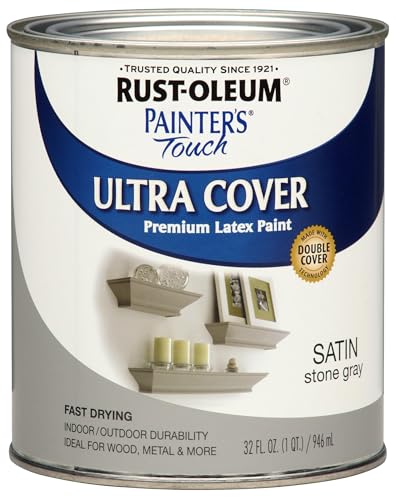
Best for: Large indoor projects needing a low-odor, water-based option. This satin stone gray latex acrylic paint covers wood, metal, plaster, masonry, or unglazed ceramic, with up to 120 sq ft of coverage and a 30-minute dry-to-touch time. It’s a good pick for walls or furniture where a durable, low-odor finish is preferred. Caution: while low odor, it’s still important to ventilate and use proper masking for surrounding areas.
Chalky Chicks Matte Wolf Gray Chalk Paint

Best for: No-sanding, all-in-one chalk paint on multiple surfaces. This matte Wolf Gray chalk paint claims to work on wood, metal, ceramic, cabinet surfaces, and more with minimal prep. It’s ideal for distressed or contemporary looks on furniture and decor. Limitation: chalk finishes can be more porous and may require a protective topcoat for high-wear pieces.
Rust-Oleum Aged Gray Chalked All-in-One

Best for: Furniture refreshes with ease. This all-in-one chalk paint provides one-coat coverage without primer, sanding, or topcoat, and it’s designed for adherent surfaces like wood, metal, and ceramic. Ideal for updating nightstands, cabinets, and décor with a soft aged gray look. Caution: results may vary with heavily glossy surfaces or very slick finishes; some prep could improve adhesion.
Buying Guide: Key Considerations For Gray Beige Paint Choices
- Finish and sheen: Decide if you want satin, matte, or chalky textures to match your project’s durability and style. Chalk finishes are forgiving but may require sealant for high-use surfaces.
- Surface compatibility: Confirm the product’s recommended surfaces. Sprays work well on metal and plastic, while acrylics suit wood and walls; chalk paints handle a broader range with less prep.
- Ventilation and cleanup: Oil-based sprays need good ventilation and solvent cleanup. Water-based acrylics are easier to clean with soap and water but may require stepwise layering for full coverage.
- Durability vs. ease: For high-traffic furniture, choose a durable satin or for easier refinishing, chalk paints with optional topcoats. For walls, a latex acrylic can offer better washability.
- Color behavior: Gray-beige tones shift with lighting. Consider testing a small area to see how it reads in your space before committing to a full project.
Practical Tips For Picking The Right Gray Beige
- Match existing décor: Compare sample swatches to furniture, flooring, and fabrics to see how the gray-beige reads at different times of day.
- Prepare surfaces properly: Clean and prime where needed, especially on glossy or oily surfaces, to ensure even pigment and adhesion.
- Test patches: Apply small test swatches on the actual surface to evaluate color, coverage, and finish under lighting conditions similar to the room.
- Layering strategy: When using acrylics, consider base coats in a lighter gray beige and finish with the chosen topcoat for depth and durability.
- Topcoat choices: A clear matte or satin topcoat can alter the final appearance and provide protection for furniture and high-traffic areas.
FAQ
- What is the best gray-beige paint for furniture with no sanding?
– Chalk paints like Chalky Chicks or the Rust-Oleum Aged Gray Chalked All-in-One are designed for minimal prep and no sanding on many surfaces. - Is a spray primer necessary for light gray-beige finishes?
– For most spray paints, a primer isn’t required on properly prepared surfaces, but on very slick or glossy surfaces primer can improve adhesion. - Can I mix gray-beige paints to achieve a custom tone?
– Yes, acrylics like Liquitex BASICS can be blended with other neutrals to reach a precise beige-gray shade, with drying behavior preserved by the medium. - Which finish is best for kitchen cabinets?
– A durable satin or semi-gloss latex acrylic is typically preferred for cabinets due to ease of cleaning and wear resistance. - Are oil-based sprays safe for indoor use?
– They require good ventilation and proper ventilation practices; consider water-based alternatives for indoor applications when possible. - Will gray-beige read differently in daylight vs. artificial light?
– Yes. Test swatches at both daylight and artificial lighting to ensure the color meets expectations in your home.