Best options for outdoor wood signs balance water resistance, UV protection, and ease of application. This guide highlights five sealers that suit different sign projects, from fresh-cut wood to weathered surfaces. Use-case notes indicate who each product is best for, such as DIY crafters, professional sign makers, or homeowners maintaining exterior decor. The selections aim to offer clear, durable finishes without adding gloss or sacrificing natural wood tones.
Summary of chosen products:
| Product | Best For | |
|---|---|---|
| Olympic WaterGuard | New, pressure-treated, or weathered wood | Clear waterproofing and outdoor protection |
| Rust-Oleum Universal All Surface Clear Topcoat | Multi-surface projects and signs with fade resistance | Excellent adhesion on diverse materials |
| Thompson’s WaterSeal Clear Wood Sealer | General exterior wood projects | Dries clear and helps prevent water damage |
| Seal-Once Marine | Outdoor decks, docks, and coastal wood | Marine-grade UV stability and water repellency |
| Rain Guard Wood Sealer Spray | Low-odor, no-gloss finish for natural look | Low VOC, water-repellent with natural appearance |
Olympic WaterGuard 11 oz. Clear Exterior Sealant

Product overview: Ready-to-use clear sealant and waterproofer suitable for new wood, pressure-treated wood, weathered wood, or wood with a weathered stain. The formula provides durable waterproofing protection to extend outdoor signage life. Best for sign makers who want a straightforward clear finish without altering color.
Best for: DIY homeowners and sign enthusiasts who need a reliable clear coating on untreated or weathered wood. It’s chosen for its compatibility with various wood types and its simple spray application. A potential limitation is coverage rate; plan more coats for larger signs or deep, porous surfaces.
Rust-Oleum Universal All Surface Clear Topcoat Spray

Product overview: A versatile, oil-based topcoat designed to adhere to wood, plastic, metal, and more. It resists fading and chipping for a long-lasting finish and dries quickly, making it a strong option for signs that require an extra layer of protection without frequent maintenance.
Best for: Sign makers seeking a single, durable topcoat that can be used on multiple materials around the outdoor display. Better for projects where a tougher, long-wearing finish is desired. Caution: Oil-based formulas may require proper ventilation and longer cure times in shaded or damp conditions.
Thompson’s WaterSeal Clear Wood Sealer
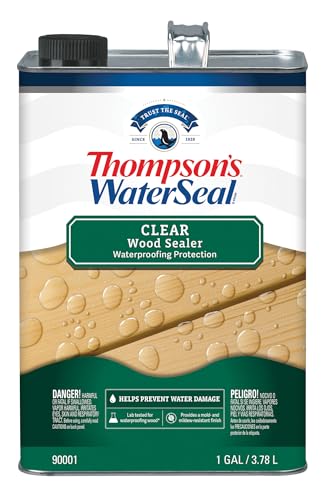
Product overview: Clear wood sealer that helps prevent water damage while maintaining natural wood color. Useful as a general exterior wood sealer for signs, deck edges, or trims. It also doubles as a sealer for brick or concrete in some outdoor applications.
Best for: Sign projects where preserving natural wood tone is important and water exposure is frequent. Choose this if you need a straightforward, clear sealant with reliable water protection. Caution: It is not specifically labeled for marine or saltwater environments; check project location for best compatibility.
Seal-Once Marine Penetrating Wood Sealer

Product overview: UV-stable, water-repellent coating designed for outdoor decks, docks, and wood near water. Marine is safe for use around open water and is non-hazardous to aquatic life. Not intended for certain hardwoods such as ipe, mahogany, or teak.
Best for: Signs installed near coastal areas, ponds, or boats where maximum water protection matters. It excels where long-term moisture exposure is a concern. Limitation: Some hardwoods may require alternative products or prep work for best results.
Rain Guard Wood Sealer Spray

Product overview: 16 oz spray sealer offering a hydrophobic barrier that repels water, with a natural, low-gloss finish. The formula is water-based with low odor and VOC-conscious characteristics, making it suitable for DIY projects where scent and fumes matter less.
Best for: Sign projects where a subtle, natural look is preferred, with minimal gloss and environmental considerations. Caution: It provides a clearer, more natural look, which may require additional coats for heavy weather exposure.
Buying Guide: Key Considerations for Outdoor Wood Sign Seals
- Project type and wood condition: Fresh wood vs. weathered wood may require different primers or sealers. For weathered wood, look for penetrating sealers that restore protection without masking grain.
- Finish appearance: Do you want a clear, natural look or a glossy topcoat? Consider whether you prefer a non-gloss finish for a rustic sign or a subtle sheen for enhanced durability.
- Environmental factors: Coastal, rainy, or high-UV areas demand higher UV stability and water repellency. Marine or all-weather formulas are suitable for harsh environments.
- Application method: Sprays offer quick coverage on flat surfaces; brush-on or roller-compatible products may provide deeper penetration on rough textures.
- VOC and odor: Water-based formulas tend to have lower odor and VOCs, which helps during indoor or shared-space projects.
- Maintenance and reapplication: Some products require reapplication every few years, while others offer longer-lasting protection. Plan for maintenance in your project timeline.
FAQ for Outdoor Wood Sign Sealers
- Q: Which sealer is best for weathered wood signs?
- A: Seal-Once Marine and Olympic WaterGuard are strong choices for weathered wood due to their water resistance and UV stability.
- Q: Can I use a topcoat over a painted sign?
- A: Yes, a clear topcoat like Rust-Oleum Universal can add durability, but ensure the base paint is fully cured and compatible with the coating.
- Q: Are oil-based sealers safer for enclosed spaces?
- A: Oil-based products require ventilation during application and curing; consider water-based options for safer indoor use.
- Q: Do these sealers affect wood color?
- A: Clear sealers are designed to preserve natural color; some products may slightly darken or enhance grain depending on porosity.
- Q: How often should signs be resealed?
- A: Frequency depends on exposure, weather, and product. High-wear outdoor signs may benefit from reapplication every 1–3 years.