Looking for a versatile primer that sticks to diverse surfaces and blocks stains? This guide highlights five top multi purpose primer paints that perform well on interior and exterior projects, from walls to roofs. Each option is suited for different buyers: DIY homeowners tackling light to moderate renovations, contractors needing durable coverage, and RV or exterior roof projects requiring high adhesion. Below you’ll find quick comparisons, product details, and practical buying tips to help you choose the right primer for your job.
| Product | Best For | Surface Types | Notes |
|---|---|---|---|
| Zinsser Bulls Eye 1-2-3 | All surfaces, stain blocking | Interior & Exterior | Sticks to glossy surfaces; low temp application |
| Rust-Oleum Painter’s Touch 2X Spray | Spray-on quick primers | Wood, Plastic, Metal, more | Fast drying, any-angle spray |
| Zinsser HIDZ | Hiding previous colors, sealing | Interior & Exterior | Fast drying, good adhesion |
| Liquid Rubber Multipurpose Primer | Bonding to challenging substrates | Concrete, Wood, Metal, Plastic | High bonding, fast-drying |
| Wadities RV Primer | RV roofs and similar substrates | EPDM, TPO, Metal, Wood | Weather resistant, low VOC |
Zinsser Bulls Eye 1-2-3 Water-Base Primer & Sealer
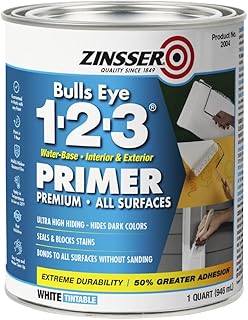
This water-based primer and sealer is designed for both interior and exterior surfaces, offering stain-blocking capabilities and a strong bond to glossy finishes without scuff sanding. It’s suitable for a wide range of projects and can be applied in temperatures as low as 35°F. Best for buyers seeking a single product that can prime multiple surfaces with minimal surface prep.
- Best for: Quick, reliable interior and exterior priming with stain blocking
- Why selected: Excellent adhesion on glossy surfaces; versatile for various substrates
- Limitations: May require multiple coats for deeply stained or highly porous materials
Rust-Oleum Painter’s Touch 2X Ultra Cover Spray Primer

This spray primer is ideal for interior and exterior surfaces, including wood, plastic, plaster, metal, masonry, and unglazed ceramic. The oil-based formula is low-odor and durable, designed to resist chips. It dries to the touch in about 20 minutes and covers up to 12 square feet per can. Best for fast, hands-off priming on small to medium projects.
- Best for: Quick, even coverage on multiple substrates
- Why selected: Fast drying; convenient spray application with broad substrate compatibility
- Limitations: Oil-based formula may require ventilation; not ideal for all indoor spaces
Zinsser 373693 HIDZ Multi-Purpose Primer

This quart-sized, flat white primer is designed to hide previous colors and seal porous surfaces. It dries quickly, with good adhesion, and is suitable for both interior and exterior use. It covers up to 100 square feet per quart, making it a strong choice for larger walls or exterior projects where rapid topcoat readiness is important.
- Best for: Hiding underlying colors and sealing porous surfaces
- Why selected: Fast dry time; broad coverage per quart
- Limitations: Water-based; may require more coats on very stained or glossy surfaces
Liquid Rubber Multipurpose Primer

This gallon primer focuses on high-performance bonding for concrete, wood, metal, and more. It’s fast-drying and non-toxic, with water-based readiness that helps improve adhesion and reduce blistering for subsequent coats. It’s best for projects where strong substrate bonding is critical, such as heavily porous concrete or wood.
- Best for: Improving adhesion across challenging substrates
- Why selected: Strong bonding capability; versatile across many materials
- Limitations: May require multiple coats on very porous or nonporous surfaces
Wadities RV Roof Primer White

This white primer is designed for RV roof applications, offering enhanced adhesion on EPDM, TPO, metal, wood, and concrete. It emphasizes safety, weather resistance, and low VOCs. The primer helps create a reliable base for roof coatings and coatings designed for outdoor exposure. Best for RV owners looking to extend roof life with a durable bond.
- Best for: RV roof preparation and multi-material roof surfaces
- Why selected: Improves adhesion and reduces coating consumption
- Limitations: Intended for roof use; verify compatibility with your topcoat
Buying Guide: Key Considerations for Multi Purpose Primer Paint
- Surface compatibility: Choose a primer that explicitly lists your substrate (wood, metal, concrete, plastic, roofs, etc.) to maximize adhesion and minimize prep work.
- Dry time and recoat windows: If you’re on a tight schedule, look for primers with fast tack-free times and short topcoat readiness.
- Stain-blocking vs. general adhesion: For projects with smoke, tannin, or water stains, prioritize stain-blocking primers. For general priming, adhesion-focused options may suffice.
- VOC content and safety: Consider low-VOC, water-based formulas for indoor use, particularly in living spaces.
- Finish and coverage: Check coverage rates per quart or gallon and the ability to hide previous colors or irregularities.
- Application method: Sprays are convenient for complex shapes; brushes/rollers suit larger, flat surfaces. Balance ease with cost and waste.
- Topcoat compatibility: Ensure the primer is compatible with the intended topcoat (latex, oil-based, acrylic, elastomeric coatings).
Frequently Asked Questions
- What is the difference between water-based and oil-based primers?
Water-based primers are low-odor and easier to clean; oil-based primers typically provide stronger stain-blocking and adhesion on tough surfaces but require solvents for cleanup. - Can I use a primer on exterior surfaces indoors?
Only if the primer is rated for interior use and you manage ventilation and drying times appropriately. - How many coats does a typical primer need?
Most surfaces require 1-2 coats, especially on very porous or stained substrates; follow product guidelines for best results. - Is stain-blocking essential for all projects?
No, only when you’re covering existing stains, smoke damage, or tannins; otherwise adhesion-focused primers may suffice. - Do primers affect topcoat color?
Yes, primers help even out color differences and improve topcoat appearance; some primers are tinted to enhance color coverage. - Are primers compatible with all topcoats?
Not always. Always verify topcoat compatibility on the product page or technical data sheet.