Finding the right lead tin yellow oil paint depends on pigment quality, working properties, and longevity. This guide highlights five top options, suitable for professional studios and dedicated hobbyists who want vibrant, warm yellows with reliable lightfastness and handling. Each product section explains who it’s best for, why it was selected, and any notable limitations.
Quick overview of selected products:
- Michael Harding Lead Tin Yellow Lemon (40 ml) — superb for luminous warm yellows, ideal for professional studios.
- Michael Harding Lead Tin Yellow Light (40 ml) — similar performance with a lighter hue, great for layering and glazing.
- M. Graham & Co. GRM-11-087 Chrome Tin Yellow — high pigment load, solvent-free, excellent for vibrant mixes.
- Gamblin Nickel Titanate Yellow (37 ml) — strong, opaque yellow with stable tint and high pigment load.
- ZenART Cadmium Yellow Hue (2 x 50 ml) — affordable, non-toxic alternative with rich color and smooth texture.
Lead Tin Yellow Lemon — Michael Harding

Product: Michael Harding Artist Oil Colours, Lead Tin Yellow Lemon, 40 ml. Content emphasizes a traditional lead-tin yellow with lemon hue. Best for artists seeking warm, luminous yellows for underpaintings, florals, and sunny landscapes. The slightly translucent nature supports glazing when layered over a warm underpainting. Caution: keep in mind traditional lead-tin color requires careful handling and proper studio ventilation due to historical formulation concerns.
Lead Tin Yellow Light — Michael Harding

Product: Michael Harding Artist Oil Colours, Lead Tin Yellow Light, 40 ml. This is a lighter lead-tin yellow intended for lighter skins and high-key passages. Best for artists who want lift and brightness in light-dominated compositions. It pairs well with deeper earths for balanced contrasts. Limitation: may require careful layering to avoid over-lightening on very pale underpaintings.
Chrome Tin Yellow — M. Graham & Co.
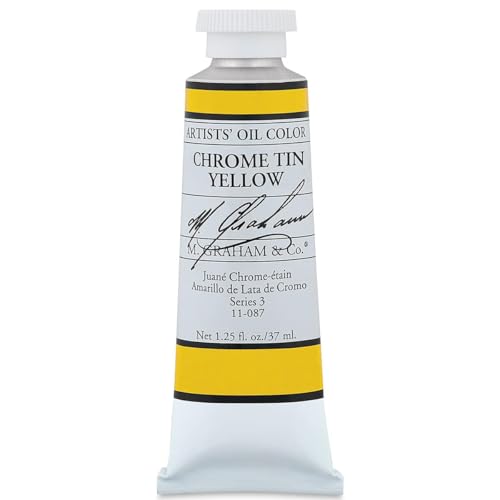
Product: M. Graham & Co. GRM-11-087 Oil Paint, Chrome Tin Yellow. This oil paint is solvent-free and uses walnut oil, with a 1.25 oz (37 ml) tube. It emphasizes increased pigment loads for stronger, more vibrant colors. Best for painters seeking a vivid, non-toxic option with long color life and clear pigment identity. Limitations: may require more careful handling during cleanup due to the walnut oil base and to achieving precise opacity in some mixes.
Nickel Titanate Yellow — Gamblin

Product: Gamblin Artist Oil, 37 ml, Nickel Titanate Yellow. Described as luscious, intense, pigment-rich colors. Made with pure pigments and refined linseed oil, it aims to retain tint clarity. Best for artists who want strong, durable yellows with minimal dulling over time. Caution: exact hue may lean toward a warmer or cooler shade depending on mixing and layering, so test swatches before large applications.
Cadmium Yellow Medium — Gamblin

Product: Gamblin Artist Oil 37 ml Cadmium Yellow Med. Pure medium yellow with strong opacity and a naturally muted tint. It is chemically pure cadmium color, historically favored for its reliability and coverage. Best for artists who need a solid, opaque yellow for initial layers or highlights. Limitation: cadmium pigments can be sensitive to light exposure and should be protected from excessive direct sunlight to maintain color integrity.
Cadmium Yellow Oxide — Gamblin 1980 Oil

Product: Gamblin 1980 Oil Cadmium Yellow Oxide 37 ml. This color version emphasizes a historical line within the 1980 series. Best for archival-style techniques and traditional color matching. Limitation: availability may be more restricted due to legacy product positioning and color shifts when mixed with other yellows.
Cadmium Yellow Hue — ZenART

Product: ZenART Oil Paint — Cadmium Yellow Hue, 2 x 50 ml. Non-toxic formula designed to be an EU-standard safe option with rich pigment and smooth texture. Best for artists seeking a safer alternative to traditional cadmium yellows without sacrificing coverage. Limitation: hue-based cadmium substitutes can differ slightly from true cadmium yellow in lightfastness and tint strength, so testers are advised before major works.
Buying Guide
What should I look for in lead tin yellow oil paints?
Consider pigment type, opacity, drying time, and handling. Lead tin yellows are traditional warm yellows with specific tint and undertone characteristics. If you plan glazing or underpainting, choose a color with good translucency and layering ability. For strong, opaque highlights, opt for higher pigment load.
Which yellow should I choose for portraits versus landscapes?
Portraits benefit from balanced warmth and skin-tone compatibility. Lighter yellows are useful for highlights and subtle transitions. For landscapes, consider a strong, vibrant yellow for sunlit areas and foliage accents, but ensure you have reliable lightfastness and non-yellowing behavior over time.
Is safety a concern with lead tin yellow pigments?
Lead-based pigments require proper handling during painting and cleanup. Work in a well-ventilated space, avoid inhaling pigment dust, and follow local guidelines for disposal. For studio safety, use dedicated gloves and protective gear when mixing or cleaning brushes.
What about non-toxic alternatives like cadmium substitutes?
Cadmium substitutes aim to replicate the hue while improving safety. These colors often offer good opacity and lightfastness, but exact color characteristics can differ from true cadmium yellows. Test swatches to verify alignment with your color needs.
How should I store and maintain oil paints?
Seal tubes tightly after use to prevent skinning. Store upright in a cool, dry place away from direct sunlight. If you notice skin formation on the surface, remove it and mix fresh pigment with oil medium to restore consistency. Proper storage helps extend color life and consistency across sessions.
Buying considerations at a glance
- Pigment name and tint strength
- Opacity vs. transparency for glazing
- Medium compatibility and drying characteristics
- Safety and handling practices for lead-bearing colors
- Brand reputation and color stability over time
FAQ
- What is lead tin yellow used for in oil painting? It provides warm, luminous yellows ideal for underpainting and bright highlights.
- Are lead tin yellows safe for home studios? Use with proper ventilation and safety practices; consider substitutes if safety is a concern.
- Which yellow is best for vibrant landscapes? Colors with high pigment load and strong tint strength, such as some Gamblin or ZenART options, are well suited for landscape accents.
- Can I mix these yellows with other pigments easily? Yes, these yellows typically mix well, but some hues may shift tint or opacity depending on pigment interactions.
- Do non-toxic cadmium substitutes perform like traditional cadmium yellows? They can offer similar brightness and opacity, but hue and lightfastness may vary; testing is advised.
- Is acrylic medium compatible with oil-based yellows? Oil paints are generally used with traditional oil mediums; acrylics require different media and cannot be mixed directly in the painting layer.