Answer: For reliable bonding and patching, choose ready-mixed or adhesive-enhanced joint compounds that suit concrete, drywall, and multi-surface repairs. This guide highlights top products for DIY homeowners, pros tackling patches, and remodelers who want durable results without complex mixing. The best options include concrete bonding additives, flexible drywall compounds, and quick-drying wallboard products, all chosen for strong adhesion, ease of use, and material compatibility.
Buyer types and suitability at a glance:
| Product | Best For | Why It Stands Out |
|---|---|---|
| DAP Concrete Bonding Additive | Concrete repairs, leveling | Excellent moisture resistance and density for patches on steps, driveways, patios |
| SIKA SikaLatex R | Mortar and concrete bonding | Strong tensile strength and freeze-thaw durability |
| Drywall Repair Kit | Wall patching and quick fixes | All-in-one kit with patches and putty for fast repairs |
| DAP Wallboard Joint Compound | Gypsum panel joints and finishing | Ready-mixed, easy embedding of tape and finishing |
| DAP White Lightweight Joint Compound | General drywall finishing | Lightweight, easy sanding, water-resistant formulation |
DAP Concrete Bonding Additive for Patches

Best for: DIYers repairing concrete surfaces and professionals resurfacing old concrete. The vinyl acetate copolymer bonding agent improves adhesion and creates a high-moisture resistant, high-density concrete when mixed with the concrete compound. Use it to patch steps, driveways, and patios, or to level new and old concrete surfaces.
Why selected: This additive is designed to boost concrete patch performance and patch longevity, providing better bonding with existing substrates. It helps achieve a more uniform surface before finishing coats.
Caution: Follow product directions for ratios; overuse may alter setting time or workability in very small patches.
SIKA SikaLatex R Concrete Adhesive Glue
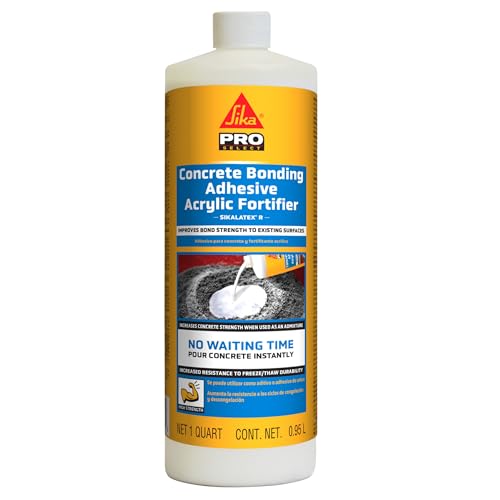
Best for: Cement mortar and concrete projects needing a strong, long-lasting bond. This acrylic admixture improves adhesion and tensile strength, and it resists damage from freezing and thawing, reducing upkeep.
Why selected: The product’s durability in variable temperatures makes it suitable for exterior or unheated spaces where joints may face freeze-thaw cycles. It’s straightforward to use with no required dilution, which is convenient for quick jobs.
Caution: Ensure material compatibility with the base cement and avoid over-dilution in bulk mixes.
Drywall Repair Kit for Patches

Best for: Quick drywall hole repairs and patches in walls. This all-in-one kit includes repair putty, patches, sandpaper, and scrapers for a compact fix.
Why selected: The kit offers a complete solution in one package, which is ideal for renters or homeowners tackling small drywall dings and holes without needing multiple purchases.
Caution: The aluminum patches are lightweight; for larger structural repairs, additional reinforcing methods may be needed.
DAP Wallboard Joint Compound

Best for: Finishing gypsum panel joints and embedding tape. This ready-mixed compound is designed for easy use and smooth finishes on interior walls.
Why selected: It is a standard, reliable option for professional-looking joints, nails, and corners, with easier sanding and embedding for a clean final surface.
Caution: Sanding dust can be generated; wear a dust mask during finishing steps.
DAP White Lightweight Joint Compound

Best for: General drywall repairs where light weight and easy sanding are priorities. Ideal for ceilings and large wall patches.
Why selected: The lightweight formula reduces fatigue during application and sanding, while maintaining a durable finish. It’s well-suited to both small and larger projects.
Caution: Although moisture-resistant, it remains best for interior use; avoid high-moisture environments unless specified by the manufacturer.
Buying Guide
What should I consider when choosing a joint compound bonding agent?
Material compatibility is crucial. Choose products that clearly indicate bonds with concrete, gypsum board, or plaster as needed. Consider whether you need a bonding admixture for concrete or a ready-mixed joint compound for drywall finishing.
Do I need a waterproof or moisture-resistant formula?
For kitchens, bathrooms, and basements, select moisture- and water-resistant formulations to reduce cracking and degradation over time. Exterior or high-humidity areas benefit from products designed to endure moisture exposure and freeze-thaw cycles.
What about ease of use and sanding?
Ready-mixed compounds and lightweight formulas reduce mixing and heavy sanding. If you’re a DIYer, look for products with smooth workability and easy sanding to achieve a professional finish faster.
How important is temperature and climate tolerance?
Admixtures and bonding agents that resist freezing and thawing help in external or unheated spaces. For interior projects, standard cure and sandability are usually sufficient.
Are kits or individual products better?
All-in-one kits can speed up small drywall repairs with fewer purchases. For larger projects, single-component products with durable bonds and good adhesion might be preferable for long-term performance.
What safety considerations apply?
Follow label instructions for ventilation and skin contact. Wear protective gear as needed, especially when sanding or working with cement-based products that can create dust.
FAQ
What is a bonding agent in joint compounds?
A bonding agent improves adhesion between existing surfaces and new repair material, increasing durability and reducing debonding risks.
Can I use joint compound directly on concrete?
Some products are designed to bond with concrete or use additives to improve bonding. Check product labels for concrete compatibility.
Is a waterproof joint compound necessary for bathrooms?
Yes, in moisture-prone areas, choose formulations labeled as moisture-resistant or waterproof to reduce cracking and water damage.
Do I need to seal drywall after applying joint compound?
Typically you apply joint compound, allow to dry, sand, and prime before painting. Sealing is part of the finishing process to prevent moisture absorption.
Which product is best for quick drywall repairs?
Drywall repair kits and ready-mixed joint compounds offer fast patches and easy application, ideal for quick fixes.
Should I mix bonding additives with concrete patch material?
Mixing with concrete patches can improve adhesion and density, particularly on older or porous surfaces.