Answering the question: which home powder coating system offers the best balance of voltage options, usability, and durability for hobbyists and small shops? This guide highlights five highly capable options suited for different buyers, from beginners to more frequent users. Each product is evaluated for who it’s best for, its strengths, and a practical limitation to consider. A concise buying table at the top helps you compare at a glance.
| Product | Best For | Main Strength |
|---|---|---|
| VEVOR Powder Coating System (50KV) | Home DIYers upgrading to consistent, durable finishes | High voltage and dual switches for easy operation |
| Powder Coating System (Dual Voltage) | Small shops needing flexibility between voltages | Dual voltage design with easy color change |
| Eastwood HotCoat PCS-250 | Users seeking quick color changes and fast cure | Benchtop oven and booth kit for fast turnaround |
| WX-958S Electrostatic Powder Coating Machine | Compact setups requiring solid capacity | Stable production with adaptable power range |
| PT-200 Powder Coating Gun System | Versatile projects across materials | Dual voltage and user-friendly design |
VEVOR Powder Coating System, 50KV

The VEVOR 50KV system is designed for strong electrostatic adhesion and durable finishes. It features a high voltage output and five selectable settings, enabling precise adjustments for different workpieces. This model is well-suited for metals, automotive parts, furniture, and construction materials where resilience against cracking, scratching, and wear matters. The dual switch setup (foot pedal and button) supports hands-free operation, improving comfort during longer coating sessions.
Who it’s best for: hobbyists upgrading to higher-durability finishes and users who value variable voltage for different parts. Why selected: the 50KV output provides excellent coating adhesion and wear resistance, while the dual switches enhance workflow. Limitation: the high voltage requires careful handling and proper ventilation in a home shop environment.
Powder Coating System with Dual Voltage

This system provides a dual-voltage option (20Kv and 50Kv), designed to suit different workpieces and coating needs. It emphasizes strong adhesion and greater abrasion resistance compared with liquid coatings. The unit is portable and easy to store, thanks to its compact size and lightweight design, with multiple nozzles and two powder bottles for color versatility.
Who it’s best for: homeowners or small shops that require switching between lighter and heavier coats or different materials. Why selected: the two voltage settings provide flexibility for a variety of jobs, and the device is designed for straightforward color changes. Limitation: switching between colors may require a brief setup time if multiple nozzle types are in use.
Eastwood HotCoat PCS-250 Powder Coating Kit

The PCS-250 system pairs powder application with a benchtop oven and booth, enabling a complete coating workflow in a compact space. It offers a low 15,000-volt and a high 25,000-volt setting to support multi-coat coverage over larger areas. The benchtop oven improves heat distribution with upper and lower heating elements and a circulation fan for consistent results.
Who it’s best for: users seeking an all-in-one kit that can coat and cure in a single area. Why selected: the integrated oven and booth speed up production and cure times, while dual voltage supports varied project scopes. Limitation: the included oven and booth may require a larger footprint than single-gun setups.
WX-958S Electrostatic Powder Coating Machine

The WX-958S emphasizes stable powder production and compatibility across power systems (90-260V, 50/60Hz). Its design aims for efficient powder coverage with a large-capacity tank, maintaining a 45L powder reservoir while keeping the footprint manageable. It’s built to adapt to different shop environments and power sources.
Who it’s best for: users needing a reliable, versatile machine that works with various power supplies. Why selected: the broad voltage compatibility and stable performance help maintain consistent results across projects. Limitation: the facility to power it at outside voltages may require proper adapters or electrical planning in some regions.
PT-200 Powder Coating Gun System
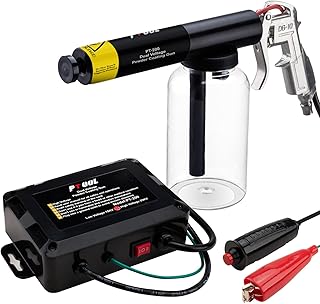
The PT-200 system provides versatile coating for metal, wood, and plastic with dual voltage options (15KV and 25KV). It features a clear bottle design to monitor powder levels and an ergonomic gun handle for comfortable operation. The dual-voltage capability supports variable coating thickness across different substrates.
Who it’s best for: DIYers who work on a variety of materials and need an accessible setup for easier color changes. Why selected: dual voltage and a transparent powder bottle simplify workflow and material management. Limitation: lower maximum voltage may limit very heavy-coat applications compared with higher-voltage units.
Buying Guide: Key Purchase Considerations
What should you evaluate when choosing a home powder coating system? Start with voltage needs. Higher KV typically improves coating adhesion and can handle tougher surfaces, but higher voltage may require more safety measures. Consider the number of colors you plan to use; systems with multiple powder bottles and easy color-switch capabilities save time. Look at portability versus capacity: larger tanks and ovens increase throughput but take space. Power compatibility matters for home shops with unique electrical setups; check voltage ranges and whether step-down transformers or dedicated circuits are needed. Finally, assess the availability of an integrated booth or oven if you want a complete workflow in a single area.
Durability and finish quality should align with your projects. Systems with strong electrostatic adhesion and well-designed spray guns tend to produce more uniform coatings with fewer runs or sags. If you’re coating larger parts or multi-coat finishes, consider models offering multi-volt options and larger-capacity powder reservoirs to minimize refills during sessions.
Practical tips for buyers:
- Plan your workspace: ensure adequate ventilation and a safe, dedicated area for powder application and curing.
- Match system capabilities to typical project sizes and materials.
- Verify whether the kit includes essential consumables (nozzles, powder cups, bottles) and if you’ll need extra accessories.
- Check local electrical code requirements and whether professional installation is advisable for high-voltage units.
Frequently Asked Questions
- What is the advantage of higher KV in powder coating?
- Do I need a dedicated space to use these systems?
- Can these systems coat wood or plastic as well as metal?
- Is a powder coating oven necessary?
- How important is color-change speed?
- What safety precautions are essential?
Higher KV improves electrostatic adhesion, producing a more uniform and durable finish on challenging surfaces.
Yes. Powder coating involves fine powder residue and curing heat; a well-ventilated, dedicated area reduces contamination and safety risks.
Many dual-voltage systems are designed for metals, with some models capable of coating other materials like wood or plastic depending on the powder and setup.
Not always, but an integrated oven or booth speeds curing and improves heat control, especially for multi-coat finishes.
For frequent color changes, systems with multiple powder bottles and easy nozzle interchange save time and reduce downtime.
Use protective gear, ensure proper ventilation, and follow manufacturer guidelines for handling high-voltage equipment and curing temperatures.