Find the right advanced hand plane to elevate your woodworking. This guide highlights five premium options suited for advanced hobbyists, professional woodworkers, and hobbyists who demand durability, precise cutting, and refined finishes. Each product is evaluated for who it’s best for, why it stands out, and any practical limitations to consider. Use this list to compare blade quality, material strength, and adjustability so you can select the best high-end hand plane for your projects.
| Product | Best For | Key Benefit |
|---|---|---|
| JORGENSEN No.4 10″ Wood Plane | Professional woodworkers and serious hobbyists | Durable ductile iron body with adjustable depth |
| KAKURI Japanese Hand Plane 42mm | Detail work, chamfering, and finishing | Japanese steel blade for a smooth finish |
| JORGENSEN No.5 Wood Planer | Flattening and smoothing larger surfaces | Ergonomic design with adjustable cutting depth |
| KAKURI Japanese Block Plane Large 60mm | Wide smoothing on larger surfaces | Large size with durable laminated blade |
| Groz No. 6 Fore Plane | Wide boards, tabletops, panels | Long sole with precise flatness control |
Jorgensen No.4 10″ Wood Plane

The Jorgensen No.4 is crafted with a ductile iron body for rugged use and a durable aluminum lever cap. It uses a professional O1 tool steel blade for efficient planing and long blade life, capable of re-sharpening and re-adjusting as needed. The cutting depth is adjustable via a simple knob, allowing users to tailor the plane to different wood depths and project requirements. This model is best for experienced woodworkers who need a reliable smoothing plane with consistent performance and a robust build. A potential limitation is that it may require regular maintenance to keep the edge refined for best results.
Best for: Professional woodworkers and serious hobbyists needing a durable, adjustable smoothing plane.
KAKURI Japanese Hand Plane 42mm

This kanna body plane is a compact, traditional Japanese tool designed for precise smoothing and chamfering. It uses a high-carbon Japanese steel blade and a chipbreaker to reduce tearing and wood splitting. The plane is easy to handle, making it suitable for beginners transitioning to more refined work, though true optimization may require blade tuning with a hammer before use. It’s best for controlled, detailed work and small-scale finishing tasks. A limitation is the need for blade setup prior to first use for optimal results.
Best for: Detail work, chamfering, and beginners moving toward higher-precision joinery.
Jorgensen No.5 Wood Planer
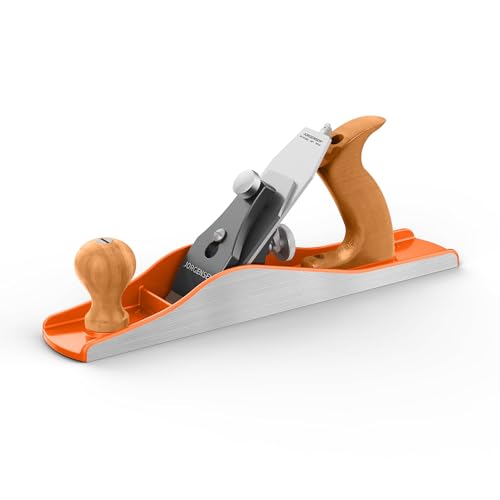
The No.5 shares the same premium build as the No.4, featuring a ductile iron body and an adjustable cutting depth with an ergonomic handle. Its longer body makes it ideal for flattening and smoothing broader surfaces, such as tabletops or wide boards. This model suits professionals tackling larger stabilization tasks while maintaining fine control. A possible limitation is that it requires careful handling to keep the sole true and avoid uneven planing on wide panels.
Best for: Flattening and smoothing wider surfaces with steady control.
KAKURI Japanese Block Plane Large 60mm

This large kanna plane is designed for efficient smoothing on larger surfaces and critical edges. It features Japanese laminated steel with soft iron and a chipbreaker, delivering a smooth finish and helping prevent wood splitting. The hand-sharpened blade is ready to use, with a two-blade structure favoring safety and reliability. Best for more extensive smoothing tasks where a bigger blade footprint is beneficial. A limitation is the potential need for frequent sharpening to maintain razor-like performance on dense woods.
Best for: Wide-area smoothing and edge finishing on larger projects.
Groz No. 6 Fore Plane

The Groz No. 6 fore plane features an 18″ sole and a wide 60mm cutter, designed for flattening wide panels and tabletops quickly. It arrives ready to use with a flat sole within tight tolerances, minimizing setup time. The blade, made from hardened spring steel, holds its edge well and is suitable for both softwoods and hardwoods. This model is best for professionals needing efficient, wide-area flattening. A limitation is its size, which may be less practical for tight spaces or fine-detail tasks.
Bench Dog No. 92 Shoulder Plane

The Bench Dog No. 92 shoulder plane combines a 3/4″ blade with removable nose pieces to convert into a chisel plane, making it versatile for fine-tuning tenons and cleaning up corners. The blade width ensures clean, sharp edges without leaving ridges. This model is best for detailed joinery work and corner cleanup. A caution is that shoulder planes can be less forgiving for absolute beginners due to the precise control required near joints.
Japanese Wood Block Plane KANNA 40mm

This Senkichi block plane uses a compact design with a 40mm blade width, focusing on precise edge work and chamfering. It follows traditional Japanese methodology, requiring blade fine-tuning and careful handling. Best for precise edge finishing on small-to-medium workpieces and detail work. A limitation is the need for blade setup and occasional sharpening for best performance.
KAKURI Hand Plane 42mm Block Plane

The 42mm KAKURI KanNA block plane is compact and designed for chamfering and smoothing, with a Japanese blade and two-blade structure that reduces tearing. It’s easy to handle, makes precise cuts, and is ready to use out of the box. Best for beginners moving toward precision and for finishing tight corners. A caveat is that its small size may limit effectiveness on larger boards or heavy material removal tasks.
Buying Guide
What matters most when choosing a high-end hand plane:
- Material and build: Look for ductile iron or forged bodies for durability and stability, with a high-quality lever cap and a well-engineered sole.
- Blade quality: Prospective planes often use O1 tool steel or high-carbon Japanese steel. Consider blade hardness, edge retention, and ease of sharpening.
- Adjustability: A clearly accessible depth adjustment and fine-tuning capability improves accuracy and consistency across tasks.
- Ergonomics: An ergonomic handle and comfortable balance reduce fatigue during longer sessions and improve control on larger surfaces.
- Intended use: Japanese planes excel at controlled pull cuts and fine detailing, while Western-style planes may be better suited for rapid flattening of wide boards.
- Maintenance: Some blades require pre-use tuning or sharpening; factor in your ability to maintain an optimal edge.
Frequently Asked Questions
- What is the difference between a fore plane and a jack plane?
Answer: Fore planes are long planing tools for flattening wide surfaces, while jack planes are versatile for both roughing and smoothing tasks. - Are Japanese planes easier to use for beginners?
Answer: They can be more forgiving for detail work, but they often require blade tuning and practice with pull-stroke technique. - What should I consider when choosing blade material?
Answer: Consider edge retention, ease of sharpening, and durability under your typical wood species and task complexity. - Can I use a high-end plane for both softwoods and hardwoods?
Answer: Yes, but blade geometry and sharpness impact performance; some planes perform consistently across different wood types. - Do these planes require special maintenance?
Answer: Regular sharpening, proper storage, and occasional sole flattening help maintain accuracy and longevity.