Answer: For fiberglass projects, choose a high build primer that delivers strong adhesion, excellent hiding power, and a forgiving application window. This guide highlights five reliable options, aligned with common fiberglass surfaces like boats, cars, and marine-grade projects. Each pick suits different needs—from fast-drying for time-sensitive projects to premium bonding for challenging substrates. Use the summary table below to compare core traits at a glance and then dive into each product’s details to find the best match for your project.
| Product | Best For | Key Benefit | Notes |
|---|---|---|---|
| U-POL 1 Gallon High Solids Primer | Professional repairs on metal and fiberglass | High build, excellent opacity | European 3-in-1 direct-to-metal primer |
| Speedokote SS-2950G/2790A | Fast-dry, large projects | High Build Urethane Primer, strong adhesion | Includes hardener options; great for shop use |
| Rust-Oleum Stops Rust 2-in-1 Filler & Primer | Multi-surface, quick patches | Filler and sandable; 2-in-1 formula | Oil-based; works on wood, metal, fiberglass |
| TotalBoat Marine Topside Primer | Marine fiberglass surfaces | One-part primer, easy to apply | Best for above-waterline fiberglass and wood |
| Evercoat Feather Fill G2 | Heavy fill for smoothing imperfections | Excellent foundation primer, easy sanding | Fiberglass, SMC and more; gray finish |
U-POL 1 Gallon High Solids High Build Primer Kit
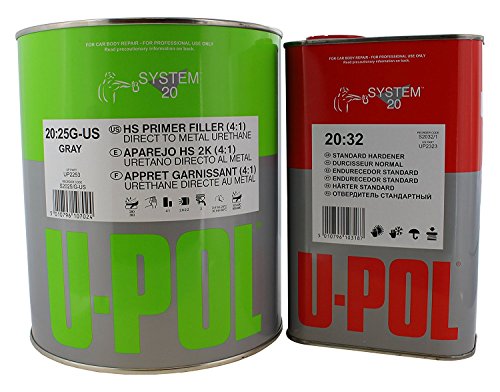
Best for: Professional garages and shops needing a robust hard primer for fiberglass and metal. This kit uses a 4 to 1 mixing ratio with a high solids urethane formula for superior build and hiding power. The European-style multi-function design supports direct-to-metal use, simplifying prep on complex substrates.
Why selected: It combines high build capabilities with strong opacity, reducing the number of coats required on fiberglass surfaces. The primer’s 4:1 mix ratio provides flexibility for different heat and humidity conditions in typical American garages. A potential limitation is the need for proper ventilation due to solvent content.
Caution: Ensure accurate mixing to achieve optimal film thickness and avoid pinholes in very rough textures.
Speedokote Automotive High Build 2K Primer Gray Gallon Kit
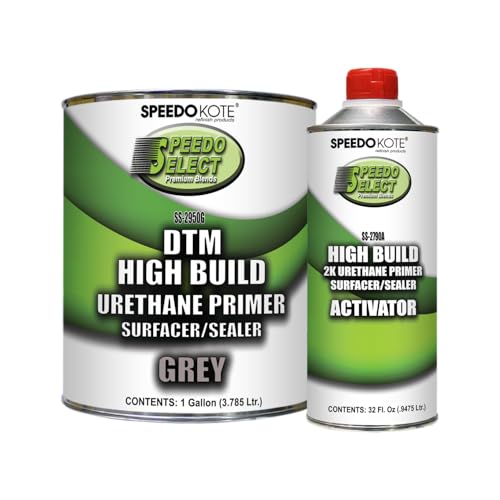
Best for: Shops needing fast-drying, durable primer with strong adhesion on fiberglass automotive panels. This 2K urethane primer is designed to build quickly and bond well to challenging substrates.
Why selected: It offers a reliable high build and quick turn-around, making it suitable for time-sensitive projects. A caution is that proper mixing and baking conditions are important to avoid shrinkage or solvent pop on larger fills.
Limitation: California and other states with stricter VOC rules may require variant formulations (check SKUs for local compliance).
Rust-Oleum 260510 Stops Rust 2-in-1 Filler & Primer Spray

Best for: Quick, small fiberglass repairs or surfaces where spray application is preferred. The 2-in-1 formula saves time by combining filler and primer in one step.
Why selected: It covers minor imperfections efficiently and dries fast, enabling rapid topcoat work. Use for minor fiberglass flaws; avoid relying on it for large, deep gouges without a subsequent skim coat.
Caution: Oil-based formula requires adequate ventilation and longer cure times before topcoating on large areas.
TotalBoat Marine Topside Primer

Best for: Fiberglass boats and marine structures above the waterline. It is a one-part primer designed to seal and build over gelcoat, fiberglass, and wood, preparing for Topside paint.
Why selected: Easy to apply by brush, roller, or spray, and designed to work with polyurethane and enamel marine systems. A limitation is the need to follow the specific recoat and sanding guidelines for best results.
Notes: The primer is chromate-free and lead-free, aligning with modern marine safety standards.
Evercoat Feather Fill G2 Primer Surfacer

Best for: Fiberglass, SMC, and similar substrates needing heavy fill and smooth sanding. This polyester primer surfacer provides a solid foundation for topcoats.
Why selected: Offers strong adhesion and fast dry-to-sand time with shrink-resistant formula, aiding a smooth, uniform finish on fiberglass surfaces. A caveat is that it may require multiple coats to achieve a perfectly flat surface, depending on surface conditions.
Buying Guide: Key Points For Choosing A High Build Primer For Fiberglass
- Surface compatibility: Fiberglass and SMC surfaces respond best to primers designed for composite materials. Look for bond strength and flex characteristics.
- Drying and curing: Fast-drying options accelerate project timelines, but ensure you have proper ventilation and proper activator ratios where applicable.
- Build vs. fill balance: If you need to fill significant imperfections, choose primers marketed as high build or with filling capabilities; for minor flaws, a standard build primer may suffice.
- Application method: Compatibility with brush, roller, or spray can influence choice based on project size and accessibility.
- Topcoat compatibility: Verify that the primer is compatible with your intended topcoat chemistry (urethane, enamel, epoxy, etc.).
- VOC and regulatory considerations: Some primers have VOC restrictions in certain regions; select compliant formulations if required.
- Safety and prep: Read data sheets for ventilation, PPE, and sanding recommendations to ensure safe and effective use.
FAQ
- What is a high build primer for fiberglass?
– A primer formulated to create a thick, smooth base that fills small imperfections and provides a solid adhesion layer on fiberglass surfaces. - Can I use automotive primers on boats?
– Yes, many automotive high build primers are suitable for fiberglass boats when compatible with marine coatings, but check the product’s intended use and compatibility with marine topside paints. - Do I need a specific activator or hardener?
– Some high build primers are two-part (2K) systems that require an activator. Follow the product’s mixing instructions to achieve intended performance. - Is a filler primer different from a bonding primer?
– Filler primers primarily fill surface imperfections, while bonding primers emphasize adhesion on difficult surfaces; some products combine both functions. - How thick should the primer layer be on fiberglass?
– Apply a thin, even coat as directed by the manufacturer; avoid heavy builds that can trap sand scratches or cause cracking. - Can I topcoat soon after priming?
– Most primers have a recommended recoat window; promptly sealing within that window yields best adhesion and finish.