Find the right beginner-friendly hand plane to start trimming and smoothing wood. This guide highlights five reliable options suited for new woodworkers, hobbyists, and DIY enthusiasts. Each listing notes who it’s best for, why it’s chosen, and any small limitations to consider. A quick buyer’s table follows to help you compare at a glance.
| Product | Best For | Key Benefit |
|---|---|---|
| JORGENSEN No.101 Mini | Detail work and small projects | Adjustable depth with durable ductile iron body |
| KAKURI Large 60mm KanNA | Large smoothing, steady control | Balanced weight and razor-sharp Japanese blade |
| KAKURI 42mm KanNA | Fine edges and trims | Compact, easy to handle for beginners |
| JORGENSEN No.60-1/2 | Low-angle trimming and detail work | Adjustable mouth and depth for versatile planing |
| FIRSTINFO H5401 Mini | Portable trimming and modeling | Fully adjustable cutter for precise cuts |
JORGENSEN No.101 Mini Wood Planer

- Professional level O1 tool steel blade for efficient cutting and long life.
- Ductile iron body for rugged durability; zinc alloy lever cap; stainless steel components.
- Adjustable cutting depth via a simple knob for various wood thicknesses.
Best for: beginners focused on small trimming tasks and detail work. Why selected: compact size, sturdy construction, and adjustable depth help new users learn control without sacrificing performance. Caution: small planers can be less effective on large surfaces; use for fine work first.
KAKURI Japanese Block Plane Large 60mm KanNA

- Japanese traditional design with a pull-cut motion for controlled, consistent cuts.
- Large size with balanced weight for efficient smoothing across wider areas.
- Two-blade structure with chipbreaker for safer planing and reduced wood splitting.
Best for: beginners who want a more deliberate, hand-friendly smoothing experience. Why selected: the robust blade and stable grip make it easier to manage for newcomers. Caution: requires blade setup and tuning before first use, which may take time to learn.
KAKURI Japanese Hand Plane 42mm KanNA

- Compact, lightweight design ideal for detailed work and edge chamfering.
- Includes English instructions; ready-to-use blade crafted from Japanese high-carbon steel.
- Two-blade system with chipbreaker reduces wood splitting for safer use.
Best for: beginners seeking precision in small-scale tasks and edge detailing. Why selected: ease of handling and ready-to-use sharp blade support rapid learning. Caution: small size may limit performance on larger boards.
JORGENSEN No.60-1/2 6-1/4″ Wood Planer
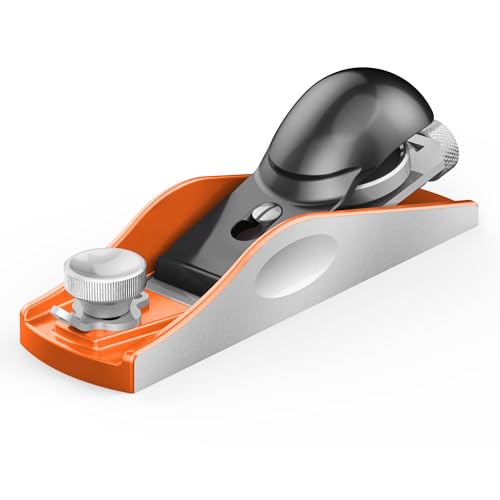
- Low-angle design for trimming and finer control on end-grain surfaces.
- Professional O1 tool steel blade; adjustable cutting depth and adjustable mouth width.
- Rugged ductile iron body with durable components for repeated use.
Best for: beginners who want a versatile tool for detail work and step-down trims. Why selected: low-angle geometry offers easier control for first-timers learning to flatten edges. Caution: broader mouth adjustment requires careful setup to avoid tear-out on highly figured wood.
JORGENSEN No.102 Wood Planer

- Professional O1 blade for precise planing and long service life.
- Ductile iron body with zinc alloy lever cap and stainless steel components.
- Adjustable depth and planing width to tackle varying wood needs.
Best for: beginners seeking a mid-size tool with strong durability and adjustable features. Why selected: balanced performance and robustness suit learning curves. Caution: heavier tool may require more wrist awareness for extended sessions.
Buying Guide: How to Choose The Right Hand Plane For Beginners
- Planing tasks and project scope: For small, detail-heavy work, start with compact models like the 101 Mini or 42mm KanNA. For larger smoothing, consider the 60mm KanNA or No.60-1/2 with broader contact areas.
- Blade type and sharpness: Look for blades made of O1 tool steel or high-carbon Japanese steel for easy sharpening and long edge life. A sharp blade directly affects finish quality and safety.
- Body material and durability: Ductile iron bodies tend to offer sturdiness for frequent use. Zinc alloy or aluminum lever caps reduce overall weight while maintaining rigidity.
- Adjustability: Seek plans with adjustable cutting depth and, if possible, adjustable mouth width. This allows you to tailor take-off and avoid tear-out on different wood species.
- Ease of setup and maintenance: Some planes require tuning before first use (blade tuning, chipbreaker setup). Beginners benefit from tools with clear instructions and minimal setup time.
- Grips and ergonomics: A comfortable grip reduces fatigue during longer sessions. Large planes are usually easier to control for inexperienced users, while compact planes excel in tight corners.
Choosing between traditional Japanese KanNA planes and Western-style block planes depends on your comfort with setup and the type of work you plan to do. Japanese designs emphasize precise control and clean cuts, often with a pull stroke, while Western planes emphasize straightforward push-style planing and wide smoothing.
Frequently Asked Questions
- What should beginners look for in a hand plane?
- Are Japanese planes better for beginners than Western planes?
- How important is blade material?
- Can I use a small plane for large boards?
- Do I need to tune the blade before first use?
- What safety considerations apply?
Look for a comfortable grip, a sharp and easy-to-sharpen blade, adjustable depth, and a durable body. A beginners-friendly plane should be easy to set up and maintain, with good instructions.
Not inherently; Japanese planes offer controlled cuts and sharp finishes, but they may require blade tuning and different technique. Western planes are often easier for absolute beginners due to familiar push motion.
Blade material affects edge life and ease of sharpening. O1 tool steel and high-carbon Japanese steel provide durable edges and predictable sharpening results for beginners.
Small planes are best for detail work, chamfering, and fine adjustments. For large surfaces, a larger plane or dedicated smoothing plane is preferred for efficiency and evenness.
Many planes require initial tuning, sharpening, and alignment. Some models arrive sharp and ready, but most beginners should plan a brief setup session to optimize performance.
Always secure the workpiece, use light, controlled strokes, and wear eye protection. Keep fingers clear of the blade and maintain a steady, low-resistance motion to avoid kickback or slips.