If you’re looking for a handheld tool to quickly and evenly mix paints, resins, and coatings, these select models offer reliable performance for hobbyists and DIYers alike. The top picks below are best for small to mid-sized projects, delicate paints, and resin work where consistent viscosity matters. Each item is evaluated for ease of use, portability, bubble control, and suitability to different media. The buyer’s guide following the product picks covers key considerations to help you choose the right handheld mixer for your needs.
| Product | Best For |
|---|---|
| Badger Air-Brush Co. 121 Paint Mixer | Small bottle paints and consistent viscosity |
| Upgraded Resin Mixer (BGick) | Epoxy resin with minimal bubbles, rechargeable |
| Edward Tools Paint and Mud Mixer | Drill-compatible, larger projects with standard drills |
| Micro-Mark Cordless Mini Mixer | Model paints and hobby fluids on the go |
| WAQONUY USB Rechargeable Epoxy Resin Mixer | USB-charged, bubble-minimizing resin mixing |
Badger Air-Brush Co. 121 Paint Mixer

Best for small jars and precision work. The 121 mixer is designed for 3/4-ounce to 4-ounce jars and thoroughly blends various paints, ensuring pigment is well dispersed from top to bottom. This model emphasizes even viscosity across the bottle contents, making it ideal for detailed hobby projects or model painting where consistency matters for color accuracy.
Who it’s best for: crafters and modelers needing reliable, gentle mixing in small containers. Why selected: its jar-compatible design limits splashing and improves dispersion, making it a dependable starter option for frequent, small-batch mixing. Caution: may not be suitable for very high-viscosity resins or large-volume applications.
Upgraded Resin Mixer (BGick)
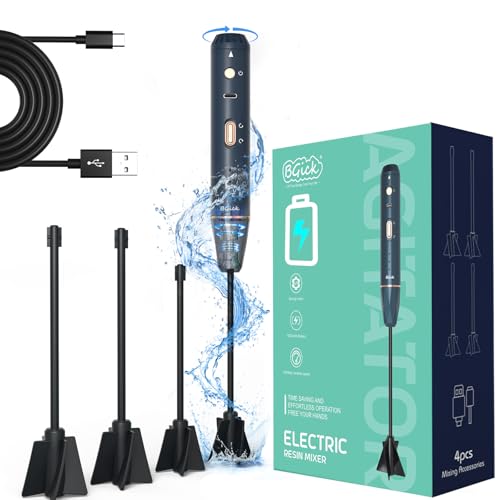
Best for epoxy resin and silicone work with strong torque and bubble control. This handheld mixer provides a 50-300 RPM range, forward and reverse modes, and a high-torque motor to handle viscous resins without stalling. USB-rechargeable with a 1500mAh battery makes it portable for studio setups or on-site jobs.
Who it’s best for: resin artists and crafters mixing thicker formulations. Why selected: the two-way mixing and larger torque helps prevent clumping and air incorporation. Caution: battery life varies with continuous high-speed use; charging indicators help monitor status.
Edward Tools Paint And Mud Mixer

Best for larger projects when using a drill. This mixer attachment measures 15 3/4″ total length with a 5/16″ hex head, designed to fit most standard drills. It features a robust zinc-plated steel construction and reinforced welds for durability, plus easy cleaning.
Who it’s best for: DIYers tackling paint, mud, or grout in bigger containers. Why selected: long shaft and rugged build enable efficient mixing in 1–3 gallon batches. Caution: heavier than some handheld units and requires a compatible drill.
Micro-Mark Cordless Mini Mixer

Best for small-batch model paints and hobby fluids on the go. This cordless, compact mixer is designed for quick blends with minimal effort, avoiding hand fatigue often associated with hand-stirring. Batteries are included for immediate use on benches or while traveling to projects.
Who it’s best for: hobbyists needing portability and quick color blending. Why selected: ease of use and compact form factor. Caution: may struggle with very thick paints or large volumes beyond small hobby kits.
WAQONUY USB Rechargeable Epoxy Resin Mixer
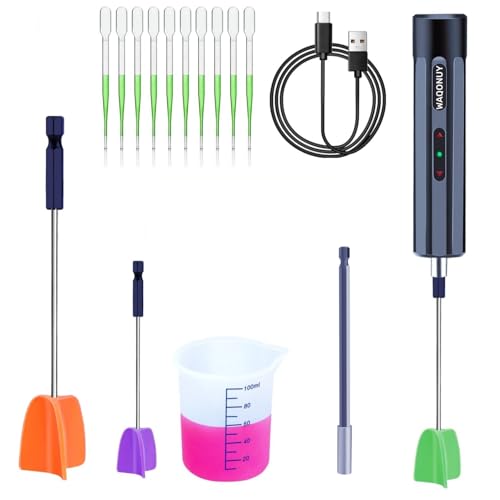
Best for USB-rechargeable resin work with a focus on minimizing bubbles. The WAQONUY model features a built-in lithium battery and USB charging, a 180 RPM speed, and two included silicone paddles for different container sizes. It aims to reduce splash and provide a steady mix for small batches.
Who it’s best for: small studios or on-the-go mixing where battery accessibility matters. Why selected: USB charging and multiple paddles offer flexibility for different cup sizes. Caution: performance may vary with extremely high-viscosity resins or large volumes.
Buying Guide: Key Factors to Consider
What media will you mix most often? Different media have different viscosity. For light paints and inks, a smaller, low-torque mixer works well. For epoxy resins or thick coatings, prioritize higher torque, forward/reverse functionality, and a design that minimizes bubbles.
What container size do you typically use? Jar-mounted or bottle-mounted mixers suit small jars (like 3/4–4 oz). Drill-attached or long-shaft mixers fit larger buckets (1–3 gallons) and heavy-duty applications.
Power and portability: battery-powered handheld tools offer mobility for workshops and job sites. USB-rechargeable options are convenient for quick top-ups, while built-in batteries should provide enough runtime for typical mini batches.
Bubble control: resin and some paints are sensitive to air. Models with adjustable speed, gentle mixing, and bidirectional rotation help reduce air entrapment. Look for silicone paddles and thoughtful blade geometry.
Maintenance and cleaning: choose materials that resist corrosion (e.g., zinc-plated steel) and parts that are easy to wipe down. Detachable paddles and simple cleaning routines save time between projects.
Versatility versus specialization: some tools are optimized for resin work, while others excel with general painting or mud mixing. If you mix multiple media, consider a model that offers adjustable speed and compatible accessories.
Frequently Asked Questions
- What is the typical RPM range for handheld mixers? Many handheld models operate between 50 and 300 RPM, with some higher-end devices offering more precise control up to around 400 RPM for certain media.
- Can handheld mixers reduce bubbles in epoxy? Yes, models with higher torque, forward/reverse modes, and silicone paddles help minimize bubbles, especially when used with proper degassing practices.
- Do I need a drill attachment for large batches? For 1–3 gallon batches, a drill-attached mixer is often the most efficient option. Ensure compatibility with your drill’s chuck and weight limits.
- Are USB rechargeable mixers reliable for resin work? USB-rechargeable designs offer portability and adequate runtime for small to medium batches, but check battery capacity for longer sessions.
- What accessories should I look for? Extra paddles in different sizes, compatible jars, and reversible rotation capability provide flexibility across projects.
- How do I clean a resin mixer after use? Rinse with compatible solvents or warm water (as appropriate for the media) and wipe dry. Some paddles are silicone and easier to wash and reuse.