Top picks for half pan watercolor palettes combine portability with reliable construction. This guide highlights five solid options, each suited to different kinds of artists—from travelers who need compact tins to studio painters who want larger color capacity. Read on to compare sizes, materials, and practical tips to choose the best fit for your painting style and on-the-go needs.
| Product | Best For | Key Benefit | Limitations |
|---|---|---|---|
| MEEDEN Empty Travel Watercolor Palette (Yellow) | Travelers, students | Foldable, anti-rust metal, includes mixing areas | Smaller capacity than larger sets |
| FCLUB Empty Watercolor Tins Palette | Outdoor painters, educators | Secure lid, holds 21/36 pans | Edges may feel sharp unless carefully handled |
| Watercolor Half Pans with Magnetic Stripe (qianshan) | DIY kit lovers, pros without a fixed set | Magnetic pans for easy reconfiguration | Plastic pans; magnetic kit requires setup |
| MEEDEN Empty Watercolor Paint Palette (Blue) | Travelers, students | Small, foldable with mixing tray | Limited color capacity compared to larger tins |
| PEVART Empty Watercolor Palette | Serious colorists, educators | 50 pans, metal box, durable | Heavier and bulkier than travel tins |
MEEDEN Empty Travel Watercolor Palette: 24 Half Pans (Yellow)

This compact metal palette folds into a portable unit, making it ideal for students and traveling artists who value lightweight gear. The white enamel lid doubles as a mixing area, while the fold-out tray expands your options without adding bulk. The metal folding ring helps stabilize the palette when painting. Best for artists who need ready-to-use color blocks while away from the studio, with a medium-sized footprint that still fits in a carry bag. A caution: the fold-out parts and edges are metal—handle with care during setup to avoid nicks.
FCLUB Empty Watercolor Tins Palette: 21/36 Pans
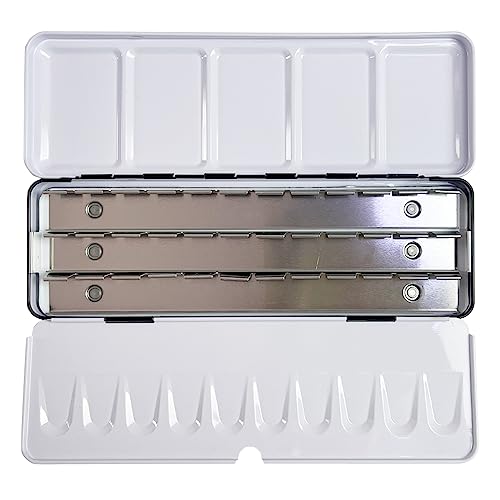
Designed for home studios and plein air sessions, this sturdy tin holds either 21 or 36 color pans and includes a secure lid to keep paints clean and dry. The edges are rolled for safety, and the pigment area provides two big fold-out mixing zones plus an extra space if you remove the tray. Best for painters who want a larger, rust-resistant option with reliable storage. A limitation: it may be bulkier than ultra-compact travel tins.
Watercolor Half Pans with Magnetic Stripe (qianshan)

These 48 white plastic half pans come with a magnetic stripe system, perfect for building a customizable kit. The pans fit into metal tins, and the magnets allow easy reordering of colors to match your workflow. Best for artists who like to reconfigure palettes on the fly or swap colors during sessions. A caution: magnetic setup requires initial alignment and may take time to organize just-so.
MEEDEN Empty Watercolor Palette: 12 Half Pans (Blue)
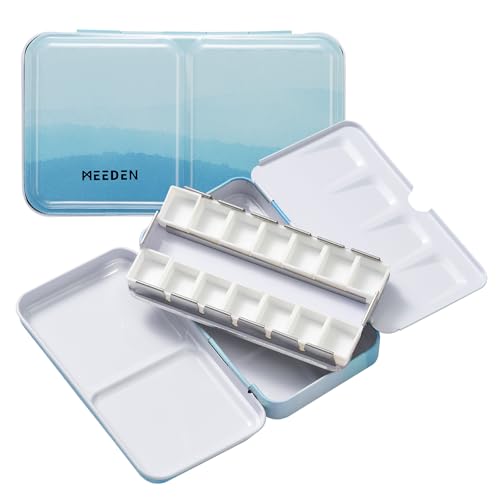
This smaller blue palette emphasizes portability with a foldable lid that serves as a mixing area. It’s well-suited for travel and classroom use where space is at a premium. Best for beginners or students who want a lightweight, easy-to-carry option. A potential limitation is the reduced color capacity compared to larger tins.
Winsor & Newton Cotman Watercolor Pocket Set (12 Half Pan)

This classic pocket set includes a 12-half-panel Cotman watercolor selection and an integral lid palette, offering good transparency and tinting strength at an economical price. Best for travelers and sketch artists who want a trusted brand with reliable performance in a compact package. A limitation: fewer color options than larger studio sets.
PEVART Empty Watercolor Palette: 50 Pans

This kit provides a robust color capacity with 50 empty half pans in a durable metal box, plus a water tank brush and a storage bag. Best for serious colorists and educators who want extensive color options in a single transportable system. A caution: heavier and less portable than smaller tins for frequent travelers.
Buying Guide: How To Choose The Right Half Pan Palette
- Portability vs. Capacity: If you travel often, consider smaller tins (12–24 pans) with a folding lid. For studio use or plein air with many colors, opt for 36–50 pans in a sturdy metal box.
- Material And Build: Metal palettes with rolled edges and secure lids resist rust and leakage. Plastic pans are lighter but may scratch more easily; magnetic pans offer reconfigurability but require setup.
- Mixing Space: Look for built-in mixing areas in the lid or tray. More mixing space reduces the need for a separate palette.
- Color Organization: Decide whether to prefill pans, or keep empty pans for custom filling. Magnetic or removable pans simplify rearrangement by color family.
- Maintenance: Enamel interiors ease cleaning and prevent staining. Rust-proof coatings extend durability in travel environments.
Frequently Asked Questions
- What size is best for travel painting?
– A compact palette with 12–24 half pans balances weight and color options for most travelers. - Do magnetic pans hold securely during transport?
– Magnetic pans stay in place when used with compatible tins, but ensure the arrangement is stable to avoid shifting. - Are metal palettes better than plastic?
– Metal palettes tend to be more durable and rust-resistant, while plastic can be lighter and cheaper. Choose based on frequency of travel and budget. - Can I customize my color set easily?
– Yes, with removable or magnetic pans, you can rearrange colors to suit your workflow and preferred color order. - Is a built-in mixing area necessary?
– A built-in mixing area is convenient, especially when painting away from a table or studio, reducing the need for a separate surface. - What should I consider if I need a large palette for teaching?
– Look for a 36–50 pan option with a robust lid and comfortable grip; consider color-carrying capacity and ease of cleaning for multiple students.