When selecting a food-safe wood treatment, choose products designed to nourish wood fibers while remaining safe for surfaces that contact food. This guide highlights five top picks that balance protection, ease of use, and safety for kitchens, workshops, and garden projects. Best for homeowners who want a simple, pantry-safe solution; best for professional cooks seeking durable finish; best for gardeners needing plant-based sealers; best for families with kids’ wooden toys; best for DIY enthusiasts who value natural formulas.
Summary table of selected products:
- Thirteen Chefs Mineral Oil (8 oz) — Food-grade, easy application, great for cutting boards and counters.
- Garden Box Sealer — Plant-based, FDA safe for garden wood that touches soil and vegetation.
- Thirteen Chefs Mineral Oil (12 oz) — Larger bottle with the same food-grade protection.
- Howard Products Butcher Block Conditioner — Combines mineral oil with natural waxes for durable protection.
- CLARK’S Food Grade Mineral Oil and Carnauba Wax Set — Complements oil with a protective wax layer.
Thirteen Chefs Mineral Oil — 8 oz

The 8 oz Thirteen Chefs Mineral Oil is a food-grade conditioner designed for wood cutting boards, countertops, and butcher blocks. It helps prevent cracking and drying while maintaining a colorless, odorless, and tasteless profile. Practical for kitchens and butcher shops, it supports routine maintenance and restoration of wooden surfaces.
Best for: Home cooks and small kitchens needing a straightforward, safe oil for daily board care. It’s particularly suitable for new boards and ongoing maintenance to extend life and usability.
Why selected: It combines ease of use (push-applicator cap) with a label that emphasizes food safety and neutral scent, making it suitable for surfaces in contact with food. A potential limitation: it may require multiple applications for deep-dened conditioning on very dry wood.
Garden Box Sealer — Plant-Based Wood Sealer

This garden-grade sealer uses plant-based, non-toxic formulas with deep penetration to protect cedar and other woods used in raised beds, planters, and pet enclosures. It’s FDA food contact safe, with a natural citrus scent and no toxic chemicals that could leach into soil.
Best for: Gardeners and outdoor projects where wood contact with soil or pets is common, and where plant safety is a priority. It’s also appealing for pet housing projects due to its non-toxic composition.
Why selected: The plant-based formulation reduces chemical exposure and emphasizes long-lasting protection. Limitation: not designed for indoor kitchen surfaces; use as exterior wood sealer instead.
Thirteen Chefs Mineral Oil — 12 oz

The 12 oz variant provides a larger supply of the same food-grade mineral oil for cutting boards, countertops, and butcher blocks. It shares the same colorless and odorless characteristics, with easy application for regular maintenance.
Best for: Users needing a larger bottle for ongoing maintenance or for facilities with multiple wooden boards and counters. Better for: households with frequent board oiling routines or small commercial setups that require steady supply.
Why selected: Consistency across sizes allows users to standardize care routines. Caution: larger volume may encourage longer storage after opening; keep sealed to prevent contamination.
Howard Products Butcher Block Conditioner — 12 Fl Oz

The Howard Butcher Block Conditioner blends natural waxes with mineral oil to protect wood against drying and cracking. It’s suitable for a variety of wooden items, including salad bowls, spoons, and toys, providing a deeper protective layer than oil alone.
Best for: Surfaces requiring durable, wax-enhanced protection and where conditioning dry wood is a priority. Choose this if you want both hydration and a protective barrier. Limitation: waxes may require a bit longer curing time for best results on rough or porous woods.
CLARK’S Food Grade Mineral Oil & Carnauba Wax Set
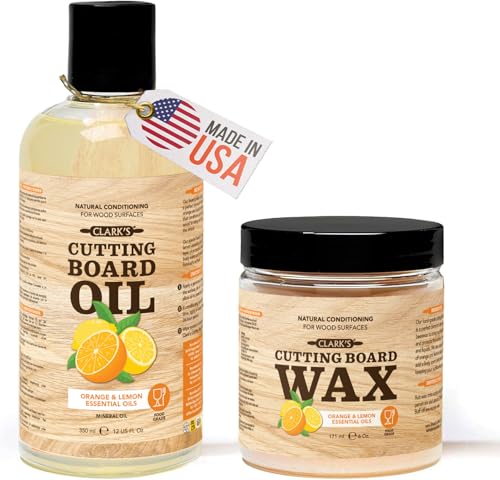
This paired set includes a food-grade mineral oil for deep wood conditioning and a carnauba wax-based finish for a protective top layer. The duo works well on bamboo boards, utensils, and countertops, providing a long-lasting moisture barrier and a durable surface.
Best for: Users who want a proven two-step system to nourish and protect wooden kitchen items. It’s especially suitable for bamboo surfaces and those seeking an added wax layer for extra resilience. Caution: ensure proper application intervals and remove excess wax to avoid buildup.
Buying Guide: Key Purchase Considerations
- Food safety: Look for USP or FDA-aligned labeling for surfaces that contact food. Mineral oil and plant-based sealers with clear safety claims are preferred for kitchens and food prep areas.
- Wood type and use case: For cutting boards and countertops, choose products designed for food contact and moisture resistance. For garden projects, plant-based sealers minimize soil contamination risks.
- Oil vs wax balance: Oils (mineral, tung) hydrate wood; waxes (carnauba, beeswax) create a protective barrier. Some products combine both for durability.
- Application and curing: Check whether the product is ready-to-use, requires a single wipe-on, or needs overnight curing. Consider whether the container size fits your maintenance schedule.
- Longevity and maintenance: Some formulas offer longer protection with periodic re-application. Decide on routine versus as-needed care based on wood exposure.
- Compatibility with existing finishes: If you already have a wax finish, a compatible oil can revitalize the surface or you may need to apply a fresh coat of wax afterward.
Frequently Asked Questions
- What is the safest finish for cutting boards?
Answer: Food-grade mineral oil and plant-based sealants labeled for FDA/food contact are among the safest choices for direct food contact surfaces. - Do I need to apply a wax after oiling?
Answer: A wax layer provides a protective shield against moisture; many people use a combined oil-and-wax approach for longer-lasting protection. - Can I use mineral oil on all wooden kitchen items?
Answer: Mineral oil is suitable for most cutting boards, countertops, and butcher blocks, but some items may benefit from tung oil or wax finishes for enhanced durability. - How often should I oil a new cutting board?
Answer: Initial conditioning may require more frequent applications, followed by maintenance intervals based on use and exposure to water. - Is plant-based sealer safe for gardens and pet areas?
Answer: Plant-based sealers labeled as food contact safe are designed to be non-toxic for garden use and pet surroundings when used as directed.