Answering a common buyer question, these flat roof reflective paints help reduce heat gain, extend roof life, and lower cooling costs. The top picks below are suited for homeowners, RV owners, and property managers seeking durable white or light-colored coatings that reflect sunlight and seal against moisture. Each option highlights ease of application, suitability for low-slope roofs, and practical limits to consider.
Quick Buying Summary
| Product | Main Benefit | Best For | Notes |
|---|---|---|---|
| Gardner-Gibson Sta-Kool 15-Year Turbo-Dri | Rain-safe in 30 minutes; cool-core pigments | Residential roofs needing quick protection | Excellent time-saving application |
| APOC 208 Silver Guard-F Fibered | Bright silver reflective finish; extends roof life | Long-term durability for metal or reinforced surfaces | Fibered for durability |
| Jetcoat Cool King Reflective Acrylic | Five-year protection; wide surface compatibility | Multi-surface projects; budget-conscious upkeep | Dries white; broad warranty period |
| Kool Seal KS00024300-16 Aluminum Roof | Aluminum-based reflective protection | Direct metal roof applications | Industrial-grade option |
| AMES MSS1 Maximum Stretch Roof Coating | 650% elongation; high crack resistance | Low-slope roofs requiring flexible sealant | Excellent for RV or walking surfaces |
Gardner-Gibson Sta-Kool 15-Year Turbo-Dri Elastomeric Roof Coating

- Elastomeric roof sealant designed to seal and protect against heat and UV exposure.
- Cool-core technology with pigments that help reflect heat and keep interiors cooler.
- “Rain Safe” finish: can be recoated quickly, aiding faster project completion.
Best for: Homeowners and RV owners needing quick rain-safe protection and durable white coating. This product is selected for its fast turnaround and heat-reflective properties. It is especially beneficial when you need a reliable sealant that can be recoated after a short wait. Caution: If you have a roof with frequent immediate rainfall, re-application timing should follow the three-hour recoating window to maintain protection.
APOC 208 Silver Guard-F Fibered Aluminum Roof Coating

- Aluminum-based reflective coating designed to form a bright, long-lasting finish.
- Helps lower interior temperatures and energy costs by reflecting sunlight.
- Fibered formulation improves durability and extends the coating’s life on suitable surfaces.
Best for: Metal and reflective roofs where a robust shield against sun damage is desired and long-term durability matters. Caution: Aluminum-based coatings may require surface preparation for optimal adhesion on certain substrates.
Jetcoat Cool King Reflective Acrylic Roof Coating
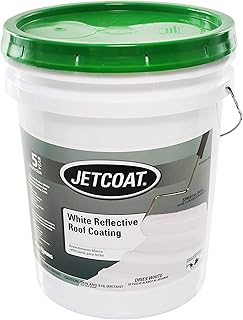
- Waterproof elastomeric sealant with reflective properties to reduce heat gain.
- Suitable for a variety of surfaces, including EDPM rubber, polyurethane foam, asphalt, and RVs.
- Dries white and provides up to five years of protection, reducing maintenance needs.
Best for: Projects involving multiple surface types and a need for a relatively long protection window. Caution: Not recommended for gravel, flat, or shingled roof surfaces; plan substrate suitability before application.
Kool Seal KS00024300-16 Aluminum Roof

- Aluminum-based roof coating designed to provide reflective protection.
- Compact item packaging with defined dimensions and weight, suitable for project planning.
Best for: Metal roof applications where a straightforward aluminum solution is preferred. Caution: Limited product details in the listing may require confirming substrate compatibility before use.
AMES RESEARCH LABORATORIES MSS1 Maximum Stretch Roof Coating

- Elastomeric, white coating with 650% elongation to resist cracking and peeling.
- High reflectivity (88%), aiding in temperature reduction and cooling cost savings.
- Designed for low-slope roof maintenance; suitable for RV roofs and other flat surfaces.
Best for: Roofs requiring flexibility to resist movement and cracking, such as RVs or low-slope structures. Caution: Application on highly textured or heavily worn substrates may require surface prep for best adhesion.
Buying Guide: Key Considerations For Flat Roof Reflective Coatings
- Roof type compatibility: Metal, asphalt, EPDM, PVC, and concrete surfaces each respond differently to coatings. Verify substrate compatibility and surface preparation requirements.
- Reflectivity and cooling potential: Look for high reflectivity (often around 85-88%) to maximize heat rejection and lower cooling load.
- Elongation and crack resistance: For roofs with movement or settlement, choose elastomeric or high-elongation formulas to reduce cracking.
- Drying and recoat windows: Some products are rain-safe within a short window; others require longer curing times. Plan around weather and project timelines.
- Durability and maintenance: Consider long-term protection (years of coverage) vs. shorter cycles requiring more frequent reapplications.
- Application method: Brush, roller, or spray coatings may affect coverage rates and ease of application. Check product data for recommended methods.
- Safety and environmental factors: White coatings can help reduce indoor heat, but ensure proper ventilation and surface readiness when applying.
- Cost efficiency: Compare coverage per gallon and total project area to estimate total product needs and waste.
FAQ: Flat Roof Reflective Paint Questions
- Q: Will reflective roof coatings save energy in all climates? A: They generally reduce cooling loads in hot sunny climates but effectiveness depends on roof type and climate.
- Q: Can these coatings be used on new roofs or only existing ones? A: Most coatings work on both, but proper surface preparation is essential for adhesion.
- Q: How long does a coating typically last? A: Durability varies; select a product with a longer protection window for lower maintenance.
- Q: Are there any surfaces you should avoid? A: Some coatings are not recommended for gravel, flat, or shingled roofs; verify substrate compatibility.
- Q: Do these coatings require priming? A: Some formulations may require a primer or specific prep steps; check the manufacturer guidelines.
- Q: Is white optimal for all environments? A: White reflects sunlight effectively, but local aesthetics and roof color constraints may influence choice.