Find the right fine grit sandpaper for painting to achieve a flawless finish. This guide targets painters of furniture, walls, and automotive surfaces who want a smoother final coat. The top picks below emphasize versatility, durability, and ease of use for both beginners and pros. Whether you’re skimming paint on trim or polishing a clear coat, these options help minimize scratches and prep time. The buyer’s table highlights each product’s best use at a glance.
- 3M Sandpaper, 220 Grit — General purpose, ideal for light sanding before painting on wood, metal, or painted surfaces.
- 3M Wetordry Sandpaper Assorted Grits — Great for polishing clear coats and removing paint defects with wet or dry use.
- Romeda 8-Pack Sanding Sponge — Flexible blocks in multiple grits for detailed work and curved surfaces.
- S&F STEAD & FAST Sanding Blocks — Four-grit blocks designed for controlled hand sanding and finishing.
- Shineboc Fine Sandpaper Assortment 1000/2000/3000/5000 — Fine to ultra-fine polishing for automotive, wood, and metal finishes.
Product Comparison At a Glance
| Product | |||
|---|---|---|---|
| 3M Sandpaper 220 Grit | General prep before painting | 220 | Dry |
| 3M Wetordry Assorted Grits | Clear coat prep, defect removal | 1000–2500 | Wet/Dry |
| Romeda 8-Pack Sanding Sponge | Detail work, curves and edges | 60/80/120/220 | Dry |
| S&F Stead & Fast Sanding Blocks | Controlled hand sanding | 60/80/120/220 | Dry |
| Shineboc Fine Sandpaper Assortment | Polishing stages from fine to very fine | 1000/2000/3000/5000 | Wet/Dry |
3M Sandpaper, 220 Grit

Best for: General prep before painting on wood, metal, or old paint surfaces. This aluminum oxide sandpaper is a versatile option for light smoothing and removing minor imperfections prior to primer or topcoat. It provides a consistent cut and broad compatibility with common substrates.
Why selected: It covers a wide range of prep tasks without switching grits, making it a reliable first step in many painting projects. The 9×11 inch sheet size offers efficient coverage for larger areas and easy handling during manual sanding.
Limitations: This is a dry-only paper. When preparing delicate surfaces or clear coats, consider a finer option for finishing stages or a wet-dry choice to minimize dust and scratches.
3M Wetordry Sandpaper Assorted Grits
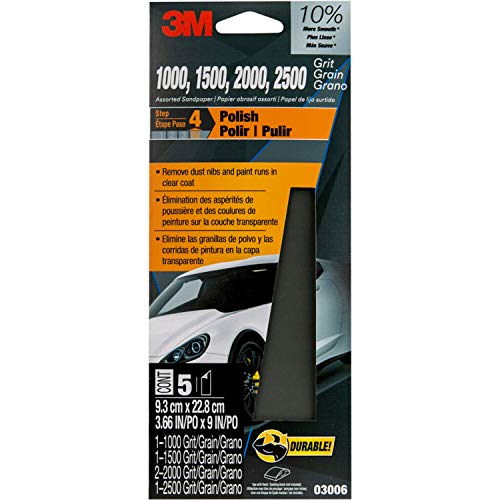
Best for: Polishing clear coats and removing paint defects. The 1000, 1500, 2000, and 2500 grits are designed for progressive finishing and defect correction on automotive finishes or high-gloss surfaces.
Why selected: This kit supports both wet sanding and dry sanding without switching papers, delivering a smoother final finish. It’s a practical choice for painters who want a refined polish path from mid-coat to final coat.
Limitations: The set focuses on fine to very fine grits; for leveling rough surfaces, pair with a coarser grit first to avoid excessive work or clogging.
Romeda 8-Pack Sanding Sponge

Best for: Detail sanding on curved surfaces, corners, and edge work in wood, plaster, drywall, and metal finishes. The set includes four grits (60/80/120/220) for versatile projects.
Why selected: The assorted grit blocks with distinct colors help users identify the right texture quickly. High-density sponge construction provides durability for repeated use on complex shapes.
Limitations: Sponges are great for hand sanding but may wear faster under heavy material removal. For flat surfaces, combine with rigid blocks or sheets for efficiency.
Romeda 8-Pack Sandpaper Block

Best for: Controlled hand sanding with a firm block to maintain flatness on wood, drywall, and metal surfaces. Comes with 60/80/120/220 grits for shaping and finishing tasks.
Why selected: The four-grit set mirrors common prep stages, enabling a straightforward progression from rough to fine. The washable blocks add value for projects with multiple uses and surfaces.
Limitations: Dry use only; if moisture is expected or you’re polishing a delicate finish, consider water-assisted options to reduce heat and dust.
Shineboc Fine Sandpaper Assortment

Best for: Polishing stages from fine to extra-fine on wood, metal, and automotive finishes. The pack includes 1000, 2000, 3000, and 5000 grits for high-gloss results.
Why selected: Silicon carbide composition with electrostatic coating delivers uniform grit distribution and durability, making it well-suited for polishing and finishing tasks that demand a refined surface.
Limitations: Higher grits are less effective for heavy material removal. Reserve these papers for final polishing after using coarser grits elsewhere in your workflow.
Buying Guide: Key Considerations for Fine-Grit Sandpaper
What grit should I choose for painting prep?
For initial prep on painted or unfinished surfaces, start with a coarser grit (e.g., 60–120) to shape and remove rough edges. Move to a fine grit (e.g., 220–320) for smoothing between coats, then to very fine grits (1000–5000) for finishing and polishing clear coats or glossy paints.
Wet or dry sanding: which is better?
Wet sanding reduces dust and heat, often yielding a smoother finish, especially on clear coats and high-gloss paints. Dry sanding is faster for material removal and is suitable for rougher prep. Some products are dual-use, offering flexibility across stages.
Blocking and grip: how to improve results?
Sanding blocks or sponges help maintain flatness and prevent gouging. Flexible sponges are ideal for contours and curves, while rigid blocks suit flat panels. Use light, even pressure to avoid imprinting scratches.
Material and durability considerations
Aluminum oxide and silicon carbide are common abrasive materials. Silicon carbide tends to stay sharp longer on hard surfaces, while aluminum oxide is versatile for wood and softer metals. Wet-dry papers generally last longer when used with water or solvents.
Practical usage tips
- Always start with clean, dry surfaces to prevent clogging and uneven sanding.
- Rinse or wipe between grit changes when using wet sanding to prevent cross-grit contamination.
- Wear a dust mask and work in a well-ventilated area to minimize inhalation of fine particles.
FAQ
- Q: Is finer grit always better for painting prep? A: Not always. Use a progression approach: coarser grits for shaping, then finer grits for smoothing and finishing.
- Q: Can I use wet sanding on wood without harming the surface? A: Yes, wet sanding reduces dust and can prevent fine scratches on wood and clear coats when done correctly.
- Q: How do I choose between sanding blocks and sponges? A: Use blocks for flat surfaces and sponges for curves and detailed areas to maintain even pressure.
- Q: Are there safety considerations for fine-grit sanding? A: Yes. Wear a mask to avoid inhaling dust, and use eye protection when sanding for extended periods.
- Q: Should I pair multiple brands together? A: Yes. For best results, mix grits and materials (e.g., a coarser paper from one brand with a finer paper from another) to optimize surface finish.
- Q: Do any options work well for automotive finishes? A: Yes. Wetordry sets and ultra-fine grits (1000–5000) are commonly used for polishing and defect removal in automotive clear coats.