Shop with clarity: these fan-pattern texture tools are ideal for starting crafters and seasoned makers who want precise, repeatable patterns on clay, plaster, wood surfaces, and walls. The top picks below cover polymer clay, ceramic texture, and decorative wall applications. Each option highlights who benefits most and why it stands out, plus a practical caveat to consider.
| Product | Best For | Why It Stands Out |
|---|---|---|
| HAVITA Seamless Clay Texture Roller — 4-Inch Art Deco Fan Pattern | Polymer clay and small-scale surfaces | Deliberate, crisp pattern transfer; three scale options ensure consistent results from detail to large areas. |
| ORIGACH 5 Pcs Polymer Clay Texture Roller | Versatile texture variety | Multiple patterns including fan, heart, leaves; stored in a compact box for easy access. |
| MKM Pottery Tools Wood Twig Rollers — Deco Fan | Clay and mixed media projects | Bevel-carved for clean release; wood texture adds a natural look to patterns. |
| Magnolia CF-10 Crowsfoot Pattern Texture Tool | Wall and ceiling textures | Classic stomp/crows-foot pattern with durable tampico bristles for even application. |
| Bon Tool Texture Mat Floppy European Fan Cobblestone | Large surface texture | Professional-grade mat for broad, continuous fan-like patterns on walls and ceilings. |
HAVITA Seamless Clay Texture Roller, 4-Inch Art Deco Fan Pattern

Best for: detailed polymer clay projects and small-scale surfaces. This 4-inch roller offers a crisp, deliberate finish that reads as designed rather than decorated. It supports one-pass clean-release on conditioned clay, slab-rolled ceramic, and air-dry clay.
Why chosen: The option to choose 2-inch, 4-inch, or 6-inch scales keeps the same high quality across sizes, making it adaptable from jewelry components to large panels. It excels when a clean, continuous pattern is required without dragging or sticking.
Caution: Use on well-conditioned clay and avoid dragging on rough textures to prevent pattern distortion. If working on very soft surfaces, roll gently to maintain pattern fidelity.
What this means for buyers
- Best for precise, repeatable Art Deco fan motifs on polymer clay.
- Better for controlled surfaces where pattern scale matters.
- Avoid if you need irregular or distressed finishes.
4 Pack Texture Tools for Plaster and Paint

Best for: painters and mixed-media artists seeking varied edge patterns. The set includes tools with unique shapes (zigzag, wavy, trapezoidal edges) that enable distinctive borders and surface textures on plaster or paint.
Why chosen: Flexible materials and multiple designs facilitate creative texture exploration. Reusable tools with simple cleaning support long-term use for ongoing texture projects.
Caution: Plastic tools may wear when pressing hard into hard surfaces; use moderate pressure to preserve edge shapes and avoid dulling patterns.
What this means for buyers
- Best for broad texture experiments and non-clay surfaces.
- Better for achieving varied borders in painting or plaster work.
- Avoid if you need large, uniform fan patterns across wide areas.
ORIGACH 5 Pcs Polymer Clay Texture Roller

Best for: clay crafters who want a broad pattern toolkit in one container. The set includes fan shapes plus heart, leaves, cobblestone, and wood grain textures for varied effects.
Why chosen: The package provides multiple texture options in one purchase, reducing the need to buy individual rollers. Packaging helps keep blades and patterns organized for quick access during projects.
Caution: Patterns are small and may require careful rolling to avoid off-center alignment on irregular slabs.
What this means for buyers
- Best for versatile clay texture work and jewelry making.
- Better for quick pattern changes during a session.
- Avoid if you primarily need a single, large uniform fan pattern.
MKM Pottery Tools Wood Twig Rollers — Deco Fan

Best for: clay artists seeking a natural wood texture with a distinct deco fan impression. The twig roller is bevel-carved to facilitate clean clay release.
Why chosen: The natural wood aesthetic can enhance organic or rustic designs. It is designed to work with natural, polymer, and precious metal clays, broadening its application range.
Caution: Wood rollers require careful cleaning and drying to prevent moisture-related mold or warping over time.
What this means for buyers
- Best for natural, wood-like textures and bevel release.
- Better for delicate clay surfaces that benefit from smooth rolling action.
- Avoid if you need ultra-fine polymer clay patterns across tiny surfaces.
Magnolia CF-10 Crowsfoot Pattern Texture Tool
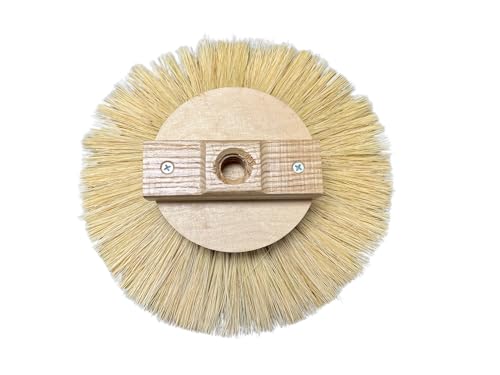
Best for: wall and ceiling texture projects where a classic crows-foot or sunburst pattern is desired. The 8″ diameter tool provides broad coverage for larger surfaces.
Why chosen: White Tampico bristles help distribute texture evenly with good paint retention, enabling consistent finishes across panels or entire walls.
Caution: Designed for rollers or stomp pattern applications; ensure you practice motion to avoid over-saturating one spot.
What this means for buyers
- Best for traditional stomp and crowfoot texture effects on walls.
- Better for large-area applications with even coverage.
- Avoid if you require precise, small-scale patterns on clay.
Bon Tool Texture Mat Floppy European Fan Cobblestone

Best for: large-scale texture applications on walls or ceilings where a floppy mat can cover broad areas quickly. The cobblestone pattern adds dimensional interest with a fan-like spread.
Why chosen: Professional-grade polyurethane mat offers flexibility and durability for repeated use on various surfaces.
Caution: Large mats can be cumbersome; ensure the surface is clean and flat to prevent pattern misalignment during rolling or stamping.
What this means for buyers
- Best for expansive fan-like patterns and cobblestone textures on walls.
- Better for fast, uniform coverage over large surfaces.
- Avoid if you need fine, small-scale texture on intricate objects.
Buying Guide: Fan Pattern Texture Tools
What should I consider when choosing a fan texture tool?
Surface type matters. Polymer clay, ceramic, plaster, and wall textures respond differently to rolling and stamping. Consider pattern scale, ease of cleaning, and whether you need single-pattern precision or a versatile set with multiple shapes.
Pattern scale and versatility
Choose tools offering multiple scales (2″, 4″, 6″) for clay and small surfaces, or larger mats for walls. Sets with a variety of shapes (fan, leaves, cobblestone, wood grain) provide flexibility for mixed-media projects.
Material and finish concerns
Wood, plastic, or silicone textures have distinct release and cleanup needs. Natural fibers like tampico bristles are suited for paint application on walls, while polymer-friendly rollers deliver clean transfers on clay.
Ease of use and maintenance
Look for rollers with smooth handles or storage boxes for organization. Cleaning requirements vary; some tools tolerate light washing, while others need careful drying to prevent warping or mold.
Best practice tips
- Condition clay properly to ensure clean release and crisp patterns.
- Test on a scrap piece before applying to your main project to avoid mistakes.
- Roll with consistent pressure and speed to minimize distortions.
Perceived limitations and trade-offs
Some tools excel at large-area coverage but may be less precise for small-scale details. Others offer fine detail but require more careful handling. Balance your project needs with the tool’s strengths and constraints.
FAQ
- What is the best fan texture tool for polymer clay?
- Can I use texture tools on plaster or walls?
- Are texture rollers easy to clean?
- Should I buy a set or individual tools?
- What patterns work well for jewelry making?
- Is there a limitation to large fan mats?
HAVITA texture rollers with multiple scales are ideal for polymer clay, offering crisp transfers and flexibility across small and larger surfaces.
Yes. Large mats like the Bon Tool texture mat or wall-focused tools such as the Magnolia crowsfoot can apply broad patterns evenly on plaster or painted walls.
Most are easy to clean with mild soap and water; wood rollers require careful drying to prevent moisture damage.
A set provides pattern variety for experimentation, while individual tools can be chosen for specific projects. Packaging often helps organization and quick access.
Small-scale patterns like the fan motifs in ORIGACH or HAVITA sets are well-suited for earrings and pendants when rolled on polymer clay and then cut with jewelry shapes.
Large mats cover wide areas quickly but may be less precise for intricate detailing on small items.