Answer: For exterior wall holes, choose patching compounds that harden weatherproofly, resist cracking, and cleanly blend with surrounding surfaces. This guide highlights five top options suited for outdoor use, masonry and siding repairs, and large or small gaps. Each product is evaluated for durability, ease of application, and best-suited projects, helping you decide whether you’re patching concrete, brick, siding, or drywall close to exterior elements. The buyer is typically a homeowner or contractor needing durable exterior patches or quick-turnaround repairs.
| Product | Best For | Why It Stands Out |
|---|---|---|
| DAP Concrete and Mortar Filler and Sealant | Concrete and masonry cracks or holes on exterior surfaces | Ready-to-use, low odor, quick return to service in 24 hours |
| 3M High Strength Fiber Reinforced Spackling (LHR-32) | Large holes in drywall, plaster, stucco, concrete, and wood near exteriors | Repair speed up to 5x faster than vinyl spackling |
| DAP Weatherproof Patching Compound | Exterior patches on fiber cement, vinyl, metal, brick, and more | WeatherMax technology; sandable and paintable; dries to withstand rain in 24 hours |
| 3M High Strength Fiber Reinforced Spackling (LHR-12) | Interior or exterior repairs after sealing with exterior paint | 5x faster repairs; handles 3″–5″ holes |
| DAP DryDex Dry Time Indicator Spackling | Interior or exterior surfaces requiring visible dryness indication | Color indicator shows pink-to-white when dry; dries within 1 hour for shallow repairs |
DAP Concrete and Mortar Filler and Sealant

Product Type and Use: Concrete patch filler designed for exterior or interior concrete and masonry surfaces. It seals cracks and holes and is ready to use straight from the tube, with no mixing required. This makes quick outdoor repairs straightforward for homeowners and general contractors. Best for small to mid-size masonry gaps where weather exposure is a concern.
Key Benefits: Ready-to-use formula; low odor; easy cleanup with water; 24-hour return to service time. It is flexible enough to tolerate minor substrate movement without immediate cracking, which is essential for exterior walls that experience temperature changes.
Who It Is Best For: Homeowners performing DIY concrete patching and small masonry repairs, or contractors needing a reliable patch on exterior concrete or masonry surfaces.
Limitations: Not a structural repair product; performance depends on proper surface preparation and sealing from longer-term moisture exposure.
3M High Strength Fiber Reinforced Spackling (LHR-32)

Product Type and Use: Large-hole repair compound suitable for drywall, plaster, stucco, concrete, and wood. It provides a strong, fiber-reinforced fill that speeds repairs compared with traditional vinyl spackling. Best for exterior repairs when sealed with exterior paint.
Key Benefits: Repairs 3″–5″ holes efficiently; faster work compared to traditional spackling. It is versatile enough for mixed substrates common in exterior walls near entryways, porches, or converted spaces.
Who It Is Best For: Craftspeople and DIYers tackling larger exterior holes, or professionals seeking faster repair cycles on walls that see weather exposure.
Limitations: Requires exterior paint after sealing to ensure weather protection; may not match texture perfectly without finishing steps.
3M High Strength Fiber Reinforced Spackling (LHR-12)

Product Type and Use: Similar to the LHR-32 but in a 12 oz size, designed for large hole repair cracks and damaged surfaces. Suitable for interior or exterior repairs when top-coated with exterior paint.
Key Benefits: 5x faster repairs than traditional vinyl spackling; handles holes in the 3″–5″ range. Provides a durable fill that paints well once cured.
Who It Is Best For: Smaller-scale exterior patches where a quick-drying, sturdy finish is needed without heavy mixing or special tools.
Limitations: Requires proper surface prep and sealing; performance depends on subsequent paint layer compatibility with the patch material.
DAP DryDex Dry Time Indicator Spackling

Product Type and Use: DryTime indicator spackle designed for interior or exterior repairs like drywall, plaster, wood, brick, and stone. It features a color indicator that turns white when dry, simplifying drying checks on exterior projects.
Key Benefits: Pink application color helps with even coverage; white when dry confirms readiness for sanding or painting. Dry times vary with depth, encouraging staged applications for deeper repairs.
Who It Is Best For: Homeowners and professionals who value a clear visual cue for dry times, useful when patching exterior walls with multiple layers or variable temperatures.
Limitations: Drying times may differ with humidity and surface temperature; avoid applying in freezing conditions or extreme heat for best results.
Loctite Tite Foam Big Gaps Sealant

Product Type and Use: Polyurethane expanding foam sealant for large gaps up to 3 inches, providing insulation and sealing around exterior gaps and cracks.
Key Benefits: High-density foam with a uniform cell structure; excellent durability and flexibility to accommodate movement in building materials. Helps prevent drafts and moisture ingress when used around exterior openings.
Who It Is Best For: Homeowners performing weatherproofing around windows, doors, and exterior joints; ideal where a sealant must also provide insulation.
Limitations: Expands significantly; use with care to avoid over-application and inventory cleanup; surface prep improves adhesion and finish.
Red Devil 0645 Concrete Repair Patch

Product Type and Use: Premixed cement patch filler for cracks and breaks in concrete, designed for quick exterior repairs and ready-to-use right away.
Key Benefits: Pre-mixed formula that dries to a light to medium gray, reducing shade mismatch on many concrete surfaces. Flexible enough to resist cracking in permanent repairs.
Who It Is Best For: DIYers repairing concrete floors, sidewalks, or exterior walls where a quick, easy patch is preferred and color match is practical for lighter gray surfaces.
Limitations: Not a substitute for structural repairs; the color may not perfectly match darker concrete without additional finishing steps.
Gorilla All Purpose Wood Filler
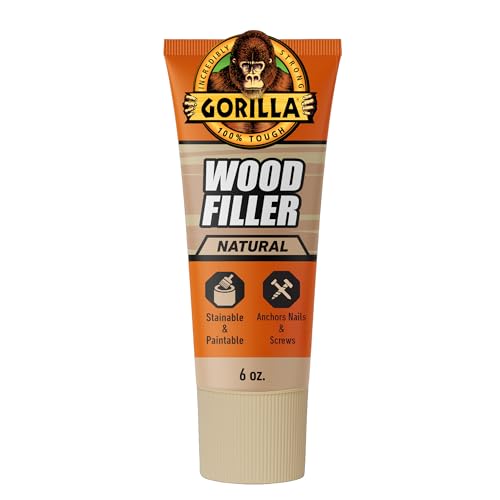
Product Type and Use: Water-resistant wood filler designed for indoor and outdoor projects, suitable for cracks, gouges, and holes in wood surfaces near exteriors or interior wood components.
Key Benefits: Natural finish and easy spreading; does not shrink or crack after curing, offering durable wood repairs in exterior settings.
Who It Is Best For: Contractors and homeowners patching wood trim, siding, decks, or interior wood surfaces adjacent to exterior walls.
Caution: Primarily designed for wood; using on masonry or concrete may yield suboptimal results where a masonry-specific product is preferred.
Buying Guide
What to consider when choosing exterior wall hole fillers
Surface type: Identify the substrate (concrete, masonry, wood, vinyl, metal, fiber cement). Pick patches designed for that material to maximize adhesion and durability.
Exposure level: If the patch will face rain, sun, and temperature swings, select weatherproof or weather-resistant formulas with curing features suited for outdoor use.
Size of the repair: Large holes (3″–5″) may require fiber-reinforced or spackling compounds designed for high-load repairs; smaller cracks can use standard patches.
Finish and paintability: For exterior walls, choose products that dry hard, sand well, and accept exterior paint to blend with surroundings.
Drying and return to service: Consider products with explicit dry times and recoat windows; some provide indicators to verify dryness before painting or sealing.
Application mess and cleanup: Ready-to-use formats reduce mixing, while foam sealants may require careful masking to avoid unintended gaps.
How to apply exterior hole fillers effectively
Clean the area: Remove loose material, dust, and debris; dampen the surface if recommended by the product.
Apply in layers: For deep holes, apply in layers, allowing each to dry before adding the next; avoid overfilling to reduce sanding effort.
Finish appropriately: Sand smooth if the product permits, then seal or paint to protect against weather.
Safety and ventilation: Use products in well-ventilated areas and follow label directions for safe handling and cleanup.
FAQ
Q: Can these products be used on exterior brick? A: Yes, several options are suitable for brick and other masonry surfaces; check the product label for substrate compatibility.
Q: Do they require painting after curing? A: Most exterior patches benefit from painting or sealing after curing to match the surrounding surface and improve weather resistance.
Q: Which is best for large holes? A: Fiber-reinforced spackling options (LHR-32, LHR-12) are designed for larger holes and faster repairs when used with exterior paint.
Q: Is a color match important for exterior patches? A: Yes, especially on visible walls; some products dry to light gray or require paint overcoat to blend with existing color.
Q: Do these patches fix leaks? A: They repair cracks and holes, but for active leaks you should address moisture intrusion and underlying causes before patching for long-term durability.