Answers to common buyer needs: protect exterior concrete walls from water intrusion, choose products that suit outdoor exposure, and balance ease of application with long-lasting protection. This guide highlights five effective options and explains who they’re best for, plus practical buying tips. The top picks target different scenarios—from above-ground masonry to below-grade walls—so readers can match a product to their project and climate. A quick summary table follows to compare key points at a glance.
| Product | Best For | Where It Shines | Limitations |
|---|---|---|---|
| KILZ Basement and Masonry Waterproofing Paint | Basements and masonry walls | Nanotechnology barrier; interior/exterior versatility | Not for floors; install cracks first |
| MasonryDefender All Purpose Sealer | Outdoor brick, stone and concrete | Deep-penetrating, clear waterproofing | Surface appearance preserved; reapplication needed over time |
| AMES Blue Max Liquid Rubber Waterproofer | Foundations and roofs needing flexible membrane | Elastomeric: expands 1200% | Blue color; may require multiple coats |
| 1 Gallon Concrete Sealer (OAIEGSD) | General outdoor concrete protection | Water-based, penetrates, low odor | Clear finish may not alter look; coverage varies |
| Hensire White Exterior Wall Paint for Concrete & Masonry | Exterior walls needing color | Adheres to rough textures; wide color choice | May require priming on very smooth surfaces |
KILZ Basement and Masonry Waterproofing Paint
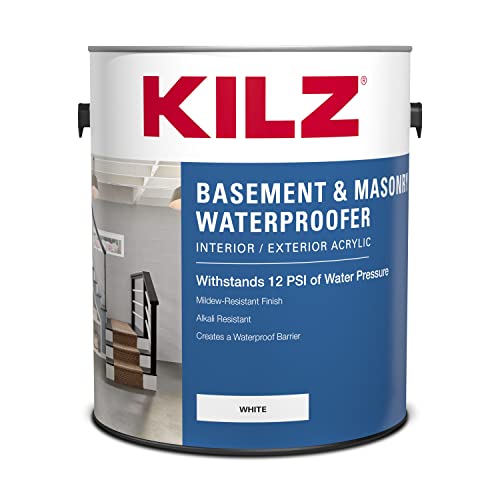
KILZ waterproofing paint uses nanotechnology to form a water barrier, blocking up to 12 PSI of water pressure on concrete and masonry surfaces. It’s designed for both interior and exterior use, making it suitable for basement walls, stucco, brick, and concrete blocks. A note: for below-grade applications, fill cracks with hydraulic cement before painting. Best for buyers seeking a durable finish that resists moisture and alkali buildup, with the convenience of one product for multiple surfaces.
Best for: homeowners handling damp basement walls or exposed exterior masonry who want a single coating that protects and enhances appearance. Choose this if you need interior/exterior versatility and a long-lasting finish. Caution: do not use on floors or areas with active water leaks; address leaks first for best results.
MasonryDefender All Purpose Sealer
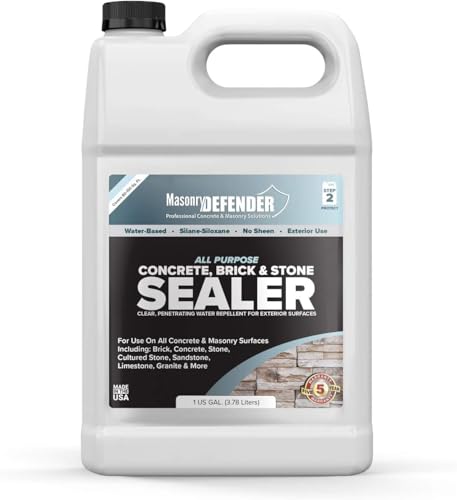
This penetrating silane/siloxane sealer provides a clear, weatherproof barrier for outdoor masonry, including concrete, brick, and stone. It preserves the surface’s natural look while delivering durable water resistance. The 1-gallon size offers practical coverage for typical DIY projects like patios and exterior walls. Best for buyers seeking a low-odor, invisible protection that won’t alter appearance.
Best for: exterior projects where preserving the natural color and texture is important. Better for: surfaces you don’t want to repaint or color-match in the near term. Caution: as a penetrating sealant, it may require multiple coats on very rough or highly porous surfaces to ensure full coverage.
AMES Blue Max Liquid Rubber Waterproofer

Blue Max is an elastomeric liquid rubber coating with high flexibility, expanding up to 1200% to resist cracking and peeling on concrete, wood, and metal. It can be used as a primer or standalone waterproofing layer on various surfaces and is suitable for basements, foundations, and roofs. Best for buyers needing a flexible, durable membrane that accommodates structural movement.
Best for: projects requiring a highly flexible waterproof layer that adapts to movement. Choose this if you want a single product usable as both primer and waterproofing layer. Caution: the blue tint may affect certain aesthetic plans, and multiple coats might be needed for full coverage on porous surfaces.
1 Gallon Concrete Sealer (OAIEGSD)

This penetrating, water-based silane/siloxane sealer offers waterproofing that penetrates the concrete surface to resist water absorption. It’s designed for outdoor use on driveways, patios, and garages, helping prevent cracking, spalling, and freeze-thaw damage while preserving the surface’s natural appearance. Best for: homeowners seeking a low-odor, VOC-conscious option that doesn’t change color.
Caution: waterproofing longevity depends on surface prep and climate; proper cleaning and drying before application are essential for optimal results.
Hensire White Exterior Wall Paint for Concrete & Masonry

This white exterior paint is designed for concrete and masonry with strong adhesion and moisture resistance. It’s available in black, gray, and white options to suit different styles and climates. Best for buyers who want color alongside weatherproofing, with improved surface appearance after coating. Limitation: may require priming on smooth surfaces for optimal adhesion and coverage.
Buying Guide: Key Considerations for Exterior Concrete Waterproofing
- Surface type and condition: new vs. aged concrete, brick, or stone; repairs needed before coating.
- Exposure and climate: high humidity, freeze-thaw cycles, or heavy rainfall influence product choice and reapplication frequency.
- Barrier type: penetrating sealers vs. surface coatings vs. elastomeric membranes; select based on desired finish and movement tolerance.
- Aesthetic goals: natural look with clear sealers or color/finish with paints for exterior walls.
- Application method and odor: consider spray, roller, or brush options; low-VOC formulas may matter for indoors or tight spaces.
- Maintenance and longevity: evaluate expected recoat intervals and compatibility with future renovations.
Frequently Asked Questions
- What is the main difference between penetrating sealers and elastomeric coatings?
– Penetrating sealers soak into the material to repel water without altering texture, while elastomeric coatings form a flexible outer layer that can bridge small cracks. - Can these products be used on interior and exterior walls?
– Some paints are designed for interior/exterior use, while many sealers are intended for exterior or above-grade surfaces; always check the label for surface compatibility. - Should I prepare cracks before applying waterproofing products?
– Yes, for below-grade or highly cracked areas, fill larger cracks with appropriate repair materials before sealing or painting. - Will these products affect the natural look of brick or stone?
– Penetrating sealers preserve appearance; surface paints and coatings will add color and texture, while some sealers remain clear. - How do I choose the right product for my climate?
– In areas with freeze-thaw cycles, prioritize products with strong water resistance and good elasticity to accommodate movement.