Top epoxy products for concrete walls provide reliable bonding, leak sealing, and structural repair. This guide highlights five clear options suited to different needs—from anchoring heavy hardware to sealing hairline cracks. Ideal buyers include DIY homeowners repairing foundations, contractors seeking fast-curing solutions, and professionals needing high-strength bonds for rebar or bolts. The following table summarizes key choices and who they’re best for.
| Product | Best For | Why It Stands Out | Limitations |
|---|---|---|---|
| PC Products 72561 | Anchoring and crack repair in damp or vertical spaces | High-tack, moisture-resistant paste for vertical applications | Temperature range can limit outdoor seasonal use |
| Akona Fast-Setting Anchoring Epoxy | Fast-setting anchoring with quick cure | 12-minute set, 16-hour full cure, simple application tube | Not ideal for very large structural repairs |
| Polygem LCR Epoxy Kit | Professional-grade crack repair and bonding | High-performance, durable structural bond | DIY-friendly but larger projects may require care |
| Hydra Stop 300 Kit (Applied Technologies) | Foundation cracks and basement waterproofing | Foam expands to seal and protect against water | Foam-based system; different handling than pure epoxy |
| RadonSeal Epoxy Crack Repair Kit | Low-viscosity epoxy for deep crack injection | Deep penetration, structural restoration | Requires proper injection technique |
PC Products 72561 PC-Concrete Two-Part Epoxy Paste
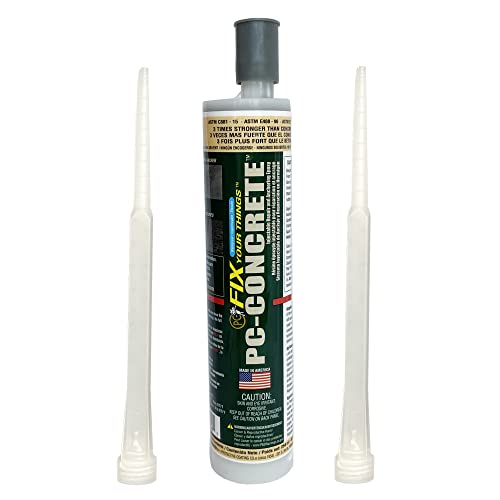
Product type: Two-part epoxy adhesive paste for concrete cracks and anchors. Features high-tack moisture resistance suitable for damp environments and vertical applications. Applications span indoor and outdoor use with an operating range of 35 to 115 degrees F and service range from -20 to 115 degrees F.
Best for: Versatile crack filling and anchor fixing in varied conditions, including damp walls. This makes it suitable for masonry repairs in basements or exterior walls where moisture is a factor.
Why selected: The combination of crack repair and anchoring capability in a single paste simplifies projects that require both sealing and fastening in one go.
Caution: Ensure adequate curing time in cooler or shaded areas as temperature affects cure rate and strength development.
Akona Fast-Setting Anchoring Epoxy
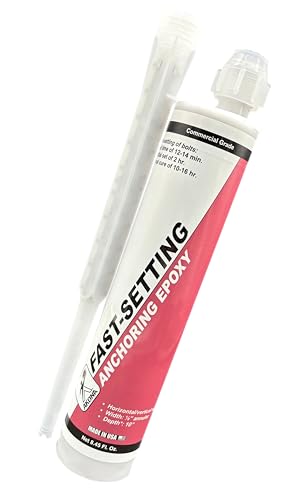
Product type: Fast-setting anchoring epoxy for concrete, rebar, steel, masonry, and bolts. Features a high-strength formula that tolerates moisture, with a 12-minute initial set and 16 hours to full cure. Easy-to-use tube packaging minimizes handling mess.
Best for: Projects needing quick turnarounds, such as anchor bolting or rebar installation in concrete where downtime matters.
Why selected: Its rapid set time helps keep job sites moving and reduces waiting periods between steps.
Caution: Not ideal for long-through-bolt installations that require extended cure strength over several days.
Polygem LCR Epoxy Concrete Crack Repair Kit

Product type: High-performance epoxy kit designed for professional-grade crack repair and structural bonding in concrete. It emphasizes a reliable seal, stops leaks, and restores structural integrity. Kit supports DIY-friendly use while delivering stout bond strength.
Best for: Repairs where long-term durability and water-tight sealing are critical, such as foundation cracks that risk water intrusion.
Why selected: The kit’s emphasis on permanent leakage control and structural bonding makes it a strong all-around choice for structural rehab projects.
Caution: Proper surface preparation and curing conditions are essential to maximize effectiveness.
10′ Hydra Stop 300 Injection Kit

Product type: Polyurethane crack injection system designed for foundation walls and basement sealing. It expands to fill cracks and creates a durable waterproof barrier. Marketed as a long-lasting solution for water intrusion and basement protection.
Best for: Homeowners addressing foundation cracks where water infiltration is a primary concern, especially in wet climates or after heavy rains.
Why selected: Its waterproofing focus and basement protection angle address a common and high-risk repair scenario.
Caution: Foam-based injection requires careful handling and uniform application to achieve a consistent seal.
RadonSeal Epoxy Concrete Crack Repair Kit (10 ft)

Product type: Low-viscosity epoxy injection system for structural crack repair in concrete walls. Engineered for basement and foundation applications with deep penetration to fill cracks thoroughly and restore bond integrity.
Best for: Projects requiring deep penetration into hairline to wider cracks to restore structural continuity and reduce leakage risks.
Why selected: The low-viscosity epoxy is designed to reach deep into cracks, improving the chance of a robust, long-lasting repair.
Caution: Correct mixing and injection technique are critical for optimal results and to prevent incomplete cures.
RadonSeal Epoxy Crack Repair Kit (10 ft)

Product type: Two-component structural epoxy designed for concrete crack repair with low-viscosity formulation for deep penetration. Aimed at restoring structural integrity in poured concrete walls including basements and foundations.
Best for: Structural cracks where restoring continuity and strength is critical, especially in load-bearing walls.
Why selected: The combination of structural epoxy with deep penetration makes it suitable for more serious crack repair needs.
Caution: Like others, success depends on proper surface prep and controlled curing conditions.
Buying Guide: Epoxy Solutions For Concrete Walls
- Crack size and location: Hairline cracks typically respond to low-viscosity epoxies that flow deeply, while wider or structural cracks may require injectable kits or two-part systems with stronger bonding.
- Moisture and environment: Moisture-tolerant pastes or polyurethane injections work well in damp or wet spaces, such as basements or exterior walls with humidity.
- Application speed: If time is critical, opt for fast-setting products that cure quickly. Consider full cure times when planning steps that depend on strength.
- Penetration depth: Deep-penetrating epoxies restore structural continuity in poured walls, while surface sealants are suitable for leaks without deep bonding needs.
- Anchoring vs. sealing: For anchor bolts and rebar, choose products designed for anchoring with rapid strength gain. For leaks, prioritize sealing agents with good water-blocking capabilities.
- Temperature range: Outdoor projects and spaces with temperature swings require epoxies rated for broad temperature performance.
Frequently Asked Questions
- What is the difference between epoxy crack repair and anchoring epoxy? Crack repair epoxies seal and structurally bond cracks, while anchoring epoxies are formulated to securely hold bolts or rebar in concrete.
- Do I need to seal cracks in both indoor and outdoor walls? Yes, consider moisture exposure and humidity. Outdoor walls and foundations benefit from water-resistant or moisture-tolerant formulations.
- How long does epoxy take to cure? Cure times vary by product and temperature. Some set in minutes, others require hours or days to reach full strength.
- Can epoxy fix all concrete cracks? Epoxy can fix many cracks, but extremely large or shifting cracks may require structural assessment and alternative repair methods.
- Is injection epoxy better than paste for crack repair? Injection epoxy provides deeper penetration, often preferable for active or structural cracks, while paste is useful for surface sealing and local repairs.
- What safety steps should I follow? Work in well-ventilated areas, wear gloves and eye protection, and follow manufacturer mixing instructions exactly to ensure proper curing and strength.